Full Article
about Pollos
Town on the Duero plain, noted for its nature reserve and the church of San Nicolás.
Hide article Read full article
At five in the afternoon, April light cuts through the bell tower of San Nicolás and casts long, shifting crosses across the cobbled ground. They move slowly, like sun dials slightly out of sync. In the Plaza Mayor there is often little movement, perhaps just an older man sweeping dry leaves with a wooden broom. The soft scrape against stone carries across the square. Tourism in Pollos often begins like this, with the feeling of arriving somewhere that keeps its own pace, separate from the urgency found in more visited places.
Pollos rarely appears on lists of well-known villages in Valladolid. That absence helps preserve a kind of stillness that is hard to find elsewhere. Streets show no signs designed to attract visitors, no windows arranged with souvenirs. Instead, there is brick and masonry that has aged gradually, ochre-toned walls that have witnessed generations of harvests, dry years and brief springs.
The church and the square
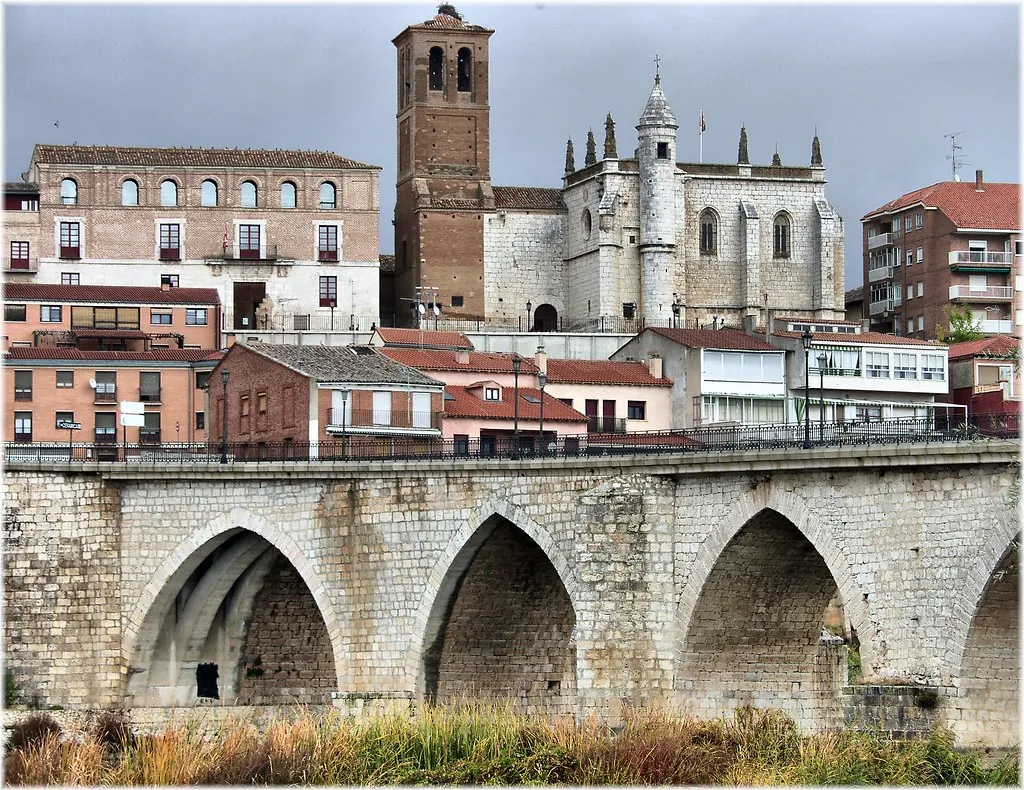
The Iglesia de San Nicolás de Bari stands at the centre of the village with the quiet authority of a building that has always belonged there. The current structure is generally associated with the 18th century. Its Baroque façade remains restrained, without excessive decoration. A red-brick bell tower rises above the low rooftops and can be seen from several points in the village, outlined against the open sky of the plateau.
Inside, the temperature drops slightly. The air often carries the scent of wax and damp stone. Old sculptures and altarpieces remain, their colours softened by time. When sunlight enters through the windows, it falls across the wooden pews in patches of blue and red that shift as the afternoon moves on.
Outside again, the square can fill with everyday life. At times there is the smell of freshly baked bread drifting from a nearby house. Neighbours cross the open space with cloth bags or pause to talk, leaning against the church wall. Nothing appears arranged for effect, yet the rhythm of the place becomes clear in these small moments.
A hill with traces of the past
Beyond the village, the land stretches out in flat agricultural plots that seem to merge with the horizon. One nearby rise, known as Los Calvillos, holds traces of an ancient settlement often linked to the Vacceos, a pre-Roman people who lived in this part of the Duero basin.
Little is immediately visible today. There are faint lines of stone, slight changes in the ground level and occasional fragments of pottery that surface after rain or farming work. Signage is limited, so it helps to have a general sense of where to go before setting out. Care matters here. This is one of those places where history sits more in the soil than on display panels.
Pollos itself appears in medieval documents connected to how land around the Duero was organised. That record suggests the village already existed as a settled place centuries ago, although its origins likely go back further.
Close to the Duero
A short distance from the centre stands the Casa del Parque, housed in what used to be a rural school. From the outside, the building keeps the simple structure and stone typical of the village. Inside, it functions as an interpretation centre focused on the surrounding Duero landscape, with particular attention to the birdlife that inhabits the riverbanks.
Panels, recorded sounds and audiovisual material offer context for what might otherwise seem like a quiet stretch of countryside. From the outdoor area, the course of the river can be sensed between rows of poplars and willows.
The river edges show more activity at certain times of day. Early morning and late afternoon tend to bring movement along the banks. Small birds skim low over the water, herons stand motionless among the reeds, and flocks rise suddenly when the stillness breaks. The setting remains understated, yet it reveals itself with a bit of patience.
Festivities and returns
August changes the atmosphere in Pollos. The wheat has already been harvested and the vines begin to shift in colour. The village celebrates its fiestas in honour of Nuestra Señora de la Asunción and San Roque during this period. Music fills the square, long tables extend into the streets, and families return after months spent living elsewhere.
There is also the tradition of the quintos, linked to young people in the village reaching adulthood. The celebration usually includes shared meals and activities organised by the group itself. Different generations take part, and the sense of continuity becomes visible in how the event is carried forward each year.
Food shaped by the land
Cooking in Pollos reflects the wider character of Castilla. The dishes found in homes and local bars are substantial, suited to long days of agricultural work. Lechazo asado, roast suckling lamb prepared in a wood-fired oven, remains one of the reference points of the area. Slow-cooked legume stews are also common, built around simple ingredients and time rather than complexity.
Bread tends to come in large loaves, with a firm crust and dense crumb that keeps well for several days. In summer, boxes of fruit from nearby gardens circulate through the village. As autumn arrives, mushrooms from the surrounding pinewoods begin to appear.
Food here follows the seasons closely. It connects to what is available nearby and to habits that have not changed quickly. Like much else in Pollos, it belongs to a rhythm that does not rush to adapt, and that is precisely what gives the place its distinct character.