Full Article
about San Miguel del Pino
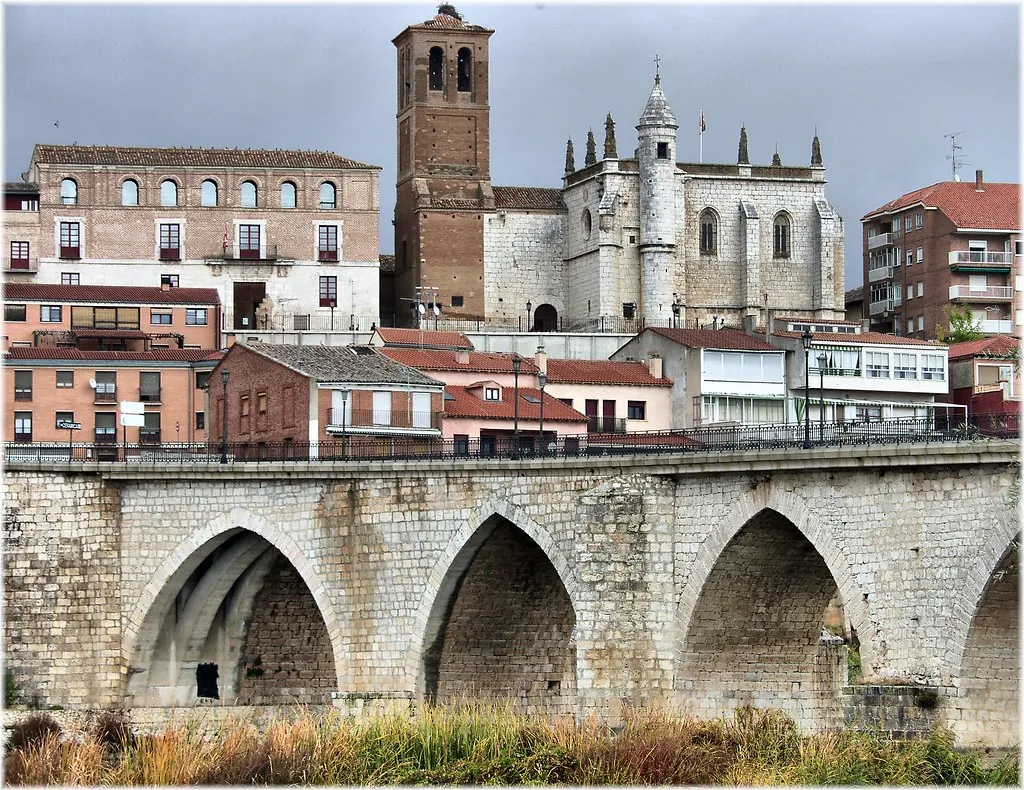
Town on the banks of the Duero; known for its fishing and the river’s natural setting.
Hide article Read full article
There are villages you barely notice until you have already driven past them. San Miguel del Pino is like that if you leave Valladolid heading west. One moment you are on the road, the next you are easing off the accelerator almost without thinking, as though turning into a familiar street.
Around 365 people live here, and the countryside still sets the pace. You see it in the tractors parked beside houses, in vegetable plots pressed up against boundary walls, and in a calm that feels entirely unforced. This is simply daily life in a small village in the Tierra del Vino, a historic wine‑growing area of the province of Valladolid.
From Valladolid to Open Fields
The drive from Valladolid is short, just long enough for the urban edge to give way to broad agricultural plains without any dramatic shift.
San Miguel del Pino appears among open fields and the occasional patch of vineyard. It is not one of those hilltop villages visible from miles away. Instead it comes into view gradually, with the church tower acting as a landmark once you are close.
This is the sort of place where you park, step out of the car and the first sound you notice is the wind rattling something metallic on a farm building nearby. There is no grand entrance, no scenic overlook, just a quiet arrival between cultivated land and low houses.
The Church That Shapes the Skyline
The Iglesia de San Miguel is the element that gives structure to the village centre. Its square tower is visible from the road and helps you get your bearings as you enter.
The building reflects different periods of construction. The base is old, probably several centuries in age, and over time it has been repaired and altered, as so often happens with parish churches in rural Spain. Stone walls, thick masonry and a simple interior define the space. Rather than a monument designed for visitors, it is the place where the most important moments of village life have unfolded for generations.
Weddings, baptisms, funerals and annual celebrations have all passed through these walls. Even without stepping inside, you sense that this is the heart around which the rest of the settlement has grown.
Straight Streets and Underground Wine Cellars
The centre of San Miguel del Pino can be explored quickly. Streets run straight, lined with stone or brick houses and large gates originally intended for carts rather than cars.
Some homes retain carved stone lintels and interior courtyards. Others have been updated in a practical, straightforward way. There are no theatrical restorations or attempts to turn the village into a stage set. A house here is, above all, a house.
Beneath the ground there is another layer of history. In several areas there are underground bodegas, wine cellars dug into the earth. For years they were used to store wine and keep it at a stable temperature through the seasons. Many still exist, although they are not generally open to visitors. Without knowing someone locally, the most likely scenario is that their doors remain closed.
Their presence, however discreet, is a reminder of why this area is known as the Tierra del Vino. Wine has long been part of the landscape and the economy, even if today you mainly see cereal fields punctuated by the occasional vineyard.
Fields, Tracks and the Silence of the Meseta
Leave the built‑up area and agricultural tracks begin almost immediately. Hard‑packed earth paths run between cereal plots and vineyards. The regional name, Tierra del Vino, is no accident.
Walking here is straightforward. There are no major gradients and no marked trails as you might find in a natural park. These are working paths, created for tractors and farm vehicles, that also serve for a stroll or a bike ride.
Towards sunset, the landscape takes on the reddish tone so typical of the Castilian meseta, the high plateau that defines much of central Spain. It is not spectacular in a postcard sense, yet it is instantly recognisable. You know you are in Castilla.
With a bit of luck, you may spot a bird of prey gliding overhead or hares darting across the fields. In these open expanses, such sightings are fairly common.
What stands out most, though, is the quiet. Not an arranged or curated silence, but the ordinary hush of a rural area where traffic is occasional and daily routines follow agricultural rhythms.
Festivities and Village Life
Social life revolves largely around the plaza and key dates in the calendar. The celebration dedicated to San Miguel is usually the moment when the village fills out a little. Relatives return, simple events are organised and the square has more movement for a few days.
The rest of the year is calm. This is small‑village life in its most straightforward form: neighbours who know each other, mid‑morning conversations in the street and the occasional car passing through.
There is no sense of performance for outsiders. What happens in San Miguel del Pino happens primarily for those who live there.
Is It Worth Stopping?
San Miguel del Pino is not a destination to travel to from far away with high expectations, and it does not try to be.
Yet if you are already in the area, or following a route through the province of Valladolid, it is the kind of place where stopping for a while makes sense. A short walk through the streets, a look at the surrounding fields, and you quickly understand how life works here.
Sometimes that is enough. In villages like this, that understated normality is very nearly the point.