Full Article
about Siete Iglesias de Trabancos
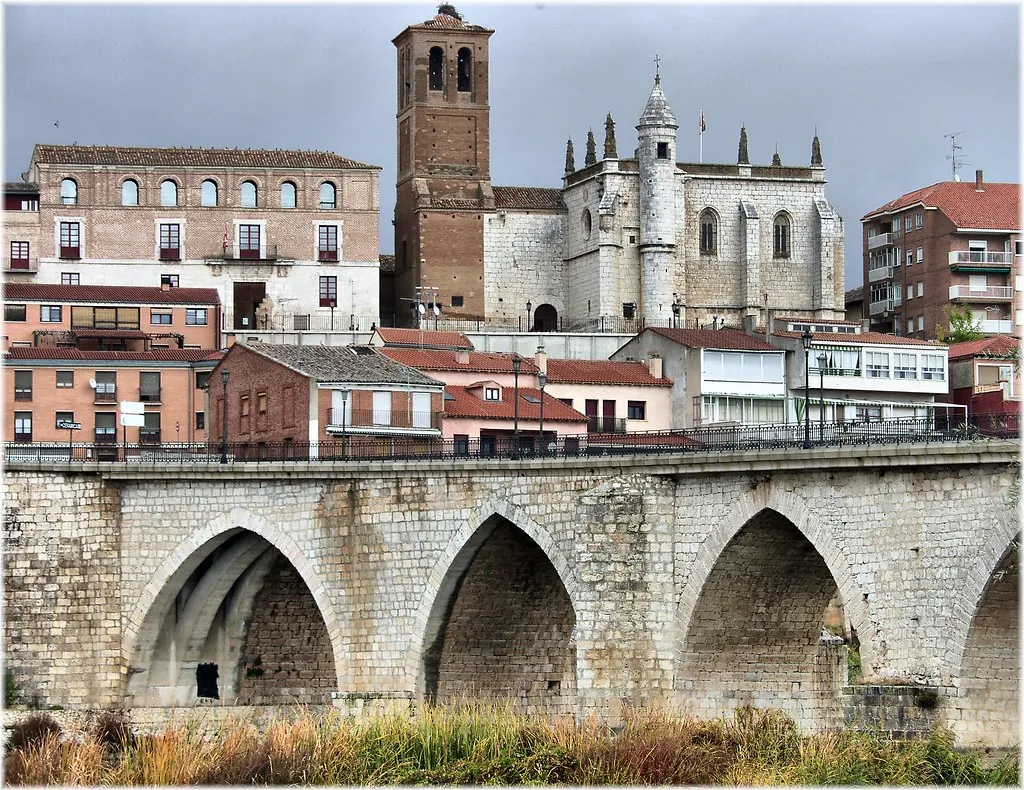
Town on the Trabancos river; noted for its church and nearby archaeological sites
Hide article Read full article
Getting There and Getting Oriented
If you are heading to Siete Iglesias de Trabancos, the first thing to think about is access and parking. From Valladolid, the drive takes around 45 minutes along standard rural roads that cut through open fields. It is sensible to arrive with at least half a tank of fuel, as petrol stations are scarce in this part of Castilla y León.
The village has roughly 400 residents, and parking is rarely an issue. Streets such as Calle Mayor usually have space available. Even so, arriving in the morning makes things easier. The centre is small, and although traffic is minimal, a badly parked car can quickly get in the way.
A Village Built Around Its Church
The main landmark is the church of San Juan Bautista. Its tower is visible from a distance and acts as a natural point of reference when approaching the village. The building itself reflects different periods, with elements added and altered over time. Inside, these successive changes are noticeable, although access is not guaranteed. The church is often closed, so visitors may have to settle for viewing the exterior or timing their visit to coincide with a service or local celebration.
Beyond the church, the village centre is simple and functional. Streets are mostly straight, lined with houses built from traditional materials such as adobe and rammed earth. Many have been renovated, though older features still appear here and there: original doorways, enclosed courtyards and low boundary walls.
There are no major monuments or standout attractions. This is an agricultural village, and that character shapes everything about it. The layout, the buildings and the pace of life all reflect its working roots rather than any attempt to draw tourism.
Underground Wineries and Open Land
On the outskirts, a series of underground bodegas can be found. These small structures are dug into the ground and form part of the area’s wine-producing past. Most remain privately owned and are not open to visitors. Even so, they offer a glimpse into how wine was traditionally stored and managed in the region.
The surrounding landscape belongs to what is known as Tierra del Vino, a region historically associated with viticulture. Today, the scenery is defined by wide, open fields. Cereal crops dominate, with some vineyards still present, connected by long tracks that stretch between plots of land.
There are no hills or wooded areas to break up the view, and very little shade. When the wind picks up, it is immediately noticeable, sweeping across the flat terrain without obstruction.
For those who want to walk or cycle, there are rural paths linking Siete Iglesias de Trabancos with neighbouring villages. On a map, these routes may seem short and straightforward. In reality, the uniform landscape can make distances harder to judge than expected. The lack of clear landmarks means everything can appear closer than it actually is.
Local Traditions and Everyday Life
Life in Siete Iglesias de Trabancos follows a steady, seasonal rhythm. At the end of June, the village celebrates San Pedro. These are traditional local festivities, centred on a religious procession, evening music and the return of people who have moved away but come back to visit family. The scale is modest, with no large events or elaborate staging.
In winter, the festival of San Antón is marked with bonfires. These gatherings are mainly for residents rather than visitors, offering a chance to come together around the fire during the colder months.
The grape harvest, or vendimia, remains an important part of the agricultural calendar. It is not presented as a show or attraction. It is simply work in the fields, continuing a routine that has shaped the area for generations.
When to Visit
Spring and autumn are the most comfortable seasons for spending time outdoors here. The temperatures are more manageable, making it easier to walk through the surrounding countryside or explore the village at a relaxed pace.
Summer brings intense heat, with very little shade available. The sun can feel relentless across the open fields. In winter, the cold sets in firmly, and conditions can be harsh.
A straightforward approach works best: come with the expectation of a short walk and then continue on to other places in the region. Siete Iglesias de Trabancos does not take long to see. Life moves slowly here, but the village itself is small, and its appeal lies in that simplicity rather than in a long list of sights.