Vista aérea de Venialbo
Instituto Geográfico Nacional · CC-BY 4.0 scne.es
Castilla y León · Cradle of Kingdoms

Venialbo

The church bell tolls twice, then stops. Nobody appears. At 700 metres above sea-level the air is thin enough for sound to carry clean across the o...

439 inhabitants · INE 2025
698m Altitude

Why Visit

Church of the Assumption Wine Route

Best Time to Visit

summer

The Assumption (August) agosto

Things to See & Do
in Venialbo

Heritage

  • Church of the Assumption
  • Wineries

Activities

  • Wine Route
  • Patron Saint Festivals

Festivals
& & Traditions

Fecha agosto

La Asunción (agosto)

Las fiestas locales son el momento perfecto para vivir la autenticidad de Venialbo.

Full Article
about Venialbo

A town with a large parish church, deep-rooted wine-making tradition and popular fiestas.

Ocultar artículo Leer artículo completo

The church bell tolls twice, then stops. Nobody appears. At 700 metres above sea-level the air is thin enough for sound to carry clean across the one main street, past the closed bar and the single cash machine that sometimes works. This is Venialbo's rush hour: a tractor clears the junction, a woman in house slippers waters geraniums, two dogs argue over territory already decided. The population sign reads 390; by evening head-count it might read 385. Arithmetic here is fluid, like the Duero River thirty kilometres north that nobody bothers to visit.

Castilla y León's Tierra del Vino doesn't shout. It calculates. Vine rows are planted exactly 1.2 metres apart so the tractor tyres fit; cereal strips alternate with grapes because EU grants pay for one and the tavern pays for the other. Adobe walls—some dating to the 1700s—carry modern metal numbers: 17, 23, 5. The houses look blind; windows are fist-sized to keep out the July furnace that runs from twelve-thirty until the sun drops behind the plateau. In January the same holes welcome a wind that tastes of snow from the distant Gredos.

Adobe, Tile and the Smell of Fermentation

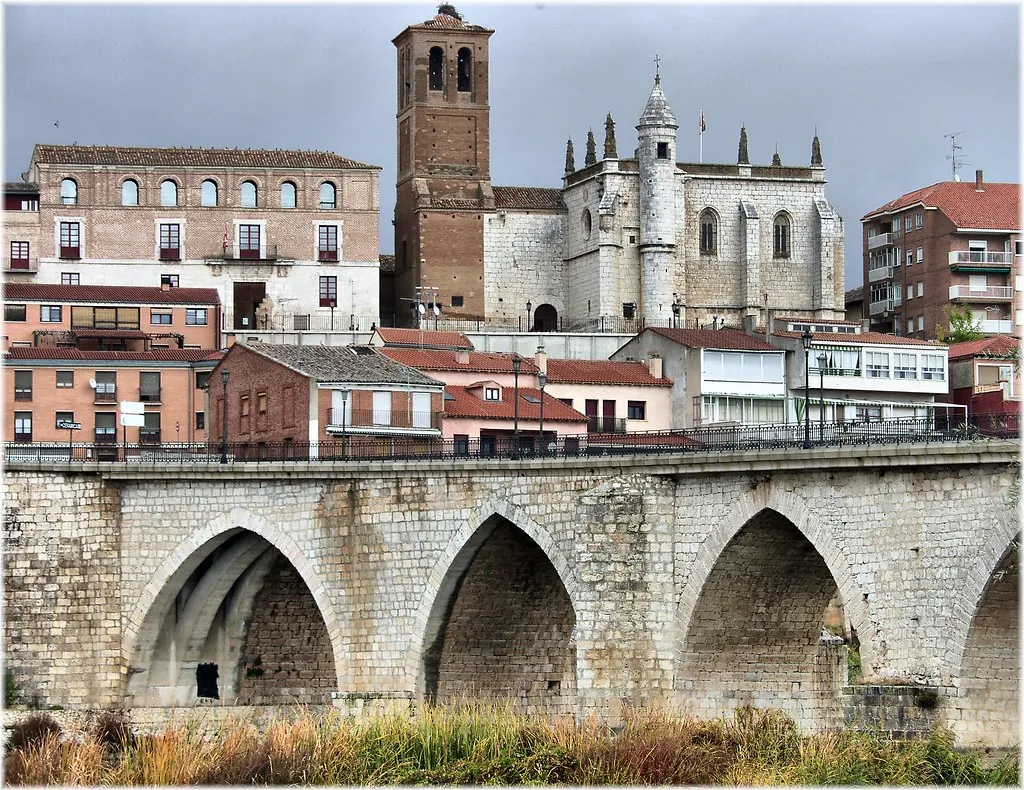
Start at the church because every walking route starts at the church. The building is 16th-century muscular, stone the colour of dry toast, erected when this land still worried about Moorish raids and not about rural depopulation. No guidebook flag, no multilingual panel. Step close and you read the timeline in brick: a Gothic arch recycled from an earlier shrine, a Baroque tower added after the 1755 Lisbon earthquake shook loose the original, twentieth-century cement patching up Civil War bullet pocks. The door is open only for Saturday mass at seven, but the perimeter path gives you the full story in fifteen clockwise minutes.

From the porch you see the village's two architectural moods. Southwards the streets keep their medieval width—just enough for a mule and the plastic crates of tempranillo now lifted by forklift. Northwards 1970s council houses sprawl, their balconies decorated with satellite dishes pointed at soap-opera Madrid. In between stand the bodega chimneys: stubby, brick, emerging from cellar holes dug three metres down where temperature holds at 14 °C winter and summer. If you catch a waft of sweet must on the breeze, someone is treading grapes the old way. Knocking on the corrugated door is allowed; refusal is polite and final, but occasionally an uncle is summoned and a glass produced. The wine will be young, tannic, perfect for roasted lamb, and never labelled because the taxable quantity is already "for family use".

Walking Sums: 4 km, 0 Bars, 1,200 Years of Furrows

The best map is the one the agricultural co-op prints for fertilizer delivery: white lanes, green parcel numbers, no contour lines—there are no contours. Leave the tarmac by the cemetery, follow the dirt track signed "Los Arenales", and within five minutes the cereal absorbs you. Wheat, barley, more wheat; the horizon flat enough to watch your own shadow lengthen for an hour. After two kilometres the path splits: left to Morales del Vino (population 900, one open bakery), right back towards Venialbo past an abandoned railway hut where "British Railways" chalk still ghosts the wall—leftovers from 1950s engineers who came to advise on track gauge and drank the locals under the table.

Turn right. The return loop adds another two kilometres and delivers you to the back of the village beside the threshing floors. These stone circles, thirty metres across, last felt grain in 1983 when Spain joined the CAP and combine harvesters became affordable second-hand. Now teenagers use them for motocross. Allow ninety minutes total, carry water between April and October, and don't trust phone signal—vodafone drops at the first ditch.

Autumn colour is not spectacular, it is statistical. One day in late October the vines decide; overnight every leaf turns chromium without tourism offices noticing. Photographers sometimes fly drones here, then leave when they realise the camera can't caption absence.

Calories In, Euros Out

Venialbo keeps one shop, opens 09:00-13:00, sells tinned tuna, tinned beans, and the local cheese that arrives unwrapped in a plastic bucket. The nearest supermarket is in Zamora, 28 minutes by car on the A-66, petrol €1.52/litre. For restaurant dining you need that same road: Casa Curro in Roales (ten minutes north) does a three-course menú del día for €12 including wine, Wednesday only. Otherwise buy supplies and improvise. The butcher's van parks outside the ayuntamiento every Tuesday at 11:00; arrive early or the ribs are gone. If someone offers chanfaina, say yes—this stew of rice, liver and paprika is designed for vineyard labourers who start at dawn and think lunch is a luxury.

Accommodation is the village's honest drawback. There are no hotels, no rentals, not even the obligatory attic room on Airbnb. The closest beds are in Villalpando (20 km) at the Hostal Plaza, €45 double, Wi-Fi theoretical. Many visitors base themselves in Zamora—there the parador occupies a 15th-century palace, rooms from €120, decent breakfast, underground car park just wide enough for a UK-spec Range Rover if the mirrors are folded.

Clocks That Run on Rain and Referendums

Come for the fiestas patronales, second weekend of August, and you will witness Venialbo at maximum revs: temporary bar installed in the plaza, paella for 400 served at 15:30 sharp, brass band playing until the mayor decides the noise curfew is more a guideline. For three nights the population doubles; cousins sleep in parked cars, someone always drives the 110 km to Valladolid for more ice. Then Monday arrives, the lorries depart, and the village exhales back to 68 decibels—mostly sparrows and the diesel generator that powers the irrigation pivots.

Winter is the inverse. January mean maximum hovers at 7 °C, minimum at -2 °C. Pipes freeze, the fields bleach to the colour of bone china, and the bus from Zamora cuts its timetable to one return journey daily, departing 07:15, coming back 14:30. If you miss it the taxi costs €40 and the driver's phone number is written on the noticeboard beside the defibrillator. Bring a coat that knows wind; bring a book that understands silence.

The Exit Equation

Venialbo will not change your life. It offers no souvenir beyond the plastic tasting cup someone pressed into your hand, no anecdote except the sight of a stork landing on the bell tower and the bell tolling thirteen because the mechanism lost count decades ago. What it does offer is a calibration device: a place where distance is measured in the time it takes barley to become beer, where a stranger can stand in the middle of the road at midday and nothing happens for so long that eventually something inside resets.

Drive away south-west on the ZA-605 and the village shrinks to a hyphen between earth and sky. Ten kilometres out you will still see the church tower, a tiny exclamation mark on the plain, reminding you that plateaus are not flat—they curve gently, imperceptibly, like good wine rounding off a rough day.

Key Facts

Region
Castilla y León
District
Tierra del Vino
INE Code
49234
Coast
No
Mountain
No
Season
summer

Livability & Services

Key data for living or remote work

2024
Connectivity5G available
HealthcareHospital 22 km away
Housing~5€/m² rent · Affordable
Sources: INE, CNMC, Ministry of Health, AEMET

Planning Your Visit?

Discover more villages in the Tierra del Vino.

View full region →

More villages in Tierra del Vino

Traveler Reviews