Full Article
about Almarza
Head town of a livestock district with noble mansions and a landscape of oak pastureland.
Hide article Read full article
A place that reveals itself slowly
Some villages seem designed for a perfect photo. Almarza is not one of them. Tourism in Almarza feels more like pulling over during a long drive, stretching your legs, and realising the place has more going on than it first suggests.
This is Tierras Altas, in the north of the province of Soria. Around six hundred people live here. It sits just over ten kilometres from the provincial capital, close enough for convenience, yet far enough for the pace of life to shift completely.
There are no vast monuments or streets laid out for social media. Almarza works differently. What stands out lies in everyday details: a quiet square, stone houses that have seen generations come and go, open countryside pressing in from all sides.
The road in and the shape of the village
The approach already sets the tone. Gentle hills, open fields, and a noticeable lack of traffic. This is not a busy corridor or a major tourist route.
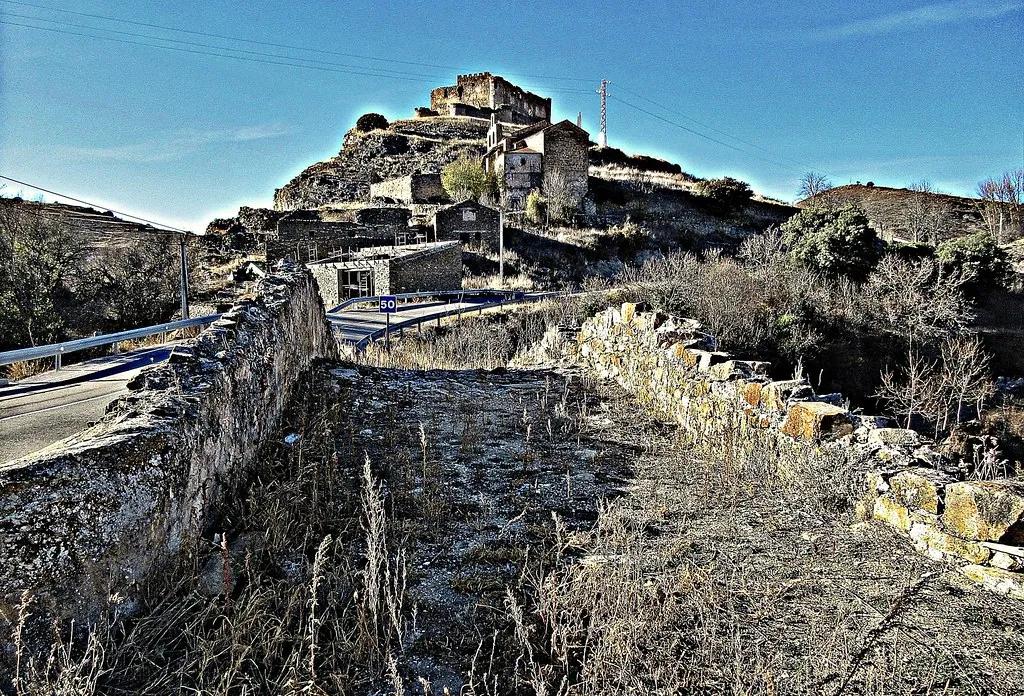
From a distance, the tower of the church of San Miguel Arcángel is easy to spot. It rises above the rest of the village and defines the skyline. Like many buildings in the area, it has been altered over the centuries, which is fairly typical in this part of Spain.
The interior is not always open. Sometimes it means asking at the town hall, or simply being there when someone happens to have a key. That kind of uncertainty is part of the experience in places like this. Things do not run to fixed timetables.
Walking through everyday life
Almarza can be covered on foot without much effort, but rushing misses the point.
The streets are narrow and straightforward. Stone walls, wooden gates, and the occasional house with an old coat of arms on its façade appear here and there. They are not everywhere, but they hint at a past where some local families held the status of hidalgos, a form of minor nobility tied closely to the land.
There are also signs of more recent changes. New windows, repaired roofs, reinforced walls. It is the usual blend found in villages that are still lived in throughout the year rather than preserved as a snapshot.
For anyone interested in how a small rural community functions, this is the kind of place where small moments keep unfolding. Someone chatting in a doorway. A tractor moving slowly through the street. A neighbour greeting you without needing to know who you are.
Paths, fields and changing light
The surroundings play a major role in any visit.
From Almarza, rural tracks lead out towards nearby villages. Many of these routes began as livestock paths and are still used for walking or moving between fields. Some run alongside pine woods and small damp areas that appear after periods of rain.
The landscape shifts noticeably with the seasons. In summer, dry tones dominate the high plains. When colder weather arrives or rainfall increases, the fields darken and patches of intense green return in certain areas.
There are no formal viewpoints or explanatory panels at every turn. Still, it only takes a short walk uphill along any of the paths leaving the village to get a clear view of the Sierra del Madero and the patchwork of fields that surrounds the area.
Food rooted in the land
Cooking in this part of Soria is direct and closely tied to the countryside. Dishes are filling, based on ingredients that reflect local life.
Roast lamb appears regularly at family gatherings or on special occasions. Seasonal stews are also common. In autumn, when conditions are right in the surrounding land, mushrooms find their way into many kitchens.
Another tradition that continues in quite a few households is the matanza, the annual slaughter and processing of a pig. From it come chorizos, morcillas, and other preparations that are then eaten over much of the year.
This is not elaborate cuisine. It is the kind of food that has long been part of rural life.
Close to Soria, but a different rhythm
One of Almarza’s advantages is its proximity to Soria. The city is a short drive away.
For those wanting to add something more urban to the day, Soria offers museums, Romanesque churches, and pleasant walks along the Duero river. The presence of the poet Antonio Machado is still felt, appearing in routes and corners across the city.
Many visitors end up combining both without much planning. A few quiet hours in the village, followed by a stroll through the provincial capital.
In the end, Almarza is the sort of place that does not try to impress. That may be exactly why it stays in the memory. Not because of a single landmark, but because of the sense of having spent time somewhere that continues to live at its own pace.