Full Article
about Ausejo de la Sierra
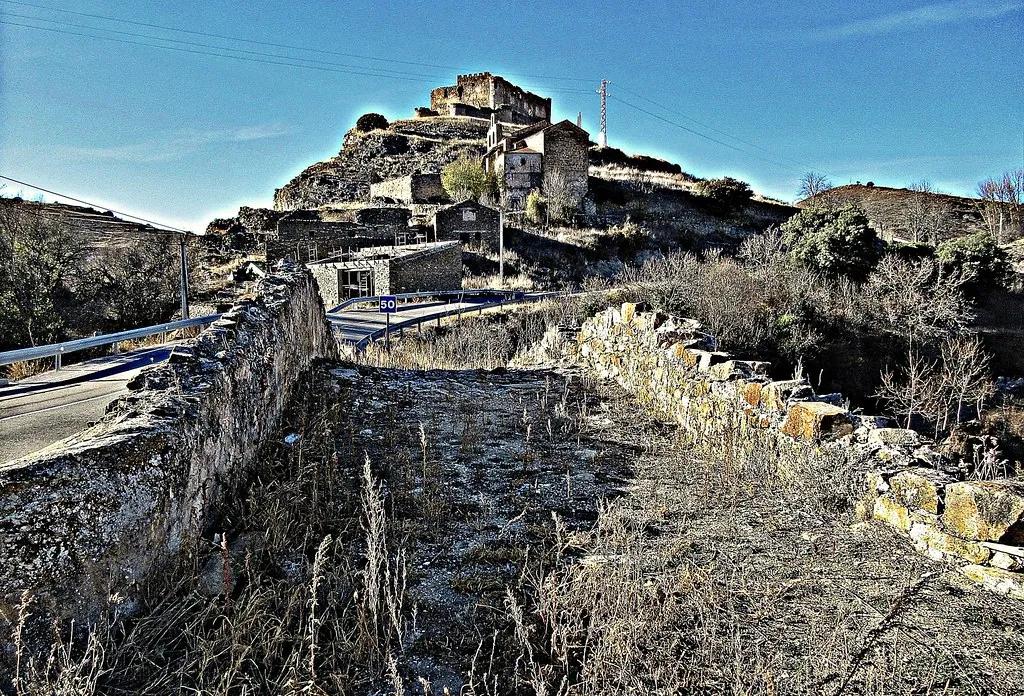
Small hillside village with valley views and traditional architecture
Hide article Read full article
Where the road slows down
On the edge of Ausejo de la Sierra, the road seems to lose its urgency. The air begins to carry the scent of resin and the landscape opens into pinewoods and gentle hills. Tourism in Ausejo de la Sierra is exactly that: arriving and easing your pace.
The village sits at around 1,100 metres above sea level, in the Tierras Altas of Soria, a sparsely populated area in the north of the province of Soria, within Castilla Leon. That altitude is noticeable. Even in summer, the air keeps a certain freshness, and when evening falls the light stretches across the stone façades, turning them a soft gold.
There are no grand monuments here, no streets filled with crowds. What defines Ausejo is quieter: a half-open door, the distant sound of a tractor, swallows cutting across the square as dusk approaches. The wind moves steadily through the pine tops, and silence settles in with surprising ease.
Stone houses on the high plain
The village as a whole is simple and closely tied to the livestock farming that has sustained this area for generations. Thick stone walls, heavy metal gates and wooden balconies shape the streetscape. In summer, those balconies often hold a few flowerpots. Between one house and the next appear corrals, barns and cobbled courtyards where past uses are still easy to read.
There is no need to search for a specific route. A slow walk through the streets is enough. Within minutes, the scale of the place becomes clear. Everything seems built with what was close at hand: stone, timber and a good deal of practical sense to withstand the long winters typical of this part of Soria.
The layout reflects function over display. Buildings cluster together for shelter, and the materials speak of endurance rather than ornament. Even on a short stroll, it is easy to understand how closely daily life has been tied to the land and to the seasons.
The church above the rooftops
At the highest point of the village stands the parish church of the Asunción de Nuestra Señora. Its origins appear to date back to medieval times, although the current building shows later alterations. The structure is sober, with simple lines, and from its surroundings you can clearly see how the houses gather around it.
Early in the morning, this part of Ausejo is usually completely still. The only sounds tend to be a car passing through the village or the wind shifting the branches of the nearby pines. From here, the relationship between settlement and landscape becomes more evident. Beyond the last roofs, the open land begins almost immediately.
The church’s position on higher ground gives it a quiet prominence. It does not dominate through decoration, but through placement. Standing there, the horizon feels close and wide at the same time.
Pinewoods, rocky outcrops and wide horizons
The countryside starts just beyond the final houses. Around Ausejo stretch undulating high plains, patches of pine forest and occasional rocky outcrops that break the horizontal line of the terrain. Limestone geology shows itself on many slopes and in small escarpments where birds are often seen gliding.
Griffon vultures are not uncommon, taking advantage of rising air currents. With a bit of luck, a falcon might also come into view. For anyone interested in birdwatching, binoculars are useful, as movement in the sky is often distant.
On clear days, from certain points around the village, other ranges of the Sistema Ibérico can be made out on the horizon. They appear as faint outlines, drawn against the sky. The sense of space is one of the defining features of the Tierras Altas. There are few obstacles to the eye, and the changing light alters the colours of the fields and pines throughout the day.
In autumn, the atmosphere shifts noticeably. The floor of the pinewoods fills with dry leaves and mushrooms begin to appear. As in the rest of the province of Soria, mushroom picking is regulated, and it is important to know the species well before collecting anything. The landscape remains the same in form, yet the textures and tones become richer and more varied.
Walking without hurry
Several agricultural tracks and traditional paths link Ausejo with other villages in the Tierras Altas. These are straightforward routes, without major changes in elevation, crossing open fields and areas of pine forest. They are suited to unhurried walks rather than demanding hikes.
Services in the village are very limited, and it is not always possible to find somewhere to buy supplies. Anyone planning a longer walk is advised to bring water and some food. The sense of remoteness is part of the appeal, but it also calls for a little preparation.
The experience of walking here is shaped by space and quiet. There is time to notice the wind moving through the grass, the shifting clouds, the occasional bird overhead. The tracks connect settlements that share similar histories and landscapes, reinforcing the impression of a region where distances are measured more in silence than in traffic.
When the village fills again
For much of the year, Ausejo maintains a very calm rhythm. In summer, however, the atmosphere changes. Around the feast of the Asunción in August, many houses that remain closed for the rest of the year open their doors for a few days. Conversations return to the streets, long meals stretch into the evening and music can be heard in the square.
In September, San Miguel is also celebrated, with a smaller and more local feel. These moments briefly alter the tempo of the village. The population increases, familiar faces reappear and the public spaces regain a livelier tone.
Outside those dates, everyday life returns to its usual quiet pattern. The contrast between festival days and the rest of the year underlines how small the community is, and how closely tied it remains to seasonal rhythms and family returns.
Before setting off
Ausejo de la Sierra is a very small place. It is sensible to arrive with the car’s fuel tank reasonably full and to bring some food if planning to spend several hours in the area.
To see the village at its calmest, early morning and late afternoon are the best times. The low light settles gently on the stone, the wind becomes more noticeable among the pines and the silence feels complete again. In those hours, Ausejo de la Sierra reveals what defines it most clearly: height, open land and an unhurried way of being.