Full Article
about La Póveda de Soria
Livestock municipality in a mountain area with dehesa landscape
Hide article Read full article
A village that appears without warning
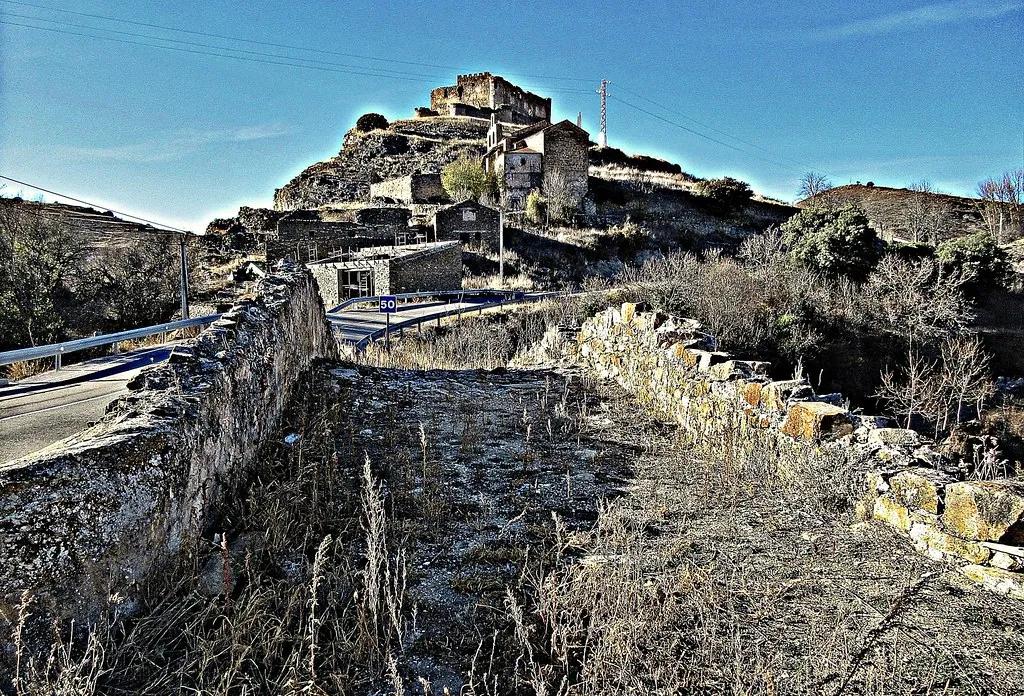
Some places feel as if they have simply been pinned onto the map and left there. La Póveda de Soria gives that impression when you arrive by road. The journey runs through pine forests and gentle bends, and then the village appears almost all at once. A small cluster of houses, dark stone walls, solid roofs. And silence, a lot of silence.
The centre does not take long to walk. In a matter of minutes, you can pass through most of it. Yet people often stay longer than expected. The appeal here does not come from a long list of sights. It comes from the atmosphere that settles in once you slow down and look around.
A small settlement in Tierras Altas
La Póveda sits in the region known as Tierras Altas, in the north of the province of Soria, close to the boundary with La Rioja. This is a landscape shaped by long winters and mild summers. The surroundings tend to dominate over the village itself.
Just over a hundred people live here. That number defines the pace of daily life. Nothing feels rushed. Some houses still show exposed stone and slate roofs, typical of this mountain area. Streets are short, sometimes sloping, and a few traditional fountains are still in use.
The parish church, dedicated to San Salvador, stands out as you walk through the centre. It is an old building, one of many constructed in the 16th century across villages in this part of the sierra. The structure is simple and solid, designed to endure rather than to impress.
The landscape sets the tone
To understand La Póveda de Soria, it helps to look beyond the village itself. It lies on the foothills of the Sierra de Urbión. That location brings extensive forests of Scots pine, open meadows and mountains that in some places rise clearly above two thousand metres.
Walking along the nearby paths reveals a landscape that feels wide and uncluttered. Views stretch easily into the distance. In autumn, the colours shift towards ochre and yellow. In winter, when snow arrives, the contrast between white fields and the dark stone of the houses becomes striking.
Early in the day, it is more common to encounter wildlife than other people. Roe deer move quietly through the area, and the sense of space becomes even more noticeable.
Paths and quiet walks
Several paths begin in La Póveda, used both for short walks and longer routes into the hills. Some follow old livestock tracks, while others lead deeper into the pine forests.
The experience here does not rely on constant landmarks or dramatic features. The appeal lies in the stillness. Wind moves through the trees, and the views open up gradually as you gain a little height. From certain points, the valley and nearby ranges come into view.
Cold months require some caution. Ice forms easily on shaded paths, and the weather can change quickly in this part of Soria. Conditions may feel calm at one moment and very different the next.
Mushrooms, wildlife and long nights
Autumn brings a noticeable change in activity. The forests around La Póveda are known for mushrooms, and many people from the surrounding area head out to search for them. Those without experience are better off observing or learning first. The forest offers plenty, but it also demands care and respect.
Wildlife remains a constant presence. Vultures can often be seen circling above the hills. At dusk, the movement of wild boar can sometimes be heard among the undergrowth.
Nightfall introduces another side of the village. In places this small, darkness is complete. Step away from the streetlights and the sky fills with stars. It recalls the kind of night sky that is often only seen far from towns and cities.
Taking the visit at the right pace
La Póveda de Soria is not a destination built around a packed itinerary. It works better as a quiet توقف within a wider route through Tierras Altas or the Sierra de Urbión.
Time here is best spent simply. A walk through the village, a short wander along one of the paths, then a pause to sit in silence. The experience may seem minimal at first glance, yet it reveals more as you settle into it.
Anyone arriving with expectations of constant activity may find it limited. Those who come with curiosity and a willingness to slow down often discover that the place has more depth than it first suggests when stepping out of the car.