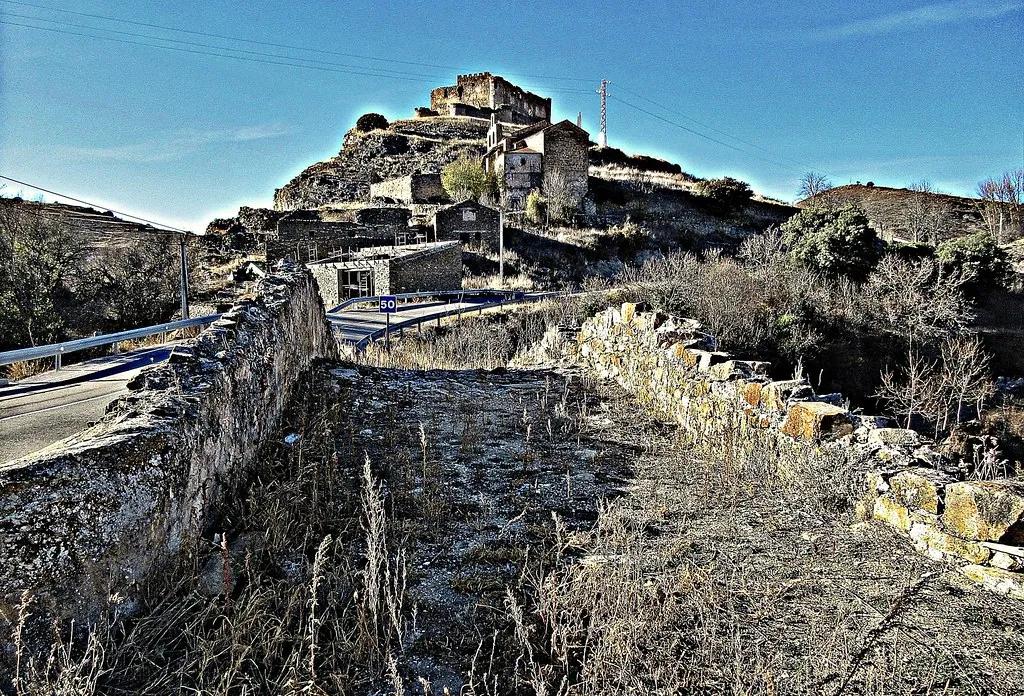
Vista aérea de Oncala
Instituto Geográfico Nacional · CC-BY 4.0 scne.es
Castilla y León · Cradle of Kingdoms

Oncala

The road to Oncala climbs past the last petrol station in Ágreda and doesn't stop. Thirty kilometres later, it arrives at a village where mobile ph...

61 inhabitants · INE 2025
1294m Altitude

Why Visit

Mountain San Millán Church (Tapestries) See the Flemish tapestries

Best Time to Visit

winter

San Millán (December) diciembre

Things to See & Do
in Oncala

Heritage

  • San Millán Church (Tapestries)
  • Shepherds' Museum

Activities

  • See the Flemish tapestries
  • Acebal Route

Festivals
& & Traditions

Fecha diciembre

San Millán (diciembre), Feria del Acebo

Las fiestas locales son el momento perfecto para vivir la autenticidad de Oncala.

Full Article
about Oncala

Mountain village known for its tapestry museum and holly groves

Ocultar artículo Leer artículo completo

The road to Oncala climbs past the last petrol station in Ágreda and doesn't stop. Thirty kilometres later, it arrives at a village where mobile phones lose signal and the air thins to mountain sharpness. At 1,300 metres, this is one of Spain's highest settlements—higher than Ben Nevis's summit—and it feels it. Even in May, morning frost sugars the stone roofs while vultures wheel overhead on thermals that haven't yet warmed the valley below.

Sixty-odd residents remain, enough to keep the bar open three days a week and the church unlocked on Sundays. They've watched neighbouring villages disappear entirely—roofless houses, cemeteries swallowed by broom—and learned to be realistic about tourism. Oncala won't entertain you. It might, if you arrive properly equipped, let you entertain yourself.

The Architecture of Survival

Stone walls here aren't picturesque; they're two feet thick because winter lasts six months. Houses huddle shoulder-to-shoulder along lanes barely wider than a tractor, their south-facing balconies painted ox-blood red against the grey. Look closer and you'll spot medieval mason's marks on doorways, and iron rings where horses were tethered when these streets echoed with hooves rather than hiking boots.

The Church of Nuestra Señora de la Asunción squats at the village's highest point, its 16th-century tower built squat to withstand winds that whistle across the Cebollera range. Inside, baroque altarpieces glimmer with gilt paint mixed using gold leaf from the Río Tinto mines. The church opens unpredictably—sometimes the keyholder's in the fields, sometimes she's not—so consider any visit a bonus rather than a guarantee.

Below the church plaza, a former schoolhouse contains something unexpected: the Museo de Tapices, housing fifteenth-century Flemish tapestries discovered in a Madrid antiques shop and traced back to Oncala's vanished monastery. How they travelled from Burgundian workshop to this mountain outpost remains speculation, but the colours—indigo blues still saturated after five centuries—suggest the monks valued beauty over practicality. Entry costs €3; ring the bell marked "Concha" and wait.

Walking Through Three Climate Zones

Oncala sits on the southern flank of the Sierra de Cebollera, where Cantabrian moisture meets Castilian dryness within a single afternoon. Walk north-east for twenty minutes and you're in Atlantic oak forest, moss-soft underfoot. Head south-west and continental pine takes over, the ground crunchy with needles. This ecological flip happens within three kilometres—closer than most Londoners travel for a pint of milk.

Marked trails exist, though "marked" stretches the definition. Red paint dashes appear on tree trunks every half-kilometre, then vanish entirely when the path crosses a boulder field. The PR-SO 72 circuit makes a manageable six-hour loop through beech woods to the abandoned hamlet of Velilla, where swallowtail butterflies patrol empty threshing floors. Download the track beforehand—Oncala's single bar has WiFi that works only when the wind blows from the south.

For something stiffer, the GR 86 long-distance path passes through the village, following medieval drove roads used by shepherds moving flocks between summer pastures here and winter grazing in Extremadura. Walking south towards Berlanga de Duero takes you across the Paramo de Layna, a treeless plateau where July temperatures still hit 25°C but you'll share the landscape only with skylarks and the occasional solar panel.

Winter transforms everything. Snow arrives by December and lingers until April; drifts can reach two metres on north-facing slopes. The village becomes a base for snowshoeing rather than hiking, though you'll need your own equipment—no rental shops here. When blizzards blow, the MU-501 road closes at the pass, sometimes for days. Locals stockpile food like siege survivors; visitors should do the same.

What to Eat When There's Nobody to Cook

Oncala itself offers no restaurants. The bar serves coffee and serves it well, but food means crisps or tinned asparagus. Instead, drive ten minutes to Muriel de la Fuente, where Casa Martín still cooks caldereta—mountain lamb stew—using animals that grazed the same slopes you walked that morning. Expect to pay €14 for portions that defeat most appetites, served with wine from vines grown at 900 metres that taste of altitude and granite.

Back in Oncala, buy cheese from María Jesús if she's home. Her flock of 80 Churra sheep produce a semi-cured queso that wins regional prizes, though she'll shrug when you mention awards. €8 buys a wheel wrapped in brown paper; it travels better than you might expect, developing character rather than mould. Bring cash—her mobile card reader relies on that same unreliable signal.

The Seasonal Arithmetic

Visit in late April for wildflowers: purple crocuses push through melting snow, and the air smells of damp earth after winter's metallic cold. May brings orchids to the hay meadows but also brings school groups from Soria on geography field trips—they crowd the tapestry museum and buy all the cheese. September offers golden beech woods with crisp mornings and warm afternoons, plus the annual sheep-shearing festival in nearby Vinuesa. October can be perfect, until the clocks change and temperatures plummet ten degrees overnight.

Avoid August unless you enjoy irony. The village's patronal festival fills streets with returning emigrants and their Madrid-registered cars, creating traffic jams incongruous in a place with sixty residents. Accommodation within 30 kilometres books solid; prices double. Better to come in March when you might share the entire mountain with one griffon vulture and a shepherd on a quad bike.

Getting Here, Staying Warm

The nearest railway station lies 65 kilometres away in Soria—two hours from Madrid on a good day, though engineering works frequently add another hour. From Soria, a rental car becomes essential; buses serve Ágreda daily but reach Oncala only on Tuesdays and Fridays, returning next morning. The final 12 kilometres twist through pine forest on a road barely wider than the hire car you'll regret not upgrading.

Accommodation means self-catering cottages, booked through the regional tourism board. Casa de la Abuela sleeps four, has underfloor heating powered by a pellet boiler, and costs €80 nightly with a three-night minimum. Bring slippers—the stone floors stay cold even when the thermostat reads 22°C. Hot water runs from a solar thermal system; cloudy days mean brief showers.

Pack for four seasons regardless of calendar. Mountain weather doesn't do gradual: sunshine can flip to sleet within half an hour, even in June. A lightweight down jacket weighs little but saves much, especially when evening temperatures drop to single figures while you're still two kilometres from the village. And download offline maps—Google's satellite view shows paths that haven't existed since Franco's reforestation programmes, while OpenStreetMap misses tracks that shepherds use weekly.

Oncala offers no epiphanies, sells no souvenirs. It simply exists, high and quiet, while Spain's coasts fill with development and its cities with noise. Some visitors find this confronting—the village reflects back their own need for constant stimulation. Others discover that after two days without notifications, the mountain begins speaking in different voices: wind through pine needles, water over granite, your own breathing grown deeper with altitude. The difference lies not in Oncala, but in what you carried up the mountain with you.

Key Facts

Region
Castilla y León
District
Tierras Altas
INE Code
42135
Coast
No
Mountain
Yes
Season
winter

Livability & Services

Key data for living or remote work

2024
HealthcareHospital 25 km away
Housing~5€/m² rent · Affordable
January Climate3.4°C avg
Sources: INE, CNMC, Ministry of Health, AEMET

Official Data

Institutional records and open data (when available).

  • IGLESIA DE SAN MILLAN
    bic Monumento ~0.5 km

Planning Your Visit?

Discover more villages in the Tierras Altas.

View full region →

More villages in Tierras Altas

Traveler Reviews