Full Article
about Rollamienta
In the Rázon valley, the very green area of "El Valle"
Ocultar artículo Leer artículo completo
The mobile phone signal dies somewhere between Soria and the sky. One moment you're scrolling through messages, the next you're staring at a landscape so empty it makes the Yorkshire Dales feel crowded. This is how Rollamienta announces itself—not with a signpost, but with technological surrender.
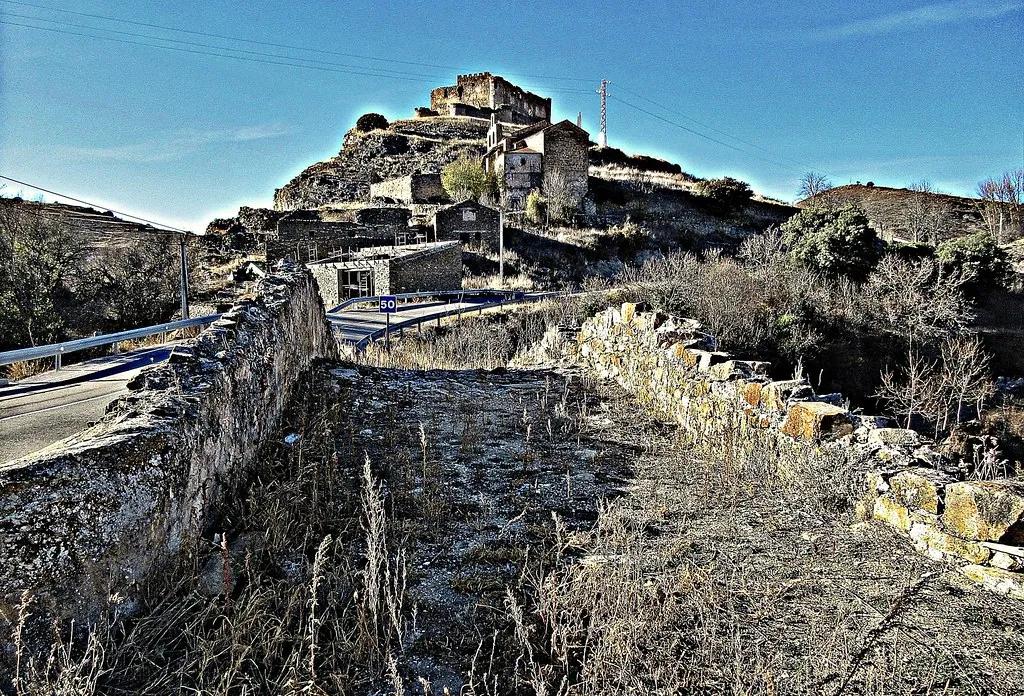
At 1,161 metres above sea level, this Castilian village doesn't so much perch as endure. Fifty souls remain, give or take, in stone houses built to withstand winters that would make a Highland crofter wince. The wind here has a name—cierzo—and it's got teeth. Even in August, when Madrid swelters at 35°C, you'll want a jumper after sundown.
The Architecture of Survival
Rollamienta's buildings tell their own story, written in thick limestone and darker granite. These aren't the whitewashed cubes of Andalucía or the pastel fantasies of Catalonia. This is architecture for people who've made peace with harsh winters and scarce resources. Walls measure half a metre thick, windows sit small and deep-set, and every dwelling once shared its space with animals—practicality trumping romance for centuries.
Walk the single main street and you'll spot the transitions. Traditional dwellings with their wooden balconies and stone-slab roofs stand beside houses where someone's installed double-glazing and satellite dishes. The church, dedicated to Saint Peter, anchors the village like a weathered ship. Don't expect opening hours—if you want to see inside, ask at the house with the green door. Someone will fetch the key, though they might finish their coffee first.
The surrounding landscape reveals its own narrative. Dry-stone walls carve the hillsides into patchwork fields, some still cultivated, others returning to wild grasses. You'll see abandoned corrals where sheep once sheltered, their roofs long since collapsed. It's not picturesque in the chocolate-box sense—this is working countryside that's seen better centuries, and wears the fact with unvarnished dignity.
Walking Into Nothingness
The real attraction here isn't something you visit—it's what you leave behind. No gift shops. No interpretive centres. Just paths that dissolve into the high plateau, where you can walk for hours and meet more red kites than people. The GR-86 long-distance trail passes nearby, though calling it a "trail" flatters what amounts to centuries of sheep, farmers, and now the occasional hiker following the same routes.
Morning walks reward early risers. Sunrise transforms the cereal fields into a sea of gold, while the Sierra de la Demanda glows pink on the horizon. But don't underestimate the terrain. What looks like gentle slopes on a map feels considerably steeper at altitude, especially when the wind decides to show off. Carry water—there's no café awaiting your triumphant return.
Birdwatchers should bring binoculars and patience. Rollamienta's position on the migratory route between northern Europe and Africa makes it a corridor for raptors. Griffon vultures circle overhead like glider pilots, while lesser kestrels hunt the field margins. In autumn, flocks of cranes pass high overhead, their bugling calls carrying for miles in the thin air.
The Seasonal Calendar
Spring arrives late and brief. April might still bring frost, but May explodes with wildflowers—purple thyme, yellow daisies, and the improbable blue of flax growing where farmers once sowed it deliberately. This is mushroom country too, though foraging requires local knowledge and permits. The golden rule: if you can't identify it with absolute certainty, admire and leave it.
Summer days shimmer with heat, but nights require blankets. The village's altitude means temperatures can drop fifteen degrees after sunset. Local families who've moved to cities return for August, temporarily boosting the population and filling the evening air with conversation. You'll hear more Spanish spoken in these weeks than the rest of the year combined.
Autumn brings the harvest and the first warnings of winter. Fields turn ochre and rust, while the surrounding oak woods blaze briefly before shedding their leaves. Winter itself arrives early and stays late. Snow isn't guaranteed but when it comes, Rollamienta becomes accessible only by 4WD or determination. The silence deepens to an almost physical presence.
Practicalities for the Determined
Getting here requires commitment. The nearest major airport is Madrid, two and a half hours away on good roads—but the last forty kilometres wind through countryside where GPS signals play tricks. Car hire is essential; public transport stops at Soria, thirty kilometres distant, and even that's a relative metropolis with 40,000 inhabitants.
Accommodation options remain limited. Rollart House offers three rooms in a converted traditional building, though booking requires persistence—owners Pilar and Miguel speak limited English but respond to determined emails. Alternatively, Soria provides conventional hotels, making Rollamienta feasible as a day trip if you start early.
Bring supplies. The village has no shop, bar, or restaurant. The last proper supermarket sits twenty kilometres away in Ágreda, so stock up before you arrive. Local restaurants exist in neighbouring villages, but they observe Spanish hours with Castilian rigour—don't expect lunch after 3:30pm or dinner before 9pm.
The Unvarnished Truth
Rollamienta won't suit everyone. Some visitors last two hours before fleeing back to phone coverage and cappuccinos. The silence can feel oppressive rather than peaceful, especially when the wind drops and you realise you can hear your own heartbeat. There's nothing to "do" in the conventional sense—no attractions to tick off, no Instagram moments unless you're unusually creative with stone walls and sky.
But for those who've grown weary of Spain's coastal saturation and city break sameness, this village offers something increasingly rare: authenticity without the performance. People here aren't living a heritage fantasy—they're getting on with lives shaped by geography and history, just as their grandparents did. The stone houses, the empty fields, the church that opens only when someone's interested—all of it forms a place that's real in ways most destinations can only simulate.
Come prepared, come curious, and come with realistic expectations. Rollamienta doesn't need visitors, which paradoxically makes it worth visiting. Just don't expect to be entertained. Entertainment here is strictly BYO—bring your own curiosity, your own capacity for silence, and perhaps a good book for when the wind howls and the sky turns the colour of wet slate.