Full Article
about Valdeprado
Almost abandoned village in the north of the province
Hide article Read full article
A village at the edge of quiet
Early in the day, before anyone passes along the local road, Valdeprado sits wrapped in a heavy stillness. The air often carries the smell of damp earth, and in winter there is a trace of old firewood. From the edge of the village, the outline of the iglesia de San Pedro comes into view. Its dark stone stands out, with a simple bell gable rising against a sky that shifts constantly across these Tierras Altas, the highlands of Soria.
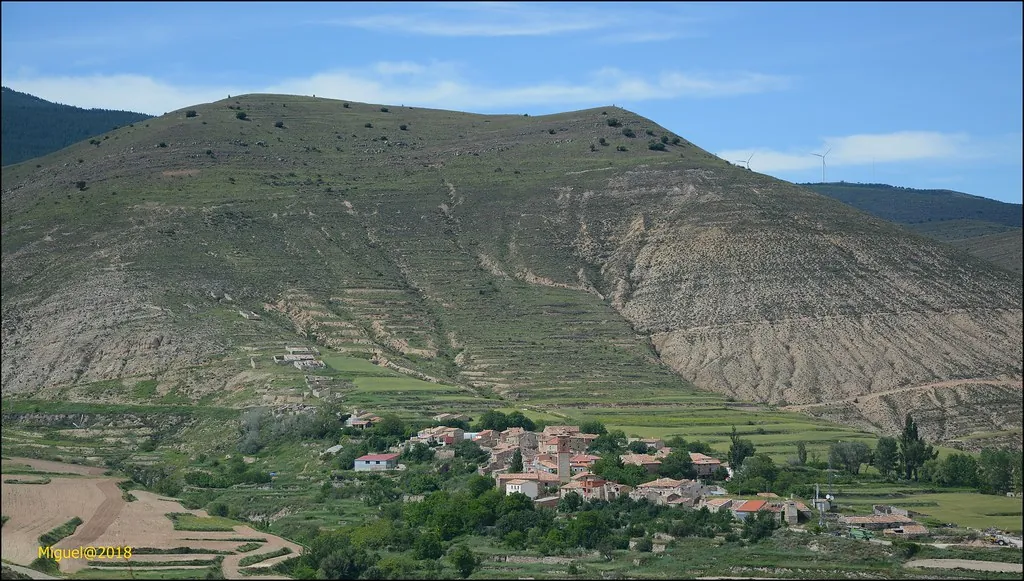
Valdeprado is one of the very small settlements scattered across this comarca. Depopulation here is obvious without needing figures. Only a handful of permanent residents remain, sometimes fewer during the colder months, and many houses stay closed for much of the year. The buildings follow traditional forms: thick stone walls, aged wooden doors, and reddish roofs that collect frost in the early hours of winter mornings.
A walk through the village does not take long. There are only a few streets, and in some places grass pushes up between the stones. Even so, the layout still reflects its agricultural past. There are animal pens, barns now used as storage, and courtyards where old tools still rest against the walls.
Stone, time and the iglesia de San Pedro
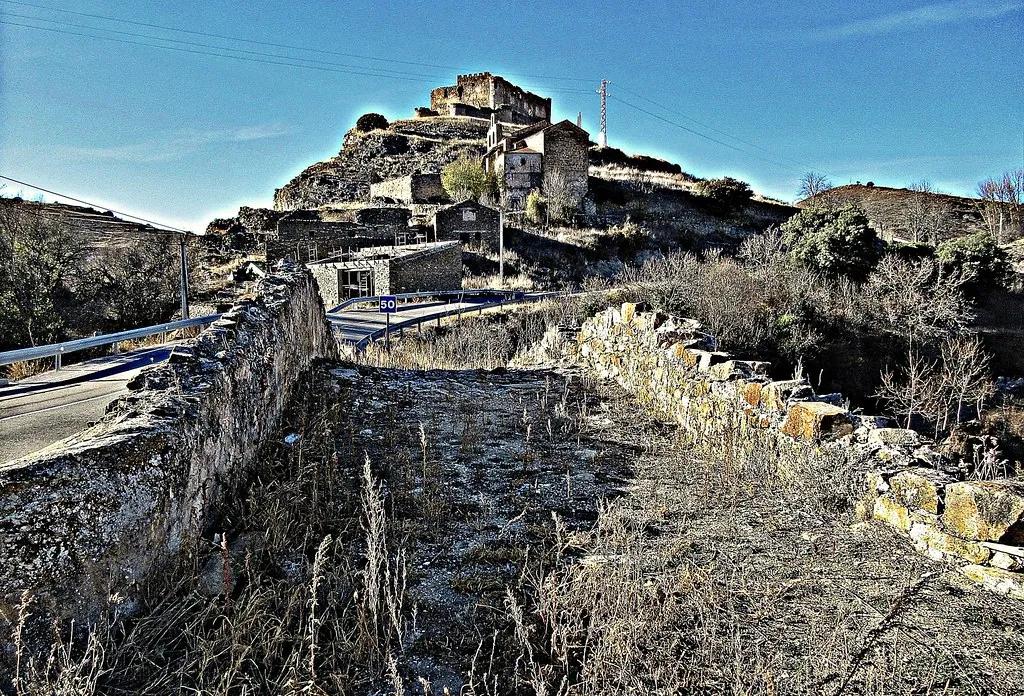
The iglesia de San Pedro stands slightly apart from part of the settlement, which is common in villages across this area. It is a modest structure, probably built between the 16th and 17th centuries. A small bell gable holds its bells above the entrance.
The door is usually closed and the interior cannot always be visited. From the outside, however, the building tells its story clearly. The stone blocks show the wear of wind and long winters, shaped over time by the climate typical of this part of Soria.
Around the church, older agricultural structures remain. Some of these are dry-stone constructions, built without much mortar. A few have partially collapsed, while others still stand despite their age. The craftsmanship is visible in the walls, where each stone was set by hand with care and precision.
Open land and long horizons
The landscape surrounding Valdeprado is wide and open. Fields of cereal crops stretch outwards, changing colour with the seasons. Dirt tracks run straight across the terrain until they fade into the distance. Here and there, a lone holm oak breaks the uniformity.
Spring brings intense green tones. The wind moves through the young grain, creating a rippling surface across the fields. In summer, the colours turn ochre, and the ground gives off the dry scent of freshly cut straw.
Birds of prey are a familiar presence. The gentle slopes generate air currents that they use to glide. With a bit of patience, it is possible to spot kestrels or kites circling high above.
Walking the agricultural tracks
There are no marked walking routes as such, but a network of agricultural tracks begins right at the village. Farmers use these paths, along with anyone travelling between nearby settlements.
They are easy to follow and the terrain is generally gentle, which makes them suitable for walking. The wind can be constant in this area, and it shapes the experience as much as the landscape itself. It is worth coming prepared with water and something to eat. Valdeprado has no shops or bars, and encountering other people during a walk is not common.
If arriving by car, it is simplest to leave it at the entrance to the village and continue on foot. Traffic is minimal, yet the streets are narrow and the surface uneven in places.
When the village stirs
Spring and early autumn tend to be the most pleasant times to visit Valdeprado. The landscape shows more variation in colour, and temperatures are moderate. Winter can be harsh, with frequent frosts, cold winds and very short days.
August sometimes brings a brief return of activity. Former residents come back for local festivities or to spend time in family homes. Outside that period, the rhythm of the village is markedly different. It is slow and quiet, with a sense that time moves at its own pace.
Before setting off
It helps to be clear about what Valdeprado is today. This is a very small village with no services. There are no places to stay or regular shops, so it is typical to base yourself in a larger town in the comarca and come here for a short visit.
Approaching it without expectations of attractions or busy schedules changes the experience. What remains is simple but distinct: old stone, open countryside and a kind of silence that has become rare in many parts of Spain.