Full Article
about La Lastrilla
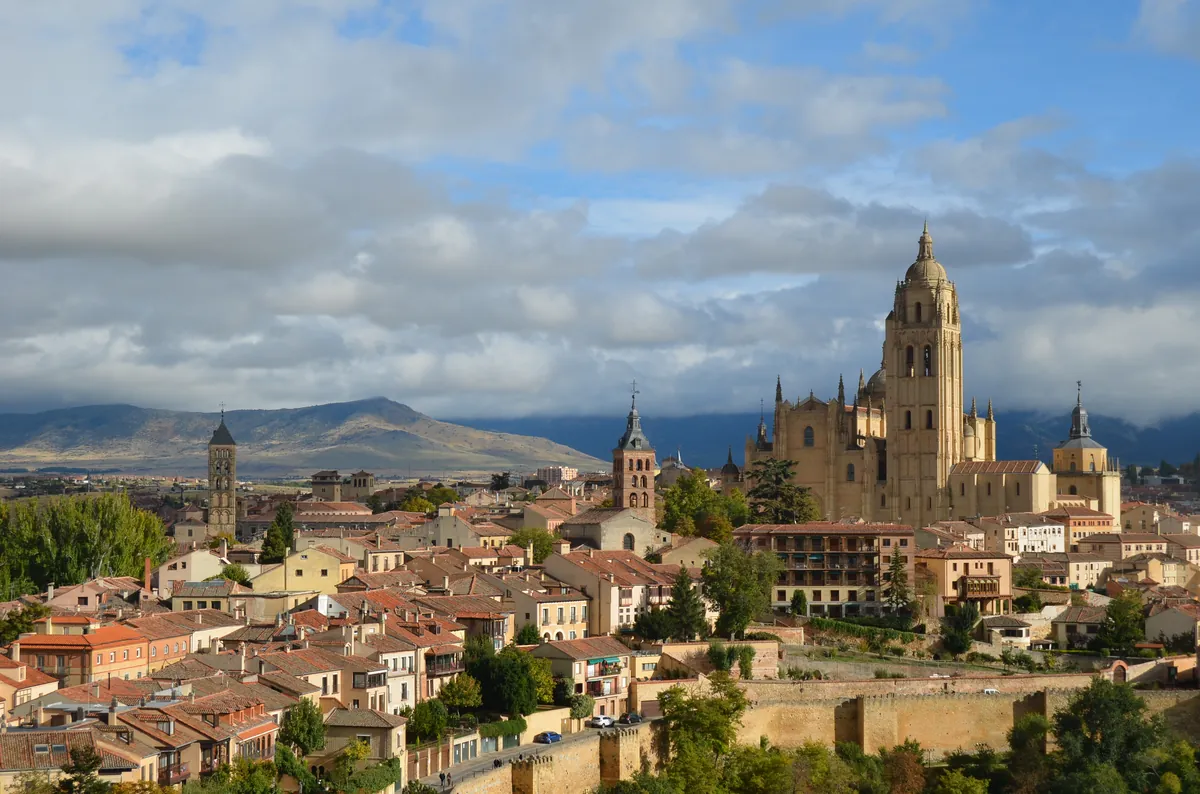
Municipality bordering Segovia; offers spectacular views of the Alcázar and the Cathedral
Hide article Read full article
Morning on the edge of Segovia
At eight in the morning, before the sun has properly warmed the Castilian plateau, shutters in La Lastrilla begin to open with a metallic rattle that echoes along the main street. Tourism in La Lastrilla, if it can be called that, starts in this quiet moment when the town still feels like itself rather than an extension of nearby Segovia.
From higher points, the rooftops of Segovia come into view, tightly gathered beside its historic walls. Between the two stretches the uneven green of the Eresma riverbank. The contrast explains much about this place. La Lastrilla has grown significantly in recent decades, yet it only takes a short walk away from the newer streets to find dirt tracks, small vegetable plots and the steady sound of the river moving through lines of poplars.
This is not an isolated village, nor entirely suburban. It sits somewhere in between, shaped by its proximity to the city while holding on to slower rhythms that become more noticeable early in the day.
Stone and silence in El Sotillo
The grey-blue granite of El Sotillo carries a distinct smell after rain, damp and slightly harsh, lingering even after the clouds clear. For years this area was tied to stone extraction, and traces of that activity remain scattered across the hillside. Large rectangular blocks lie where they were cut, some partly covered by grass, others still marked by the tools that shaped them.
Walking through this landscape, the ground can sound hollow underfoot. In the warmer months, swallows nest in some of the gaps left behind, while wild thyme grows in others, releasing its scent when stepped on. The setting has not been formalised for visitors, and that lack of intervention defines the experience. The terrain is uneven, with exposed rock edges, so it is a place to move through carefully rather than quickly.
There is no clear boundary separating path from quarry remains. Instead, everything blends into a rough, open space where past activity has simply been left in place. The quiet here feels different from that of the town, less domestic and more expansive.
Along the Eresma
The Camino Natural del Eresma begins almost without warning. The asphalt ends, a gate or dirt track appears, and within moments the poplars take over. Road noise fades quickly.
In autumn, dry leaves cover the ground and crackle underfoot. The river runs dark and slow, carrying the smell of mud and damp vegetation. Walking towards Segovia, the outline of the city gradually emerges between the trunks: first its towers, then the line of its walls.
The route itself is straightforward and mostly flat. People from La Lastrilla often use it for walking or cycling, especially towards the end of the day. After several days of rain, some sections soften and mud clings to shoes, changing the pace of the walk.
There is little in the way of signage or structure, which keeps the experience simple. The focus stays on the shifting light through the trees, the muted movement of the water, and the gradual appearance of Segovia in the distance. It is a path that connects places, but also separates them, marking the transition from town to countryside.
The quiet remains of Ojalvilla
At some distance from the current centre of La Lastrilla, beyond dirt tracks and open plots, lie the remains of Ojalvilla. What survives today are mostly low stone walls and scattered piles that barely rise a metre above the ground. It takes a moment to recognise that this was once a settlement.
In spring, the area changes noticeably. Thyme and lavender spread across the clearings, and a few old almond trees continue to bloom. Among the ruins stands what is left of a small hermitage dedicated to San Blas, with part of its arch still intact.
This is not a site prepared for formal visits. There are no marked routes or explanatory panels. Instead, it draws cyclists and walkers who arrive from La Lastrilla, often without planning to. That lack of structure helps preserve an unusual sense of quiet, especially given how close it is to Segovia.
The remains do not present themselves dramatically. They sit low against the land, easy to overlook, which makes the discovery feel gradual rather than immediate.
When the town fills again
By mid-afternoon, La Lastrilla begins to shift. Around six o’clock, cars start arriving from Segovia, and the pavements fill with school bags, small bicycles and brief conversations before people head indoors.
In the square, under the trees, older residents gather to talk or play cards while children run nearby. The smell of freshly baked bread drifts from the local bakery and mixes with the dry air of the plateau as the sun sets.
Many who live here work or study in Segovia. The journey by car is short, though traffic becomes noticeable at certain times of day. That constant movement between the two places shapes the character of La Lastrilla. It is neither fully independent nor fully absorbed, but something in between, a shifting boundary where daily life crosses back and forth.
As night falls, quiet returns quickly. From El Sotillo, Segovia can be seen lit up in the distance, a concentrated patch of light against the dark plain.
When to go
Spring and early autumn are usually the most comfortable times for walking along the Eresma riverbank. In high summer, traffic towards Segovia later in the day can slow access in and out of La Lastrilla. For those looking for stillness, early morning remains the best moment, when the shutters open and the town has not yet picked up speed.