Full Article
about La Losa
Mountain village near Palacio de Riofrío; beautiful natural setting
Hide article Read full article
A village that wakes slowly
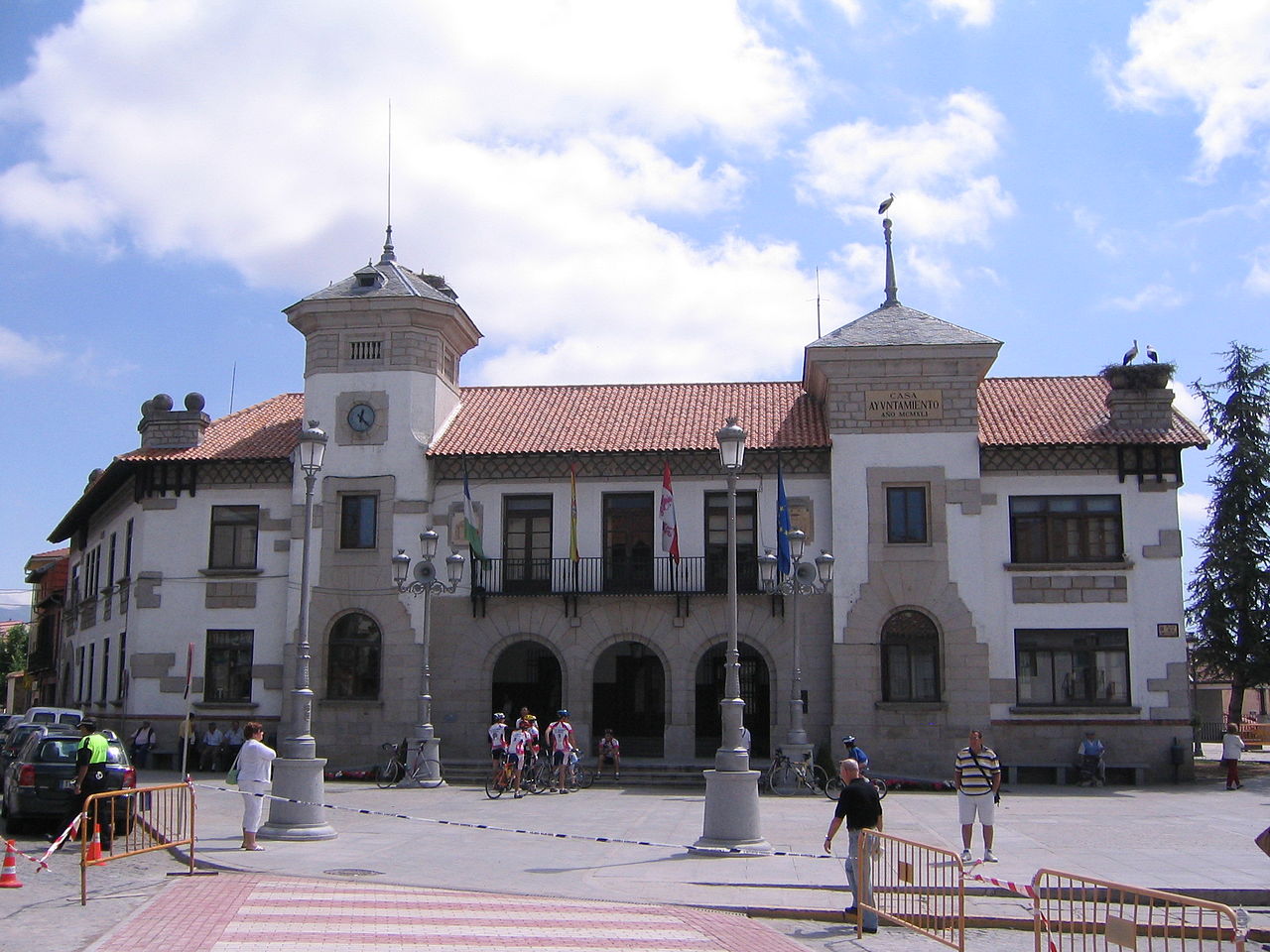
Early in the morning, when the sun still slips low through the pines, La Losa sounds like dry branches underfoot and the occasional blackbird perched on an electricity cable. Along Calle Mayor, granite façades remain cool and shutters begin to lift one by one. Visiting La Losa is much like that moment: unhurried, attentive to how light shifts across stone, and shaped by a pace that feels slightly removed from elsewhere.
The village sits at around 1,000 metres above sea level, on the edge of the Sierra de Guadarrama, within the Tierras de Segovia. It is a place of transition. To the north, the land opens into cereal fields; to the south, pine forests begin, rising gently towards the slopes that announce the mountains. The population is roughly five hundred, and that scale is noticeable. There are brief bursts of activity, when a car pulls into the square or doors open onto the street, followed by long stretches of quiet.
Around San Juan Evangelista
The centre is compact and easy to walk in a matter of minutes. Narrow streets, some still partly cobbled, turn around the parish church of San Juan Evangelista. The current building is usually dated to the 16th century and, like many structures here, it is built from granite blocks.
Its square tower, plain in style, rises above the reddish roofs. The clock marks the hours with a metallic sound that carries clearly when the square is still. Inside, the church keeps things simple: religious images, modest altarpieces, and that familiar mix of cool stone and candle wax that lingers in many rural temples.
Nearby, several older houses remain, with wooden balconies darkened over time and iron bars across the windows. In winter, it is common to see stacks of firewood piled by the doors, ready for the colder months.
Pines, tracks and open ground
A short walk is enough to leave the last houses behind and step into pine forest. The ground is covered with dry needles, and the air shifts quickly, carrying the scent of resin and damp earth, especially after rain.
A network of agricultural tracks and forest paths links La Losa with nearby villages such as Villaseca and El Espinar. Some residents use them on foot or by bicycle, while others follow them to reach small plots of land or to collect firewood.
Close to the village, there are small meadows scattered with large, rounded granite boulders where livestock sometimes graze. On clear days, gaining a little height along these tracks reveals the outline of the Sierra de Guadarrama. In winter, the view sharpens as the higher peaks are often covered in snow.
Walking the familiar routes
The routes around La Losa are not laid out as marked long-distance trails. They are the paths that local people have used over time, practical and direct. A common walk begins in the square and continues into the pinewoods along wide tracks that are easy to follow and do not involve steep climbs.
In the hills there are several springs and small water sources. One of them is known locally as the fuente del Chorrón, where water typically flows straight from the rock. It is a welcome stopping point in summer, particularly after walking under the strong sun of the plateau.
For those on a mountain bike, the forest tracks allow for longer rides that connect with neighbouring municipal areas. Car traffic is limited, though extra care is needed during periods of forestry work.
Food and festivities
The food associated with this area follows the traditions of Segovia. It is hearty cooking, suited to colder weather. Judiones, large white beans typical of the region, appear alongside slow-cooked stews and roast lamb, especially during family gatherings and local celebrations.
The main festivities are usually held around San Juan, at the end of June. At that time, the village changes rhythm. Many people who live elsewhere return, the square fills with activity, and traditional events, shared meals and evening dances take place.
Seasons in the pines
Autumn brings a different kind of movement. The surrounding pine forests attract mushroom gatherers, as níscalos, a type of saffron milk cap, often appear in good numbers if the season has been wet. Other varieties are also collected by those familiar with the area. In many nearby woodlands there are rules about gathering, so it is worth checking before heading out with a basket.
Winter is quieter. Some mornings begin with a thin layer of frost covering the village, while smoke from chimneys lingers low between the rooftops. In years when snow falls, the silence becomes even more noticeable, and the pine forests take on a muted grey-blue tone.
When to go
Spring and autumn tend to offer the most comfortable conditions for walking in the surrounding countryside, with mild temperatures and clear views towards the sierra. Summer can also be pleasant, though it is better to be out early or later in the day, as the midday sun is strong even at this altitude.
La Losa is not a place defined by major monuments. What it offers is quieter and more gradual: the feel of granite under changing light, the scent of pine after rain, and the steady rhythm of a small village on the edge of the Sierra de Guadarrama.