Full Article
about Otero de Herreros
Historic mining town at the foot of the sierra; known for its deposits and landscape.
Hide article Read full article
Getting there and first impressions
A trip to Otero de Herreros starts with the car. From Segovia it is about twenty kilometres along the SG‑612. The approach crosses the railway line and a canal before a roundabout marks the entrance. Parking is usually straightforward on the main streets, although in summer spaces fill up sooner than expected. An early arrival makes things easier.
The village sits at over 1,100 metres above sea level and has roughly a thousand residents. It is not set up as a tourist destination. Most people stop briefly, take a short walk, then continue towards the nearby mountains.
A compact village to explore on foot
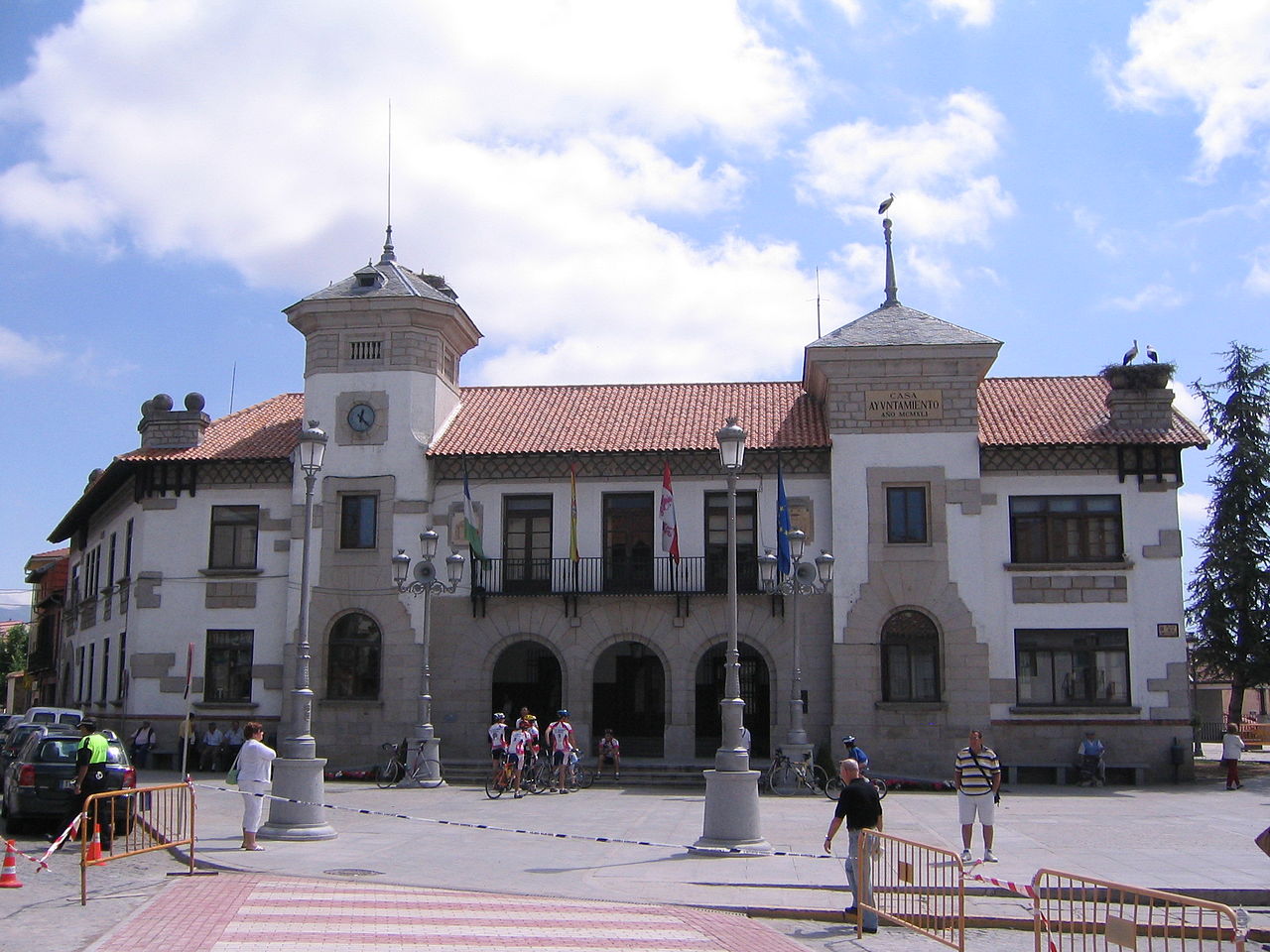
The centre is small and easy to cover on foot. Streets alternate between flatter stretches and others that climb gently towards the slopes. There are no large squares or long promenades. Visitors tend to leave the car near the centre and move around on foot.
The houses follow the typical pattern of this part of Castilla y León. Granite stone walls, pitched roofs and brick chimneys dominate the streetscape. Nothing stands out as particularly ornate. This is practical mountain architecture, built to cope with long winters rather than to attract attention.
The heart of the village
The Iglesia de Santos Justo y Pastor marks the centre of Otero de Herreros. Like much of the village, it is simple in appearance. Inside there is a wooden altarpiece with limited decoration. The building still functions more as a gathering point for locals than as a visitor attraction.
Several old fountains appear along the streets. Some still run on certain days. They are not signposted or arranged into any kind of route. They remain in place because the village continues to use them, which gives them a quiet, everyday presence rather than a curated one.
Into the pines and hills
The real interest lies beyond the built-up area. The municipality extends deep into the pine forests of the sierra. Scots pine is the dominant tree, alongside areas of resin-producing pine. Oak trees appear in between, adding variation to the landscape.
Marked paths begin in the village and lead into the forest. These routes are straightforward rather than technical, although a map or GPS is useful if heading further out. Some sections climb between large granite blocks, and higher points open views across the Segovian plain.
Forest tracks are also widely used by cyclists. Some stretches are broad and covered in gravel, while others are rougher underfoot. There is no traffic, but the terrain changes frequently, which keeps routes from feeling uniform.
Autumn draws people looking for mushrooms. Níscalos are common in the pinewoods. Other species grow here as well, and not all are safe to eat, so knowledge matters when collecting.
Local festivities and food
The main fiestas usually take place in August. These include processions, music and activities organised by local residents. During these days the population increases as people return to the village to spend time with family.
A smaller celebration often follows in September. It focuses more on religious events and a few activities in the square.
Food here follows familiar Castilian lines. Roasted meats, judiones and local cured meats appear when available. There are no surprises, just the kind of cooking associated with the region.
A straightforward reason to visit
Otero de Herreros suits those interested in walking through pine forests close to Segovia. It works well as a day trip. Anyone looking for a large historic centre or a long list of sights will not find that here. The best approach is simple: arrive early, park without rushing, and head out into the hills. That is where the place makes sense.