Full Article
about San Cristóbal de Segovia
A residential municipality very close to Segovia; excellent views and services
Ocultar artículo Leer artículo completo
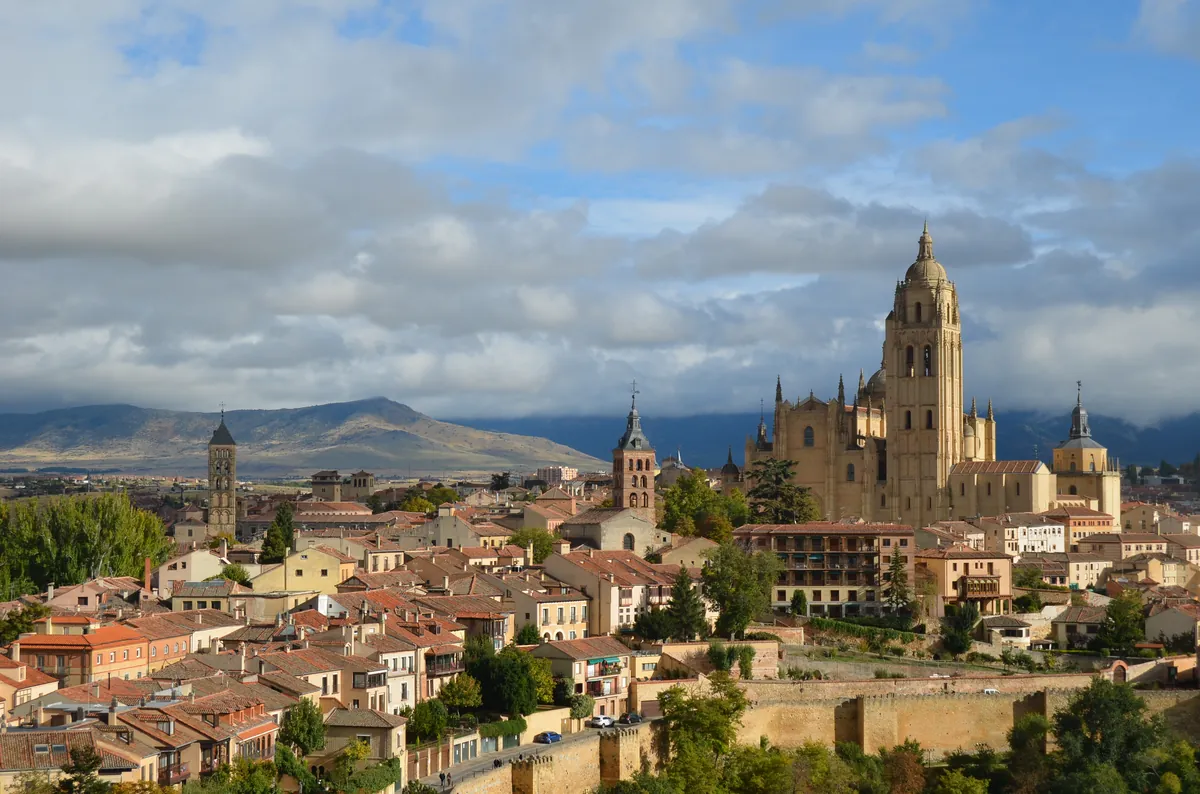
The morning bus from Segovia drops you at 1,074 m, high enough for the air to feel thinner and the cathedral towers to look almost level with your feet. San Cristóbal de Segovia doesn’t shout for attention; it simply hands over the keys to a quieter altitude and lets the city glitter below like a model village.
Why villagers call it “the balcony”
Most visitors race up the A-601, see the aqueduct, eat cochinillo and leave. Stay five minutes longer and you’ll notice locals pointing not at Segovia’s stone but at the sky above it. From the mirador outside the parish church of San Cristóbal Mártir the whole basin snaps into scale: the Sierra de Guadarrama snow line to the north, the cathedral dome dead centre, the Roman water bridge just visible if the light is clean. Photographers turn up at dusk with long lenses; estate agents turn up the following morning. The view is the village’s main export and, unlike the monuments below, it costs nothing.
The church itself is modest—rough masonry, a single nave, a tower rebuilt after lightning in 1917. Step inside and the temperature falls five degrees; stone floors echo like a school corridor. There are no audio guides, no ticket desk, just a printed board noting that the baroque altarpiece was paid for by shepherds’ tithes. When the bell strikes noon the sound ricochets across pine-covered ridges that separate Segovia from the plains of Old Castile.
Altitude changes everything
At 1,074 m winters arrive early. The first snow usually dusts the rooftops before Halloween and can linger until March; side streets become toboggan runs and the village WhatsApp group buzzes with 4×4 owners offering lifts to the supermarket. Summer, by contrast, is a relief. While Segovia’s cobbles bake at 35 °C, San Cristóbal sits in its own micro-breeze. Evening temperatures drop to 17 °C—perfect for sitting outside Bar Cristóbal with a caña while the city below still radiates heat like a pizza oven.
The altitude also rewinds spring. Cherry orchards flower two weeks later than in the valley, so if you’ve missed the pink blossom in the UK, you still catch it here in late April. Autumn is equally extended: oak and beech on the higher slopes keep their copper colour well into November, giving walkers a second shot at those calendar photos.
Walking without way-markers
San Cristóbal is not on the Camino and that suits the village fine. A lattice of farm tracks heads north into the Valsaín pine forests, used mainly by loggers and mushroom hunters. One easy loop starts at the cement works on the western edge, follows a stone drovers’ road for 4 km to the abandoned charcoal platforms, then drops back past allotments where residents grow runner beans against the wind. Total ascent: 150 m. Total traffic: zero. Sturdier boots can link up to the GR-10 long-distance path, but check weather before you set off; cloud can roll in from the Sierra faster than you can say “waterproof”.
If you prefer two wheels, the local cycling club marks a 25-km circuit every Sunday morning: tarmac to the Roman bridge at Puente de San Juan, then gravel through holm-oak pasture back to the village square. Mountain bikes can be hired at Hotel Los Arcos for €18 a day—cheaper than Segovia’s old-town shops and the staff will lend you a paper map that actually corresponds to the trails.
A bedroom with parking
British visitors tend to treat San Cristóbal as a cheaper, quieter base camp. A double room in the small hotel above the bakery costs €65 in mid-week, half the price of equivalent accommodation inside Segovia’s walls, and the underground car park is free. The C-8a bus reaches the aqueduct in nine minutes; taxis back after midnight average €12, still less than the city’s surcharges. Families rent stone cottages on Calle Real for the garden space—children kick footballs along the lane while parents plan tomorrow’s assault on the Alcázar without worrying about blue zones or coach parties.
The downside is what you give up. Apart from the weekend roast houses, the village eats early and closes early. The Eroski supermarket shutters at 21:30, the cash machine inside with it, and Sunday trading is still a novelty rather than a right. Night owls end up in the one late bar, a neon-lit place showing La Liga replays; conversation stops when someone’s cousin walks in. If you want flamenco, craft beer or rooftop terraces, sleep in Segovia instead.
What lands on the plate
Castilian cooking here is built for altitude. Lunch menus start with judiones—buttery beans the size of 50-pence pieces—then move to cordero lechal, lamb so young it still fits the roasting tin. The local twist is the wood-fired oven at Mesón de San Cristóbal; oak from the nearby forest gives the meat a faint campfire note you won’t taste in city restaurants. Not everything is nose-to-tail: Bar Cristóbal’s grilled pork pluma is essentially a posh bacon steak, and the half-ración system lets cautious eaters try two dishes without waste. Vegetarians get the usual tortilla or roasted peppers; vegans should probably self-cater.
Pudding is punch segoviano, a squared-off slice of custard set between brandy-soaked sponge. Panadería Reyes sells it by weight; 100 g costs €1.80 and survives the flight home if wrapped in a tea towel. Order it with a cortado and the baker will ask whether you want the top caramelised—say yes; the blow-torch adds the same burnt-sugar bitterness as a good crème brûlée.
When the fiesta starts
San Cristóbal’s big day is 27 July, when the statue of the patron saint is carried uphill to the church. The procession begins at 11:00 but the serious business is the night before: brass bands, foam cannons for children, and a street dance that finishes only when the wine runs out. Visitors are welcome; bring earplugs and a seat cushion. September brings the romería to the Virgen de la Fuencisla chapel on the ridge—more sedate, more flowers, same ham sandwiches. In December the council strings LED snowflakes across every balcony; combined with real frost the effect is oddly Nordic, like stumbling into a Ystad crime drama.
How to get here, and when not to
From Madrid-Barajas take the direct Airport-Segovia bus (1 h 20 min, €14.50) then a taxi to the village for €12. Trains from Chamartín reach Segovia-Guiomar in 28 minutes but you still need a cab uphill; there is no railway to San Cristóbal itself. If you hire a car, the A-601 is dual-carriageway almost to the village exit—no white-knuckle mountain road—but remember to fit winter tyres between November and March; Guardia Civil checkpoints appear the morning after the first snow.
Avoid August weekends when Segovia overflows and the village fills with second-home owners from Madrid. Accommodation prices jump 30 per cent, the bakery queue snakes round the corner, and the mirador turns into an Instagram catwalk. Late March can be perfect: almond blossom, crisp light, empty paths—and the punch segoviano still feels seasonally appropriate.
San Cristóbal will never make the bucket list. It offers altitude instead of monuments, pine scent instead of tapas tours, and a view that costs nothing but the bus fare. Use it as a lens: the city looks better from up here, and you might finally understand why Castilians say the best thing about Segovia is leaving it—then looking back.