Full Article
about Santo Domingo de Pirón
In the Pirón river valley; a place of outlaw legends and nature
Hide article Read full article
A Slow Corner of the Tierras de Segovia
There are villages you drive through and immediately sense that time moves differently there. The kind of place that feels a bit like stepping into your grandparents’ house, where things look much as they did twenty years ago. Tourism in Santo Domingo de Pirón sits firmly in that category.
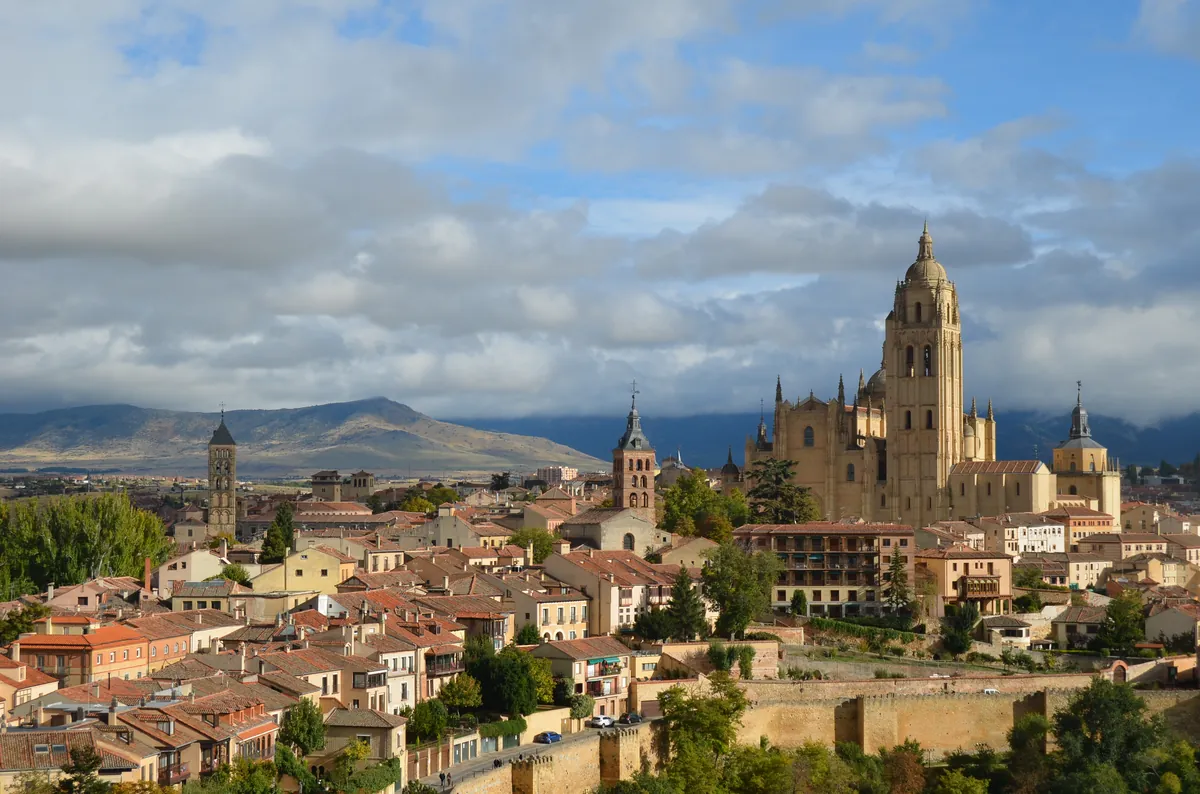
This small village in the Tierras de Segovia has just over fifty residents. Silence carries weight here, almost as much as the landscape itself. It lies a short distance from the city of Segovia and fairly close to the first slopes of the Sierra de Guadarrama, part of the Sistema Central mountain range. The setting blends open meadows with patches of oak and holm oak woodland.
It is not a dramatic or theatrical landscape. There are no vertiginous cliffs or headline-grabbing landmarks. Instead, it resembles the sort of calm desktop background you choose when you need to concentrate: wide fields, discreet streams and a clear horizon stretching without interruption.
A Village You Can Cross in Ten Minutes
Santo Domingo de Pirón is small enough to understand at a glance. In ten minutes on foot you have a good sense of how the place works. Short streets thread between houses built of stone and adobe, some carefully restored, others carrying the visible marks of long use.
Door lintels carved with dates sit above old entrances. Wooden balconies project over narrow lanes. Walls seem to have learned how to live with the Segovian winter. Nothing feels arranged for effect. There is no sense of façades designed for photographs. Rather, everything appears to remain because it has always been there.
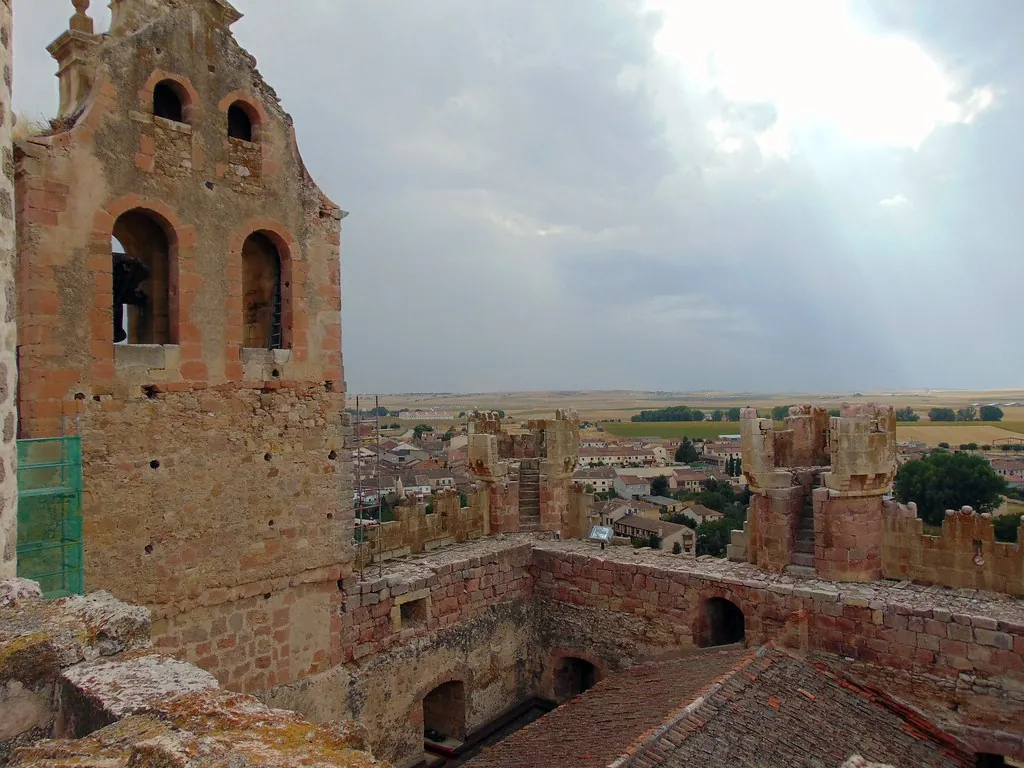
The parish church, with its simple bell gable, is visible from almost anywhere in the village. It acts as a point of reference in the same way a tower or skyscraper might in a city. Look up and you know where the centre is. The interior opens at specific times, so if curiosity gets the better of you, the usual approach is to ask a neighbour.
There are no grand monuments or headline attractions. The appeal lies in the rhythm of the streets, the texture of the buildings and the feeling that daily life continues at its own pace.
Open Countryside and Old Paths
If you make the journey here, the interest does not stop at the village boundary. It extends into the surrounding countryside.
Paths lead out of Santo Domingo de Pirón in several directions. These are traditional routes, used for years by shepherds and farmers. Do not expect information panels every hundred metres or heavily signposted trails. It feels more like setting off for a walk in the hills behind a friend’s village: clear tracks, but with minimal instructions.
In spring the meadows shift noticeably in colour. Wildflowers appear and the green deepens across the fields. Small streams that flow down towards the Pirón river create quiet pools where the only sounds are running water and the occasional bird. They are not spots for swimming or large picnics. They are places to pause for five minutes, take in the stillness, and move on.
From some of the low rises near the village, the view opens towards the Meseta, the vast central plateau of Spain, and towards the mountains of the Sistema Central. There are no constructed viewpoints, no railings or explanatory boards. You simply climb a little and, almost without warning, the landscape spreads out before you.
The effect is understated. The reward comes from noticing space, distance and the gradual change in terrain between plateau and mountain foothills.
Raptors Overhead and Dark Skies at Night
The area often sees a fair amount of movement from birds of prey. With a little patience, red kites or common buzzards can be spotted circling above the fields. Occasionally, and with some luck, a larger species may cross the sky.
Watching them requires calm. It is something like fishing, but with your eyes turned upwards. A pair of binoculars and a stretch of waiting are usually enough.
After dark, the atmosphere shifts again. Light pollution is minimal. The sky feels expansive, the kind that prompts a reminder that in cities we rarely look up for long. Here, the absence of artificial light makes the night itself part of the experience. The stars do not compete with streetlamps or illuminated shop fronts. They simply occupy their place above the fields.
Eating in the Area
Within Santo Domingo de Pirón itself, there is very little infrastructure aimed at visitors. That is simply the reality of a village of this size.
It is common to head to nearby villages if you want to sit down for a proper meal. In this part of Segovia, hearty dishes remain the standard. Roast lamb and cochinillo, the region’s famous suckling pig, are typical choices. Judiones, large white beans cooked into substantial stews, feature prominently, as do local cured meats that are more filling than a light city supper.
If the plan is to spend a few hours walking in the countryside, bringing something simple to eat is also an option. A sandwich tends to taste better here, perhaps because there is no traffic noise, no queues and no rush pressing in from the edges.
A Place That Does Not Pretend to Be Anything Else
Santo Domingo de Pirón is not a destination of packed itineraries or major monuments. It works more as the kind of village you visit for an afternoon. You take a long walk, wander along the short streets and, before you realise it, you have spent an hour looking at the landscape without doing anything in particular.
At times, that is exactly what is needed. A small, quiet place that is honest about what it is. There is no attempt to sell an experience larger than the village itself. What you find is open countryside, a handful of streets, a church that marks the centre and a horizon that remains clear.
In the Tierras de Segovia, near the slopes of the Sierra de Guadarrama and within reach of Segovia city, Santo Domingo de Pirón offers something simple: space to slow down and let the day unfold at its own pace.