Full Article
about Trescasas
Residential town at the foot of Peñalara; gateway to the National Park
Hide article Read full article
On a cold winter morning just outside Segovia, sunlight filters through the pines around the square in Trescasas, casting golden patches across grey stone. The air carries the scent of recently burnt wood. From certain points in the village, the outline of the sierra appears, sometimes with a strip of mist clinging to its slopes. Tourism in Trescasas often begins with that feeling: being close to the city, yet clearly beyond its noise.
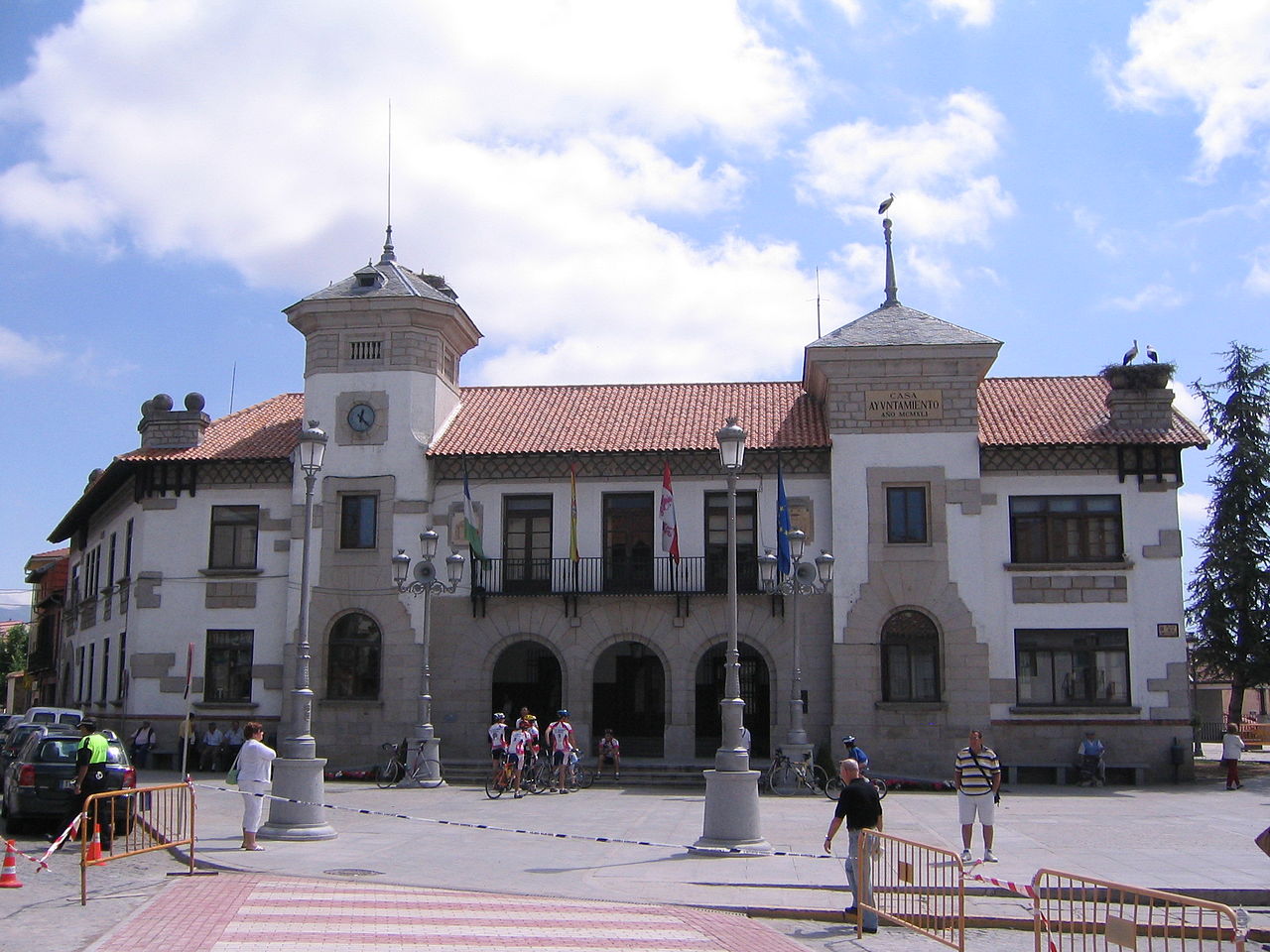
Trescasas lies just over ten kilometres from Segovia, in the stretch of land linking the city to the Segovian side of the mountains. A little over a thousand people live here, spread across streets that rise gently towards higher ground and others that open onto farmland. The old centre keeps a restrained architectural style, with stone walls, small windows and curved clay-tiled roofs. Some balconies still hold flowerpots or lines of washing that move with the wind descending from the sierra.
The parish church, dedicated to Nuestra Señora de la Asunción, appears suddenly between the houses, its brick bell tower standing out against the muted tones of the village. The walls show a mix of older stone and later additions, something commonly seen in churches across this region.
Streets that follow a slower rhythm
The village centre is compact. Calle Mayor connects to small squares and corners where, at certain times of day, especially mid-morning or late afternoon, it is common to see neighbours sitting in the sun, leaning against a wall or talking without hurry.
Daily life follows a rhythm familiar in villages near Segovia. People head out to walk along the surrounding paths, cars come and go towards the city for work, and weekends bring a noticeable increase in visitors looking for mountain air without travelling too far.
The older houses make clear how building adapted to the cold: thick walls, small openings and heavy doors. In winter, once evening falls, the village becomes notably quiet.
Paths through pines and open ground
The landscape shifts quickly once you leave the last houses behind. Within a few minutes on foot, open pinewoods appear, along with meadows where cows and sheep are often seen grazing.
Most outings here follow agricultural or forest tracks. They are not high mountain routes, but some stretches include slopes and uneven ground. From several open spots there are clear views of the Sierra de Guadarrama, with the straight lines of firebreaks marking the hillsides.
Each season brings a different texture. In spring, the edges of the paths fill with small flowers and tall grass. In autumn, the pine forest floor crunches underfoot. In summer, the sun can be intense in areas without shade.
One practical note stands out. During colder months, the wind coming down from the sierra feels stronger than it seems in the village itself. Even on clear days, an extra layer is worth bringing.
Festivities and familiar flavours
The main celebrations take place in August in honour of Nuestra Señora de la Asunción. During those days, the pace of the village shifts. Processions, music and shared meals bring together year-round residents and families who return for the summer.
In September, further festivities are held for the Virgen de los Remedios, usually with a quieter atmosphere.
Local cooking reflects the wider province. Dishes such as judiones, large white beans typically cooked with cured meats, are common. Roast pork appears at celebrations, and hearty stews become more frequent as temperatures drop. The proximity to Segovia means many visitors combine a trip to Trescasas with a traditional meal elsewhere in the area.
Between the mountains and the city
One of Trescasas’s defining features is its location. A short drive leads to La Granja de San Ildefonso, where the palace gardens and fountains create a clear contrast with the village’s restrained character.
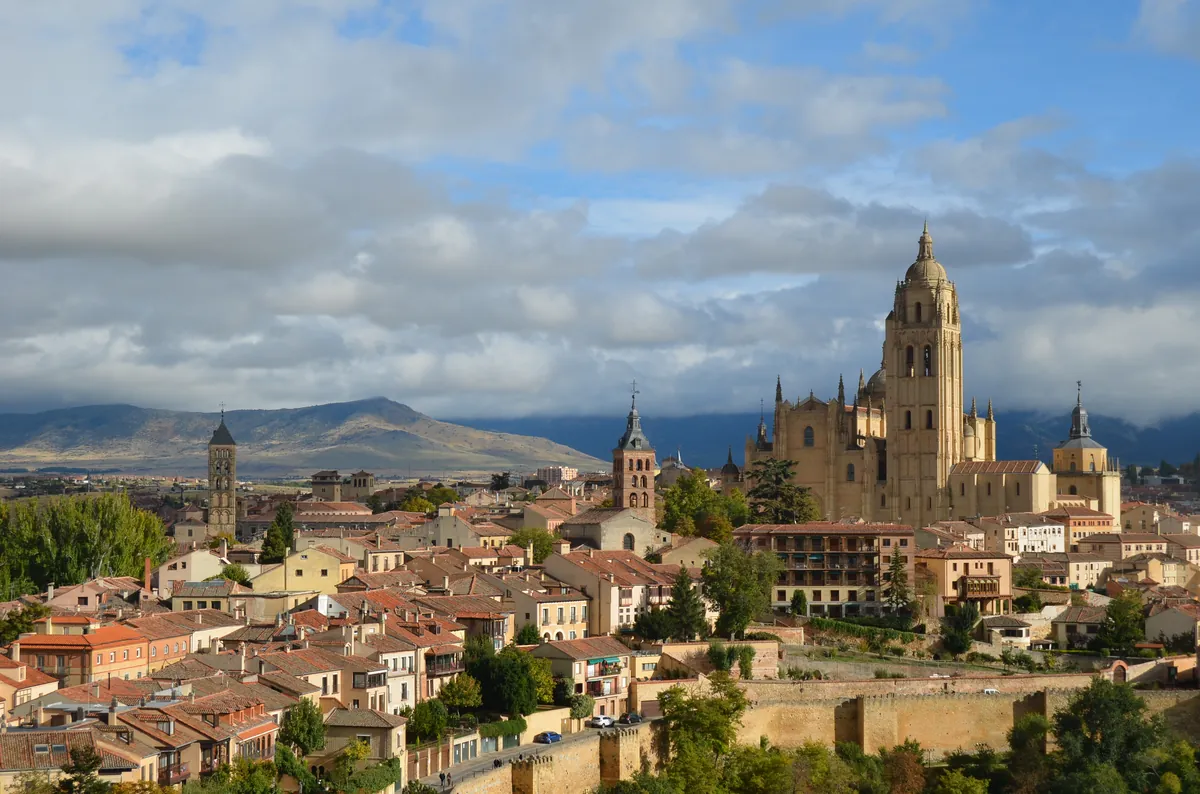
In the opposite direction lies Segovia, its skyline shaped by the Roman aqueduct and the Alcázar.
The Puerto de Navacerrada, higher up in the sierra, is also within reach. There, both the landscape and the temperature change noticeably. In winter, it is sensible to check road conditions if there has been snowfall.
A small place without embellishment
Trescasas does not revolve around major monuments or constant tourism. What it offers is more understated: paths leading out from the village, the scent of pine when the sun warms the ground, and the steady presence of the mountains in the background.
At weekends, arriving early in the morning makes a difference. Later on, more cars begin to arrive from Segovia. Early in the day, the village remains half quiet, with little more than the sound of wind moving through the pines.