Full Article
about Valdeprados
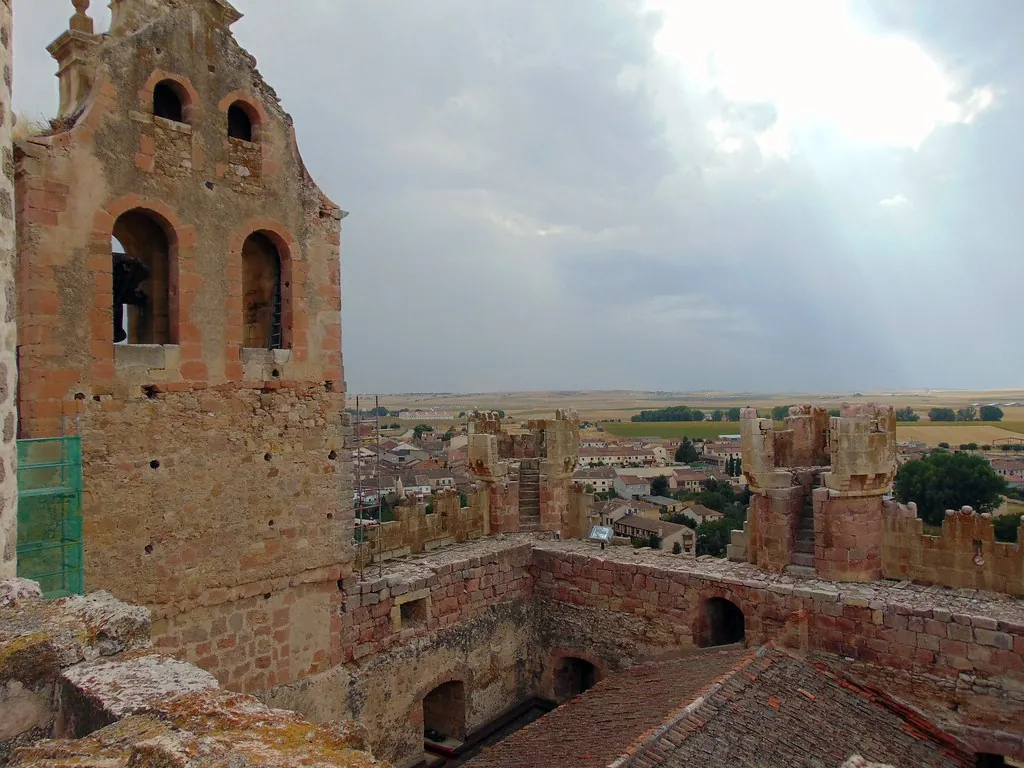
Small village with a medieval tower; near the Risca de Valdeprados
Hide article Read full article
First impressions on red earth
The first glimpse of Valdeprados is often a cluster of stone houses set against reddish soil that turns almost copper at dusk. As the sun drops towards the Sierra de Guadarrama, the façades take on a warmer tone and the village settles into a quiet that arrives without warning. Perhaps a single car passes slowly. A wooden door closes with a dry, hollow sound. Little else disturbs the air.
From the small plaza, a short street leads towards what was once the main access route. The ground still bears uneven marks, traces of carts and animals that used this approach for generations. These details are easy to miss, yet they frame the village as a place shaped by routine movement rather than by grand events.
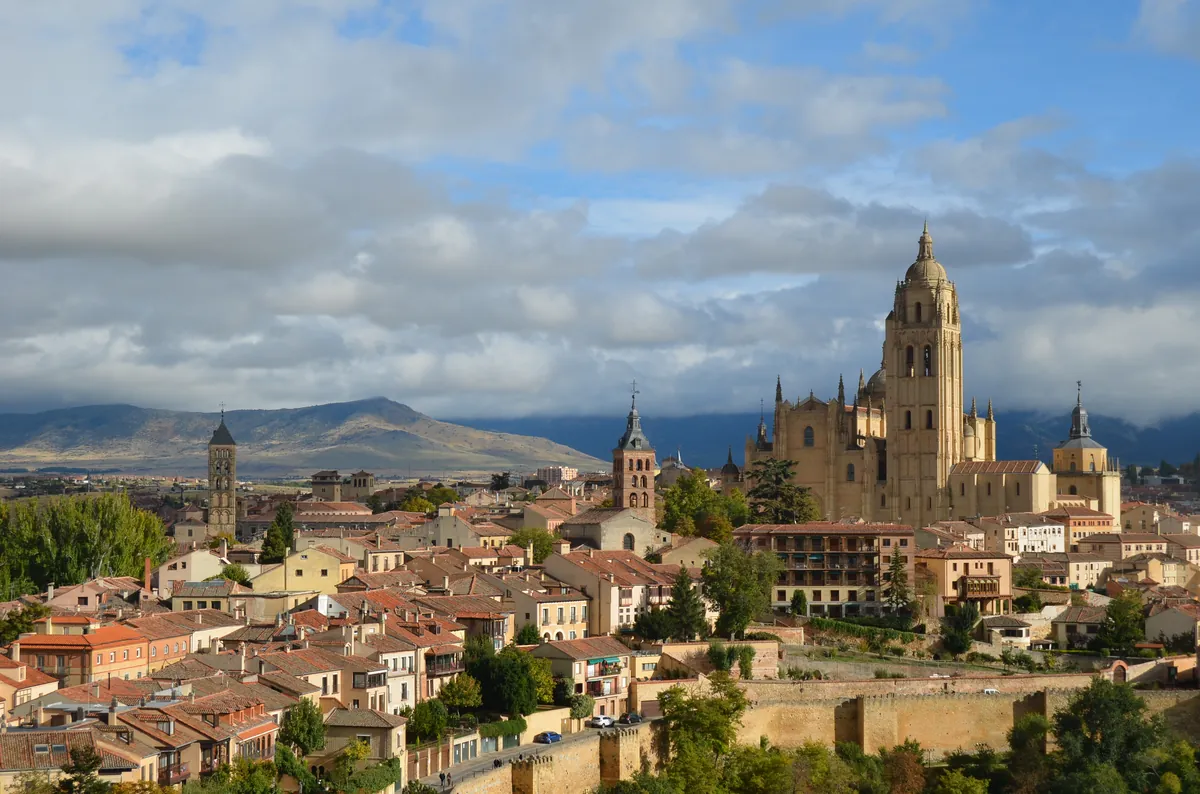
Valdeprados stands at around 980 metres above sea level, on slopes that look towards the Sierra de Guadarrama, within the Tierras de Segovia in Castilla y León. For much of the year its population hovers around 60. The layout is compact. Narrow streets follow long-established lines, and stone houses sit close together. The church of San Juan Bautista, usually dated to the 16th century, is visible from several points. Its tower is not especially tall, but it defines the skyline as you arrive by road.
Open meadows and shifting light
Beyond the last houses, open meadows begin. Sheep or horses often graze there, and further out patches of pine forest thicken as they extend northwards. Dirt tracks link fields and low, rounded hills from which the view stretches a long way, particularly on clear winter days when the air feels sharper and cleaner.
There are no prepared viewpoints or explanatory panels. The landscape reveals itself gradually, as a path rises slightly or curves between plots of land. The sense of space builds step by step rather than all at once.
Seasonal change is obvious. In spring, green dominates almost everything in sight. By late summer the fields look harsher, yellow tones replacing the earlier freshness and a fine dust settling on the tracks. Winter mornings often bring frost, especially in lower areas, where the cold lingers longer before the sun reaches it.
The scenery here does not rely on dramatic features. What stands out is the light. In the morning the sun enters low from the east and lengthens the shadows of the pines. Later in the day the tones turn more golden, and when a car passes the dust from the road hangs briefly in the air before dropping again.
Stone streets and kitchen gardens
The architecture follows patterns common in this part of Segovia province. Rubble stone walls support pitched roofs covered with curved tiles, and wooden doors have darkened over time. Some houses have been restored with that original structure in mind. Others remain much as they were decades ago, with little visible alteration.
Next to many homes there are small kitchen gardens enclosed by wire fencing or low stone walls. Even in colder months, tools can be seen leaning against façades or stacks of firewood neatly arranged by the entrance. These are modest details, yet they suggest that Valdeprados is more than a weekend retreat. Daily life continues here through the year.
The streets are not wide. They invite slow walking rather than hurried movement. Stone underfoot and the close alignment of façades reinforce the sense that the village has grown according to practical needs, without dramatic redesign.
Rural tracks to neighbouring villages
Several agricultural tracks lead out from Valdeprados towards nearby settlements, including Lastras del Pozo and other small villages in the area. Many follow old routes that for centuries served to move livestock or connect scattered plots of land.
Signage is limited. After rain, certain stretches can turn into deep mud that clings to shoes and seems to grow heavier with each step. Anyone planning to walk these paths is better off with sturdy footwear suited to the countryside. In summer, the central hours of the day bring stronger heat, and shade is scarce along exposed sections.
These routes are part of the working landscape rather than designed trails. Their appeal lies in continuity. Fields, low hills, pine stands and open sky repeat in varying proportions as you move further from the village.
Birds overhead, wind in the pines
Patience brings subtle rewards. Small birds are easy to hear among hedgerows and field boundaries. On clear days birds of prey can be seen circling high, taking advantage of air currents rising from the meadows below.
Wind is a constant presence across the plateau. It shifts the tops of the pines and carries sound over longer distances than expected. Combined with the changing light, it alters the character of the same stretch of land from one hour to the next.
Nothing here seeks attention. Instead, the landscape invites a slower pace. A short walk can become an exercise in noticing minor variations: a line of shadow moving across a field, frost retreating into shade, the contrast between bare earth and grass.
Local food and the rhythm of the year
In homes around Valdeprados and at family gatherings, food reflects the surrounding countryside. Cordero lechal, milk-fed lamb typical of Castilla y León, appears frequently. Local pulses and simply stewed potatoes are also part of the repertoire.
In autumn, conversation often turns to mushrooms from the nearby pinewoods. The subject is treated with a degree of respect and a fair amount of discretion, reflecting how closely linked it is to local knowledge and seasonal rhythms.
The patron saint festivities dedicated to San Juan Bautista usually take place in August. During those days the village fills more than usual, especially with people who have family roots here and return in summer. Religious events, music and gatherings in the plaza form part of the programme, although everything remains on a small scale in keeping with the size of the community.
When to pause in Valdeprados
Those seeking a quieter atmosphere will find weekday mornings particularly calm. In summer, afternoons bring more movement along with higher temperatures. Winter can leave the village very still, the dry cold of the Meseta settling into hands and face.
Valdeprados does not present itself as a full-day destination. It works better as a place to stop for a while, walk through the surrounding countryside and let time slow to match the rhythm of wind in the pines. The appeal lies in understatement: stone houses on red earth, open fields beyond the last wall, and light that keeps shifting across the slopes of the Tierras de Segovia.