Full Article
about Villacastín
Historic town at a crossroads; noted for its monumental Herrerian church.
Hide article Read full article
A place you weren’t planning to stop
Some places are found by accident. Villacastín is one of them. Travelling through the south-west of Segovia, close to the border with Madrid, the tower of its church appears above the rooftops. You pull over for a quick stretch of the legs and end up lingering longer than expected.
Tourism in Villacastín is closely tied to that sense of passing through. For centuries, this was part of the route between Madrid and northern Spain. Muleteers, traders and travellers moved along these roads, and that steady flow has left traces in the layout of the village and in the life of its main square.
The town centre blends yellowish stone houses with simpler buildings. Walking slowly along the streets that lead away from the plaza, you may notice façades decorated with carved coats of arms. They point to families who once held influence here, at a time when traffic over the Puerto de Guadarrama was constant. Today the pace is quieter, but those details remain embedded in the walls.
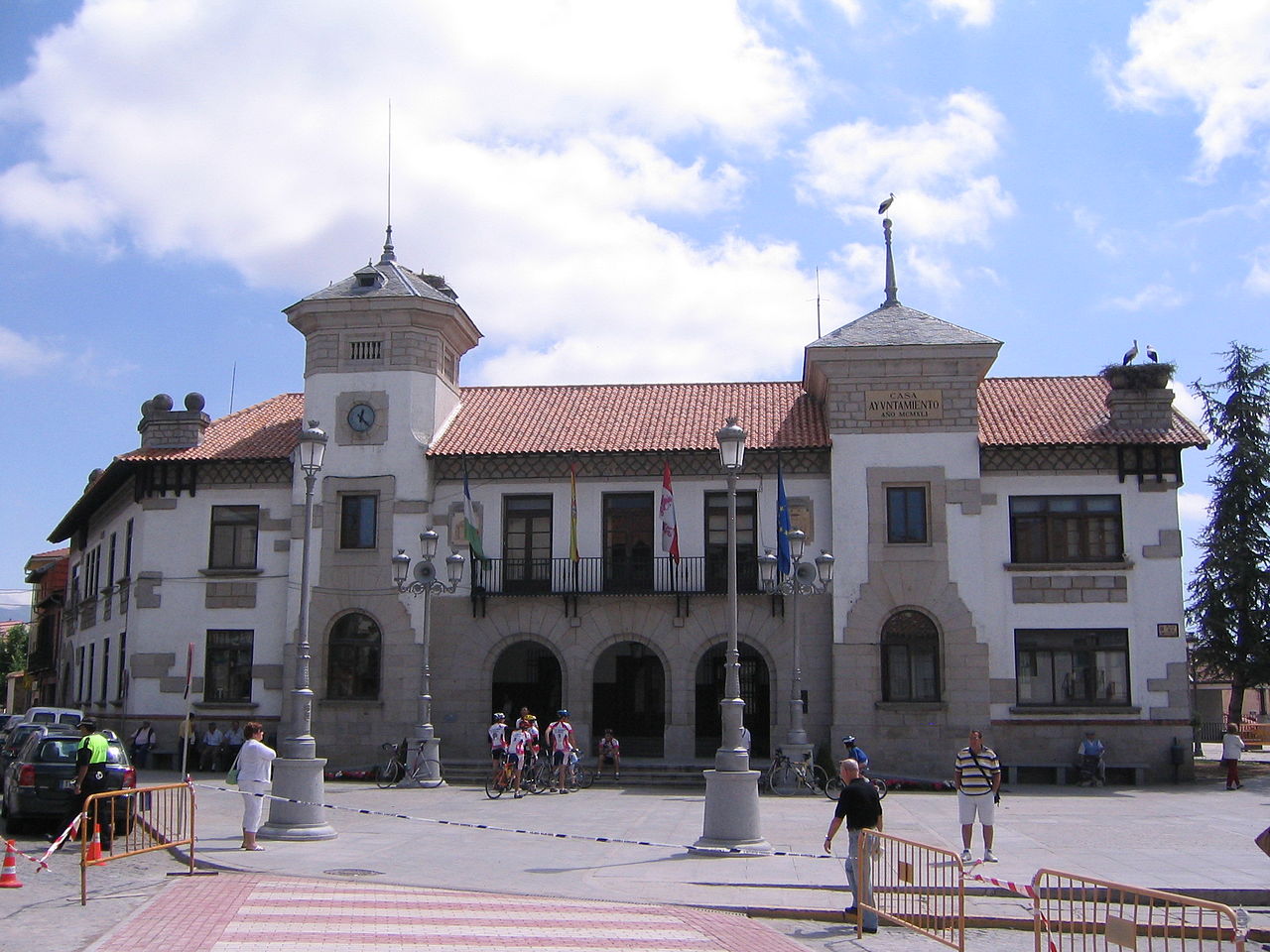
The Plaza Mayor still acts as the meeting point. People cross it on errands, neighbours sit on benches, and the occasional car passes through at a cautious speed looking for somewhere to stop. It is not a staged historic setting or a place designed for quick photos. It is a square used daily, shaped by routine rather than display.
Beyond the houses, the landscape quickly opens out. Fields, scattered dehesas and agricultural tracks stretch in several directions. It is not dramatic terrain, but the wide horizon has a calm, steady quality that many find more appealing than any famous viewpoint.
The church that guides your way
One building defines Villacastín more than any other: the church of San Sebastián. Its tower appears again and again as you move through the streets, acting as a reference point that helps you stay oriented.
Construction began in the 16th century. Built in granite, it has the solid, grounded look typical of many Castilian churches from that period. The tower is the most striking feature from the outside. It is not excessive in scale, but tall enough to dominate the village skyline.
Inside, the atmosphere is restrained. Ribbed vaults span the space, and several altarpieces were added over time. The church is not ornate or grand in a theatrical sense, yet it conveys a clear sense of austerity and durability, something that feels characteristic of this part of Spain.
Walking without a checklist
Villacastín is not a place for ticking off landmarks. The usual plan here is simpler: go for a walk and see what you notice.
The streets around the plaza form a compact network that is easy to explore. Within a short time, you get a feel for the village. Older houses, the occasional worn coat of arms, shaded doorways that offer relief in summer, and streets that rise and fall just enough to keep things varied.
There is plenty to catch the eye if you slow down. Wooden doors darkened by age, iron window grilles, stone walls that have stood for centuries. None of it is monumental, but it feels genuine and unforced.
This is the kind of place where attention shifts from big sights to small details. A corner, a texture, a doorway left slightly open. The interest comes from how everything fits together rather than from any single standout feature.
Easy routes into open country
The land around Villacastín is mostly flat, so this is not a destination for dramatic peaks or demanding mountain routes. Instead, there are rural paths leading out towards the fields and nearby villages such as Ituero y Lama or Zarzuela del Monte.
These are straightforward routes, suitable for walking or cycling at a relaxed pace. In many stretches, the only sounds are the wind and the occasional tractor working the land. When the wind blows from the west, which happens often, it can be quite noticeable.
For a short outing of an hour or two, the setting works well. There is no need to rush or plan in detail. You follow a path, turn back when it feels right, and let the surroundings set the rhythm.
Food rooted in tradition
The cooking in this area stays close to what has long been prepared across the province of Segovia. The dishes are substantial, shaped by a history of physical work in the countryside.
You are likely to come across slow-cooked legume stews, grilled meats and straightforward recipes where the ingredients matter more than presentation. This is not a place for modern reinterpretations or lengthy menus. The approach is direct and familiar.
After a walk along the surrounding tracks or a morning spent driving through the region, that kind of food tends to feel exactly right.
A base for exploring the area
One of Villacastín’s practical advantages is its location. From here, it is easy to reach other villages in the area or move along the strip of land that links Segovia with the Sierra de Guadarrama.
Nearby are small towns with Romanesque churches, quiet squares and bakeries that continue to operate much as they did decades ago. There is no need for a carefully structured itinerary. Simply follow the secondary roads and connect one place to the next.
In that sense, Villacastín works better as a calm base than as a destination packed with attractions. It is somewhere to pause, look around, and then decide where to go next without much urgency.
Local celebrations
Festivities in Villacastín remain closely tied to the village itself, shaped more by local participation than by outside attention. They follow patterns that have been maintained over time, reflecting the rhythms of the community rather than being designed as large-scale events.