Full Article
about Burgo de Osma-Ciudad de Osma
Former episcopal seat and historic quarter with an impressive cathedral and walls
Ocultar artículo Leer artículo completo
At 888 metres above sea level, Burgo de Osma's cathedral tower punches through morning fog that pools in the Ucero valley below. This isn't a village that time forgot – it's one where medieval bishops still matter, where Tuesday's market fills the same arcaded street they've traded in for eight centuries, and where roast lamb arrives at your table via recipes that predate the Reformation.
The dual name gives the game away. Ciudad de Osma refers to the original episcopal city, while El Burgo grew up around it like a protective shell. Together they form perhaps the most intact medieval townscape in Castilla y León, yet with 5,000 residents who refuse to let it become a museum piece. Grandmothers still gossip beneath the porticoes of Calle Mayor while their grandchildren kick footballs against 16th-century stone.
Stone, Saints and Sunday Lunch
The Cathedral of Santa María de la Asunción dominates everything, its Gothic bulk visible from miles away across the meseta's wheat fields. Inside, the temperature drops sharply – some visitors find it almost uncomfortably cold, though that might be the weight of history rather than the stone walls. The baroque Chapel of Santiago gleams with gold leaf that once bankrolled empires, while the cathedral museum houses manuscripts so precious they're kept in climate-controlled darkness. Tours run at noon and 5pm sharp; arrive ten minutes early at the sacristy door with €5 in cash. The guides work on tips and know which stories make English visitors wince – the bishop who burned heretics here, the British pilgrims who never made it past this stopping point on the Camino de Santiago.
Below the cathedral, Calle Mayor's porticoes create a natural theatre. Tuesday's market transforms it into a chaos of shouting vendors, elderly women prodding vegetables with practiced fingers, and the smell of fresh bread wafting from bakeries that still close for siesta. The arcades protect from summer sun that can hit 35°C, but in winter the wind whistles through like a medieval trumpet. That's when you understand why these towns developed their particular rhythm – up early to work, indoors by 2pm when the temperature plummets, back out at 5pm when stone walls have absorbed what heat exists.
Up the Hill and Down by the River
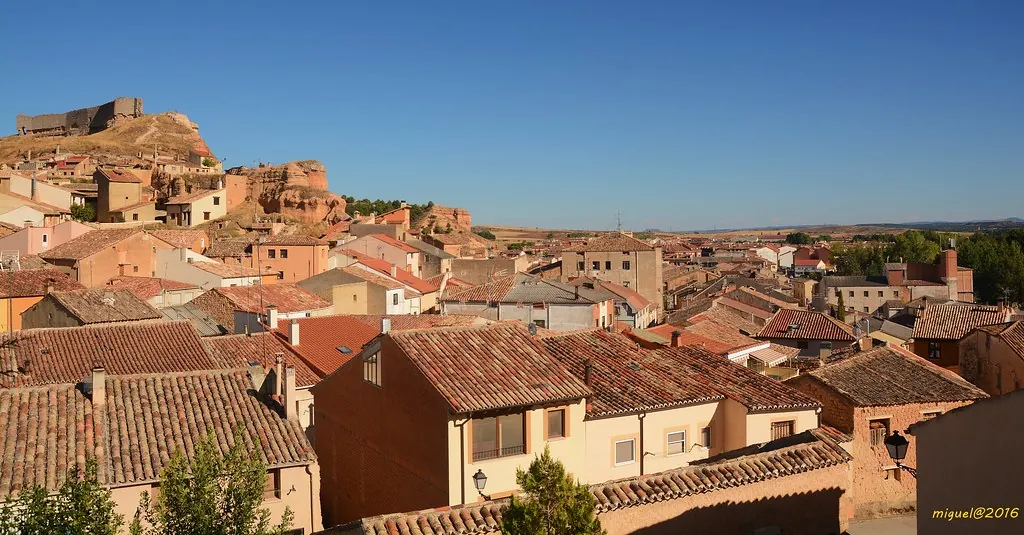
The castle ruins require either a five-minute drive or a twenty-five minute walk that'll test calf muscles grown soft on British pavements. Take the SO-160 towards El Enebral, following signs that seem to point into empty countryside. What remains are essentially foundations, but the 360-degree view explains everything – the Ucero river curling protectively below, the medieval walls hugging the town's irregular shape, the cathedral tower asserting ecclesiastical authority over every rooftop. On clear days you can see the Sierra del Madero rising to the north, its limestone ridges marking the edge of the Duero basin.
Back at river level, the Roman bridge (heavily reconstructed but charming nonetheless) leads to a riverside path that most visitors miss. Here the Ucero moves slowly enough to mirror the town walls, creating photographs that'll make friends assume you've discovered some secret Tuscan village. The walk takes twenty minutes, shaded by poplars that turn golden in October. It's where local teenagers sneak cans of beer on summer evenings, and where elderly men cast fishing lines with the patience of people who've never needed to check a watch.
The Business of Eating
Food here isn't performance art – it's continuation of agricultural cycles that defined these valleys for millennia. At Restaurante La Dehesa de Osma, the roast suckling lamb arrives having been born, raised and cooked within a thirty-mile radius. They'll do half portions if asked, understanding that British stomachs sometimes balk at an entire animal on one plate. The meat falls off the bone with the slightest nudge, having spent four hours in wood-fired ovens that operate continuously – closing them would crack the centuries-old brickwork.
For those needing a break from meat, Tinto y Leña offers vegetarian risotto that doesn't feel like an afterthought. Their English-speaking staff have heard every joke about Spanish vegetarian options being "ham or cheese?" and respond with dishes that would satisfy Brighton food critics. Across town, Cervecería Alquimia de Arevaka pours craft beers alongside traditional tapas, proving that even here, the modern world seeps in through the cracks. Try the local cheese with honey – the combination sounds wrong until you taste how the sweetness cuts through the sheep's milk sharpness.
When to Come and What to Know
Spring brings wildflowers to the surrounding hills and temperatures that make walking pleasant rather than endurance testing. Autumn colours the riverside poplars gold while mushroom season transforms local menus. Summer hits hard – that 888-metre altitude offers little relief when the meseta bakes under 40°C heat. Winter can be brutal; snow isn't uncommon, and that beautiful cathedral becomes a refrigerator. The town doesn't close, but some restaurants do, and that riverside walk loses its appeal when the Ucero runs brown and angry.
Practicalities matter here. No cash machine exists within the medieval walls – withdraw money in the modern part before crossing the bridge. Shops close 2pm-5pm religiously; arrive at 1:30pm wanting lunch and you'll eat well, but at 2:05pm you'll wait until evening. Parking inside the walls fills by 11am on market day; after that, it's a steep walk from the free riverside car park. The bus station sits 1.5 kilometres downhill – with luggage, ring a taxi (+34 975 34 03 22) rather than attempting the haul up medieval streets designed for donkeys, not wheelie cases.
Monday everything shuts. Not some things – everything. It's the day the town catches its breath, when locals do laundry and teenagers complain there's nothing to do. Come Tuesday and you'll find the place transformed, with delivery vans blocking streets and conversations flowing faster than the Ucero itself.
Burgo de Osma works because it never decided to become anything other than what it is – a market town that happened to accumulate extraordinary architecture, where daily life continues regardless of who points cameras at it. Stay for lunch, walk the walls, but leave before you start thinking medieval bishops had the right idea about urban planning. Some towns are best appreciated as brilliant anachronisms rather than models for modern living.