Full Article
about Calatañazor
Medieval village frozen in time with vernacular architecture and thousand-year-old juniper woods.
Hide article Read full article
A place that never rushed
Some villages feel carefully staged. Others simply carried on while time passed around them. Calatañazor belongs to the second group. You arrive by car and leave it outside, as there is barely any room within, and the first impression is clear: this is a place that chose not to modernise too much, and it worked out well.
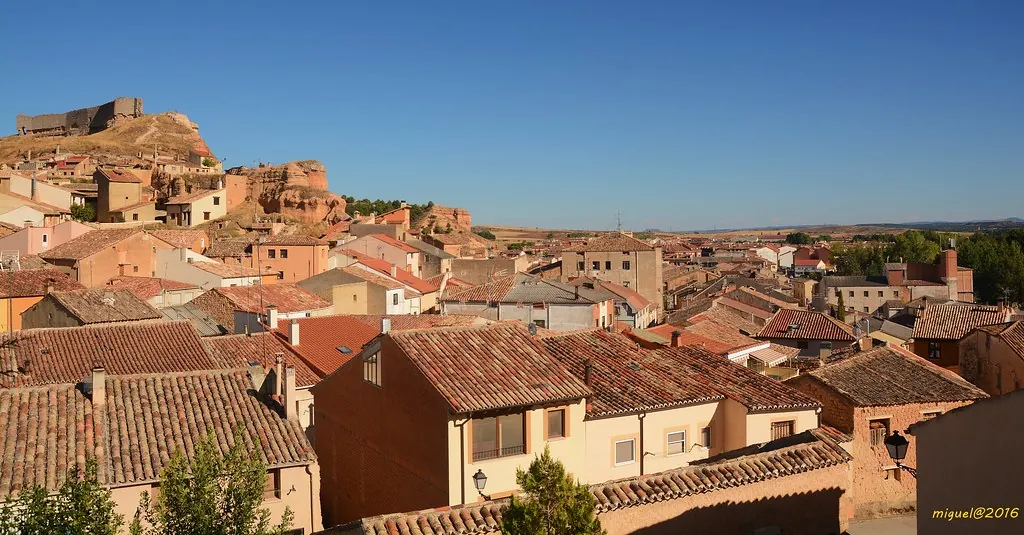
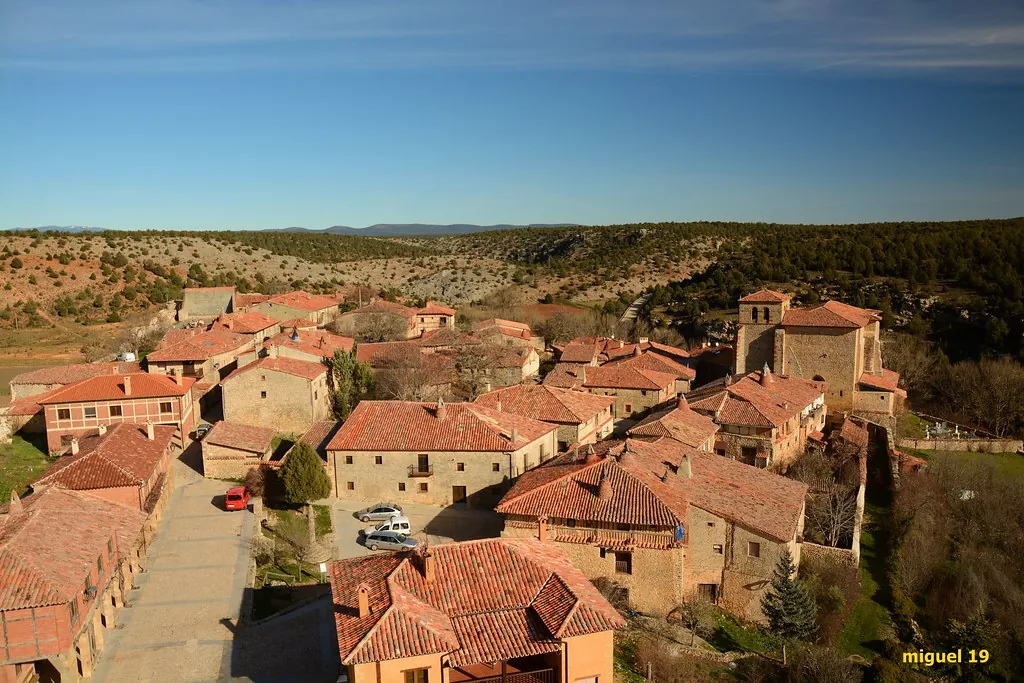
It sits just over an hour from the city of Soria, in the region known as Tierras del Burgo, at a little over 1,000 metres above sea level. The village is small. You can walk across it without effort. What stays with you is the pace it imposes. Streets slow you down without asking. The ground is uneven, the houses show timber frames and reddish adobe, and there is a particular kind of quiet that only appears in small places when few people are around.
Calle Real, the centre of everything
The historic core has kept much of its medieval layout. There is no real need for a map. You enter, and almost everything revolves around Calle Real, which runs from one end of the village to the other.
The houses lean slightly towards each other, with wooden balconies and dark doorways. In some stretches, the ground is so worn that it prompts thoughts about how many people have passed through over the centuries. Despite its appearance, it does not feel like a set arranged for visitors. The sense is closer to a village that has remained itself, with everyone else just passing through.
The castle and the view beyond
At the upper end of the village stand the ruins of the castle. It is not an intact fortress, more a collection of remains, but the walk up is worthwhile for the view alone. From that height, the landscape around Calatañazor opens out: wide fields, rocky escarpments and the dry terrain typical of this part of Soria.
A short distance away stands the church of Nuestra Señora del Castillo, a Romanesque building usually dated to around the 12th century. Carved figures can still be seen on the corbels and capitals. These details are easy to miss if you move too quickly, but they reward a slower look.
The sabinar just outside the village
On the outskirts lies the Sabinar de Calatañazor, one of the best-known natural areas in the region. It is a forest of juniper, specifically sabina albar, with very old specimens. Some are considered to be over a thousand years old. Their twisted shapes give the place an unusual character, almost as if the landscape followed different rules.
Marked paths allow visitors to walk among the trees without disturbing sensitive areas. The walk itself is not demanding, though comfortable footwear helps because of roots and loose stones. The silence stands out here as well. During the week, it is quite possible to walk for a long stretch without encountering anyone.
Down to the valley of the Milanos river
Another short outing from the village leads to the vega of the Milanos river. The scenery shifts noticeably. Reddish rock walls appear, and the ground becomes greener and more humid near the water.
In summer, the river tends to run gently. There are shaded sections where it is easy to stop for a while. This is not a place with developed facilities or structured spaces. It suits a simple plan: walk a little, pause, and listen to the water.
Straightforward food, no fuss
Food in this part of Soria tends to be direct and filling. You will usually find hearty dishes, roast lamb or lechazo, and stews that call for bread on the side. It is the kind of meal that slows everything down afterwards, whether that means a short rest or an unhurried return to the car.
How much time to spend
Calatañazor is quick to see, slower to appreciate. The village itself can be covered in just over an hour. Add the walk up to the castle and a relaxed visit to the sabinar, and it easily fills a morning.
Expectations matter here. This is not a place packed with activities. It works best as somewhere to walk, observe the houses, and take in the view from above. That rhythm suits the village. A rushed visit can be over in half an hour, and it may leave you wondering why it is so often mentioned. Slow down instead, and it makes more sense.