Full Article
about Fresno de Caracena
Quiet village on the banks of the Caracena River with a Romanesque church.
Hide article Read full article
A Small Village Between Plains and Hills
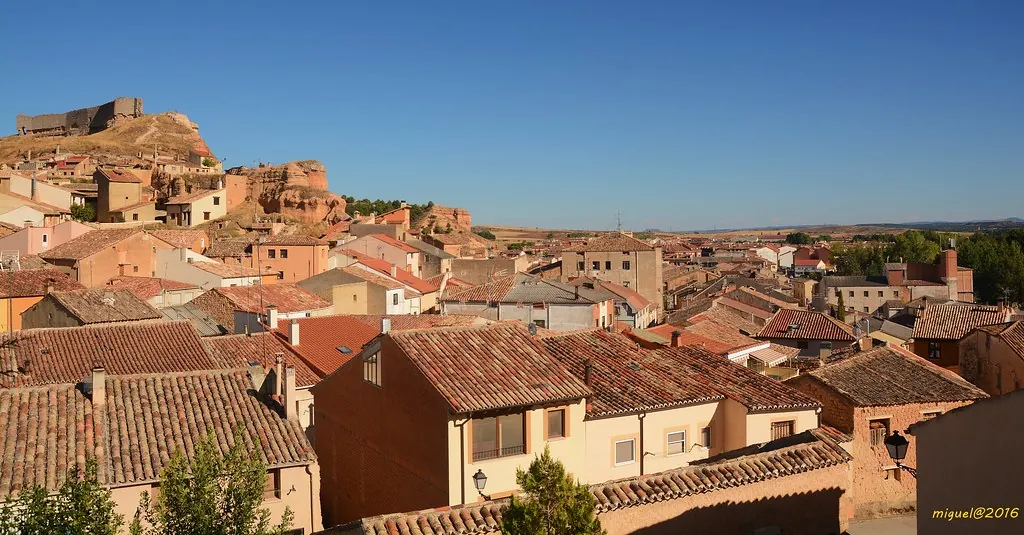
Fresno de Caracena sits in the west of the province of Soria, within the district known as Tierras del Burgo. This is a transition zone, where broad cereal plains begin to give way to the first ridges that hint at the Sistema Central. With barely fifteen registered residents, the village reflects the scale of many settlements in this part of Spain: stone houses, farm buildings, a few agricultural sheds, and short streets where silence is part of daily life rather than a feature designed for visitors.
The village stands at around 950 metres above sea level. Around it stretches a patchwork of open fields, scattered holm oaks and old tracks that still link small neighbouring villages. Traditional architecture remains largely untouched. Masonry walls, wooden beams and roofs of curved terracotta tiles define the look of the place. It is not a restored heritage site shaped by aesthetic decisions. Instead, it is what has endured from a farming and livestock economy that supported these communities for centuries.
Nearby Caracena helps place Fresno in its historical setting. That village, now also very small, preserves traces of its medieval past, including walls, a ruined castle and several Romanesque churches. For a long time, this area formed part of a shifting frontier between different powers on the Iberian Peninsula. Many of the paths that today appear to be simple farm tracks have their origins in that earlier period.
A few kilometres away runs the canyon of the river Caracena. Here, the river has carved a narrow gorge between reddish rock walls. Griffon vultures are often seen riding the thermal currents above the cliffs. Walking along the valley floor offers a clearer sense of the geography that shaped life in these villages.
The Village as a Whole
Fresno de Caracena does not centre around a single landmark. The interest lies in the village as a whole. Stone houses with large wooden doors, barns and small vegetable plots sit closely together. On some walls, repairs made with different materials are still visible, signs of ongoing maintenance carried out over decades.
The parish church, dedicated to the Asunción, is a simple building. Its current appearance reflects a series of alterations made over time, which is typical of rural churches where work was done when resources or necessity allowed. The structure rises slightly above the surrounding houses and acts as a visual reference point from the paths leading into the village.
Life here changes noticeably with the seasons. In summer, some houses open up and cars appear parked along the façades. In winter, many homes remain closed for weeks at a time, and the village can feel almost empty.
Caracena and Its Canyon
Very close by is Caracena, one of the best-known medieval sites in this part of Soria. It preserves two Romanesque churches dating from the 12th century, along with remains of its old defensive walls. The ruined castle stands in a commanding position above the valley.
From the area around Fresno, several tracks lead towards the canyon of the river Caracena. The gorge forms one of the most distinctive landscapes in the district. Limestone rock dominates the scene, with riverside vegetation along the bottom and wide, open plains above. It is common to see vultures or other birds of prey gliding along the canyon walls.
Walking the Old Routes
Walking here is less about marked trails and more about following traditional routes. These include agricultural tracks, paths winding between holm oaks and old connections between villages. One of the most common routes links Fresno with Caracena, crossing open fields along the way. It is not especially difficult, although carrying water and wearing suitable footwear is advisable. The terrain is dry, and distances in this region often feel longer than they appear on a map.
Spring and autumn tend to offer the most comfortable conditions for walking. In summer, the sun is strong and shade is scarce. In winter, the winds that sweep across the plains can be harsh.
Practical Notes for a Visit
Fresno de Caracena is a very small village and does not have tourist services. Visitors usually come from nearby towns where accommodation and other facilities are available.
A visit to the village itself does not take long. It makes more sense as part of a slower journey through the Caracena valley and the surrounding villages. The appeal lies in the wider landscape, the scattered Romanesque churches and the network of old paths that still shape how this part of Soria is experienced today.