Full Article
about Gormaz
Home to Europe’s largest caliphal fortress, with sweeping views
Ocultar artículo Leer artículo completo
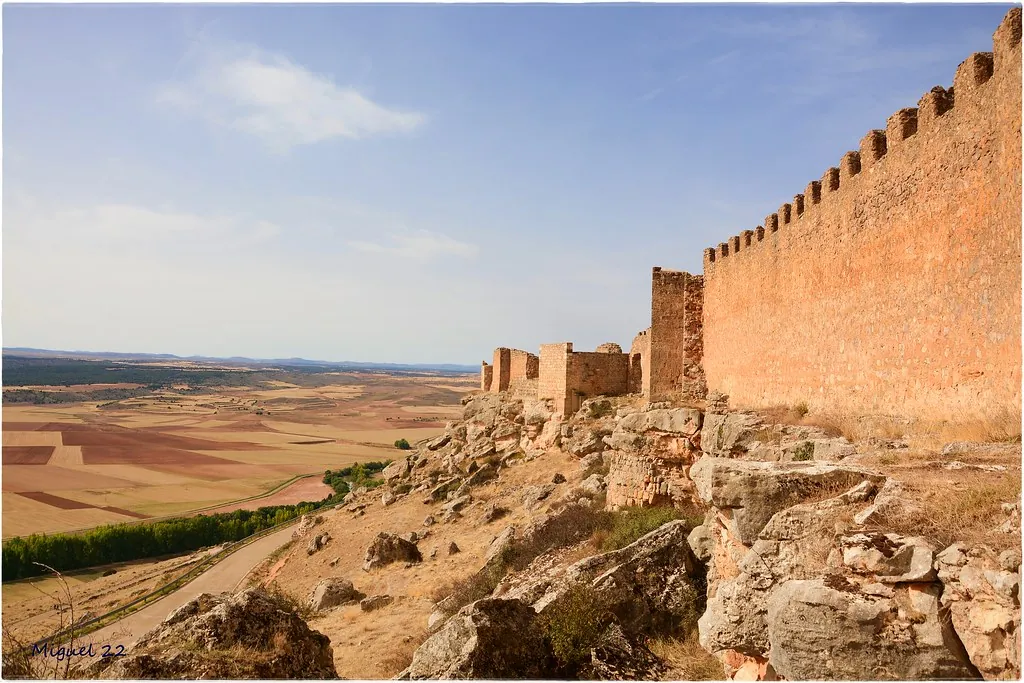
The Duero glints below like a dropped ribbon while the wind carries the smell of thyme and distant tractor diesel. Up on the ridge, a kilometre-long spine of stone and towers keeps watch—1,200 m of walls, 28 turrets, no ticket booth, no rope cordon, no one in a hi-vis jacket telling you where to stand. You can scramble right onto the battlements where Caliph Al-Hakam’s sentries once tracked Christian war-bands, and the only sound is your own boots grinding the grit.
This is Gormaz, population 21 on a festive weekend. It sits 953 m above sea-level, forty minutes south-east of Soria, and it feels like someone forgot to tell the Middle Ages to pack up and leave. The castle—built in the 930s, extended by the kings of León—remains the largest surviving Islamic fortress in Europe, yet the car park is a patch of packed earth shared with a wheat field. Entrance is free; opening hours, non-existent; risk assessment, yours alone.
A village that forgot to grow
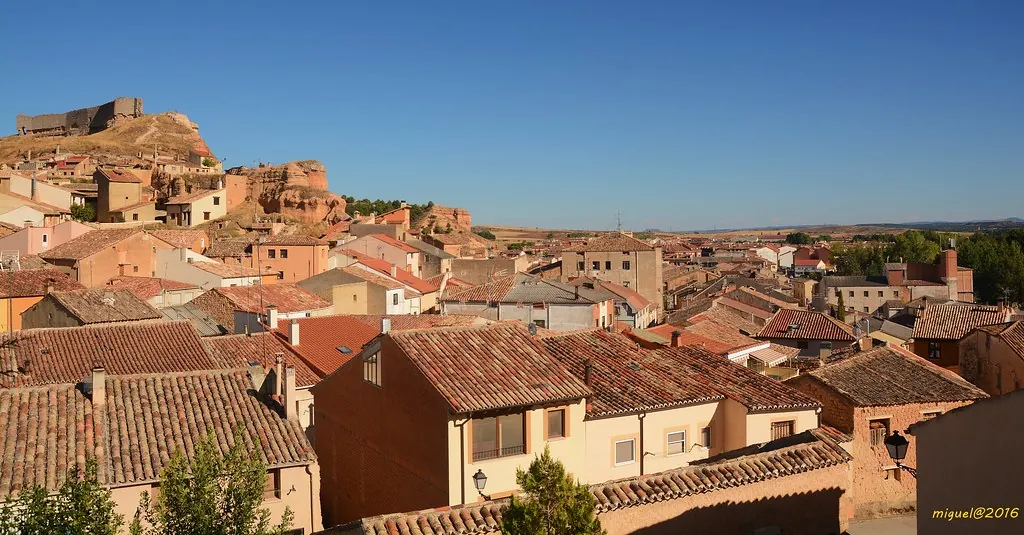
A single road threads through the hamlet, ending at the ermita of San Miguel. Houses are built from the same ochre stone as the ridge; many are shuttered, their owners long ago lured to Valladolid or Madrid. Ivy pushes through upstairs windows, yet the streets are swept and geraniums still splash colour across wrought-iron balconies. There is no hotel, no gift shop, no piped museum commentary—just the hush of high-plateau Castile broken by the occasional clink of a goat bell.
Walk uphill for eight minutes and the village shrinks to a Lego cluster. The path becomes a goat track, the goat track becomes the outer wall, and suddenly you’re inside a fort the size of a small town. Masonry is rough, staircases half-gone; kids love collecting shards of green-glazed pottery that surface after rain. From the southern parapet the Duero bends in a perfect ox-bow, vineyards stitched along its banks. On a clear day you can pick out the snow-dusted summits of the Urbión range 70 km away.
Heat, height and history
Come July the thermometer regularly tops 36 °C and there is absolutely no shade on the walls. Morning visits save both sweat and squint; by 11 a.m. the stone turns mirror-bright and the wind feels like it’s been through a hair-dryer. In winter the same ridge funnels the freezing cierzo wind; gloves are essential and the mud can glue your shoes to the ramparts. Spring and autumn are the sweet spots—mild air, green wheat, and the smell of wet earth drifting upward.
Wear trainers, not sandals. Several towers have missing steps, and none are dressed up with hand-rails. The drop on the river side is sheer; paramedics would have a 45-minute drive from El Burgo de Osma, 14 km north-west. Mobile reception flickers in and out, so download an offline map before leaving the car.
Where lunch means a drive
The village itself has no bar, no bakery, not even a vending machine. Bring water and a picnic—olives, local cheese from Valdemaluque, and a bottle of young Ribera del Duero picked up in San Esteban de Gormaz (30 km west). If you fancy a proper table, Casa de Adobe in Valdemaluque (ten minutes by car) serves roasted lamb and a homemade yoghurt that has achieved minor cult status among British drivers on the Madrid–Bilbao route. Vegetarians are catered for with judiones (buttery white beans) stewed with bay and paprika—order ración to share; portions assume you’ve spent the morning behind a plough.
The nearest cash machine is in El Burgo de Osma, so fill your wallet before you set out. Petrol follows the same rule; the village pump closed decades ago. A modest picnic plus fuel and castle fun still costs less than a single adult ticket to many European monuments, but plastic is useless once you’re up the hill.
Beyond the walls
A farm track circles the base of the fortress—an easy 4 km loop, flat enough for pushchairs if the ground is dry. Wheat and vine country roll away on every side; you’ll share the path only with a tractor or an elderly man gathering wild asparagus. Serious walkers can follow the river south toward the Romanesque bridge of Quintanas de Gormaz, but there are no way-markers and shade is sporadic. Take a hat and at least a litre of water per person.
Photographers should linger for the hour before sunset. The caliphal gate glows amber, swifts stitch the sky, and the castle’s silhouette grows until it feels like it might topple onto the barley. Night skies are equally dramatic—zero light pollution means the Milky Way shows up in full regalia, though you’ll need that offline star app, and a coat even in August.
When the village wakes up
Gormaz’s patronal fiesta lands on the second weekend of August, when emigrants return and the head-count briefly quadruples. There’s a modest procession, communal paella cooked in a tractor-towed pan, and dancing to a single-speaker sound system until about 2 a.m. If you crave fireworks and beer tents, drive on; if you fancy sharing tapas with the mayor—who also runs the generator—pull up a chair. September sees livelier action down the road in San Esteban de Gormaz, whose wine harvest fiesta includes grape-stomping and free tastings aimed squarely at visitors.
Honest verdict
Gormaz delivers one of the most uncrowded medieval experiences in western Europe; you can pace the ramparts for an hour and meet nothing louder than a hoopoe. Yet “experience” here means raw stone, sharp drops and a complete absence of interpretation boards—history buffs will be in raptures, casual tourists may wonder why they bothered after 45 minutes. Treat it as the anchor stop of a day trip: castle at sunrise, coffee in El Burgo’s arcaded plaza, perhaps the cathedral cloister or a vineyard bodega on the way back. Expect basic infrastructure, respect the silence, and you’ll leave feeling you’ve been let in on a secret the coach companies haven’t yet spoiled.