Full Article
about Langa de Duero
Riverside town with castle and medieval bridge in vineyard country
Hide article Read full article
A village shaped by the Duero
Langa de Duero sits in the central part of the Tierras del Burgo area, within the wider landscape that follows the middle stretch of the Duero River in the province of Soria. With a population of around 700 people and an altitude of roughly 850 metres, it is very much a working village, tied closely to vineyards and cereal crops. This is not a recent development. Wine production has long been part of daily life here, something that becomes clear as soon as you notice the underground cellars carved into the rock, scattered through the village and across the nearby hills.
The surroundings are defined by the river plains of the Duero and the vineyard plots that spread across the sunniest terraces. It is an open agricultural landscape that changes noticeably with the seasons. In spring, the low green of the vines dominates. By autumn, the leaves turn reddish tones in the lead-up to the harvest. The village is close to the N‑122 road, which makes it easy to reach as part of a wider route through this stretch of the Ribera del Duero in Soria, roughly between several larger nearby towns.
Stone, streets and underground cellars
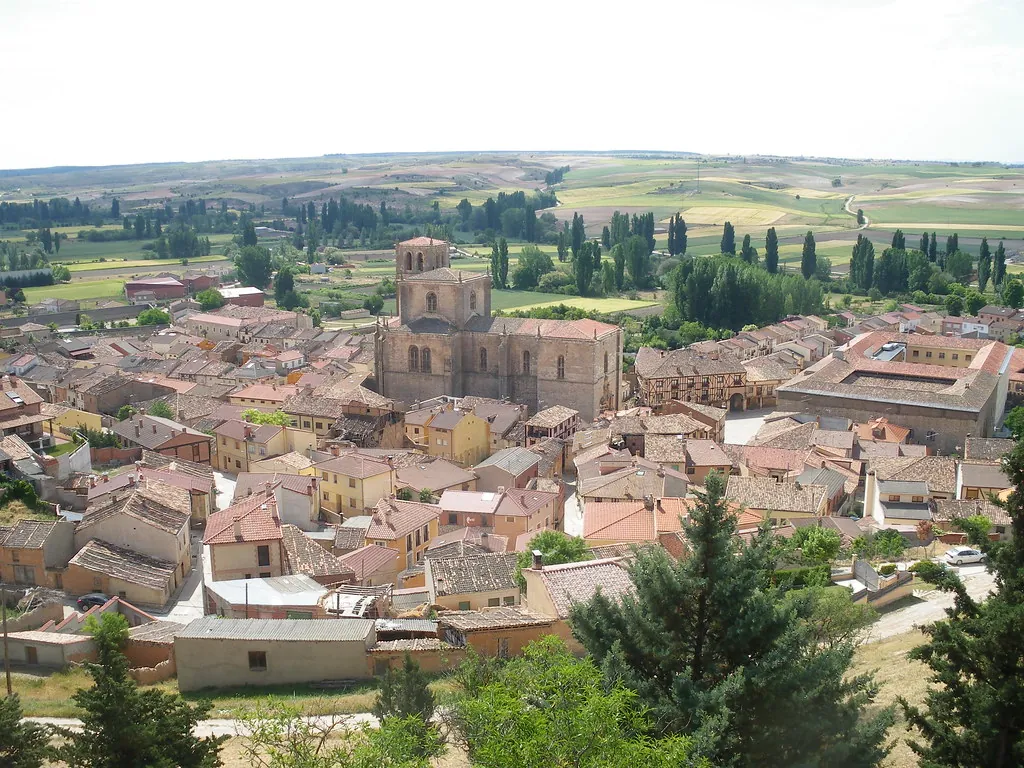
At the centre of Langa de Duero stands the parish church of San Miguel Arcángel. The building reflects different construction phases, with alterations added over the centuries. It is not particularly large, but it acts as a clear point of reference within the village. Several of the main streets are organised around it, making it a natural starting point for walking through the settlement.
More distinctive than the church is the network of underground wine cellars. These are galleries dug into slopes or located beneath small stone structures, traditionally used to produce and store wine in conditions where the temperature remains relatively stable. Some of these cellars are still in use today. There is no regular system of visits, and access usually depends on local residents opening their cellars at certain times of the year. Anyone interested in seeing them from the inside is advised to ask at the town hall, as opportunities are occasional rather than scheduled.
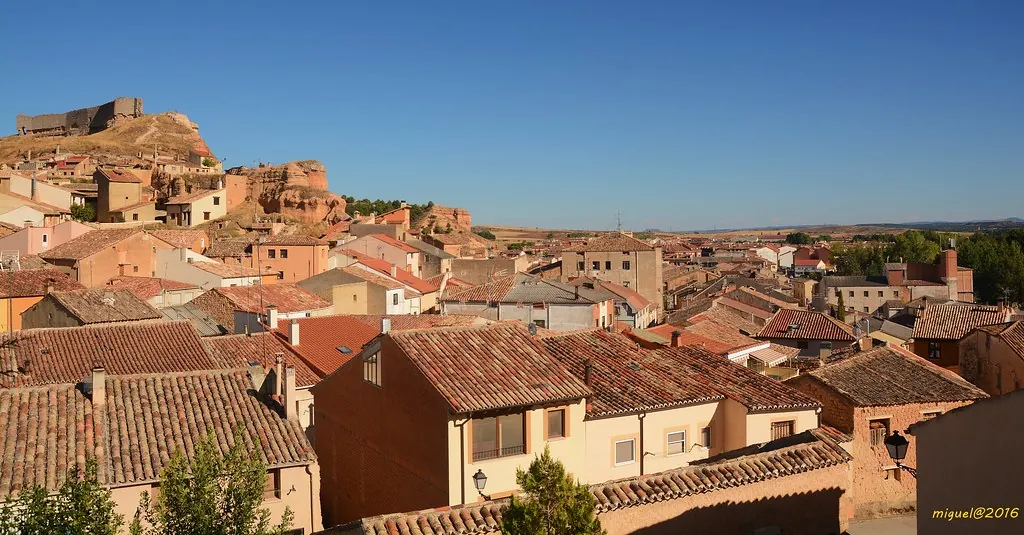
The urban layout preserves elements of traditional Castilian building. Houses are constructed with stone or adobe walls, and the oldest parts often include wooden structural elements. This is not a monumental ensemble in the grand sense, but it offers a clear picture of how an agricultural village in the Ribera del Duero was organised. Homes are compact, often with yards or corrals at the back, and the streets are narrow, helping to shelter against the wind.
Beyond the built-up area, the landscape opens out again. There are groves of poplars along the riverbanks and a network of agricultural tracks linking the village to its surrounding vineyards. From slightly elevated points, it becomes easier to understand how the settlement, the Duero and the cultivated land all fit together.
Among vineyards and wine-making traditions
Wine remains central to the local economy. The municipal area forms part of the Ribera del Duero designation of origin, one of Spain’s recognised wine-producing regions, and there are facilities nearby dedicated to production. In some cases, visits are organised to explain the process, from the grape harvest through to ageing in barrels. These are not always available on fixed schedules, so checking in advance is recommended.
The tracks that extend out from the village offer a straightforward way to explore the surrounding countryside on foot or by bicycle. These are working paths used by farmers to reach their plots, so they tend to be simple and without significant changes in elevation. They pass through vineyards and open fields, which means there is very little shade during the summer months.
Autumn brings another activity to the area. It is common to see people gathering mushrooms in the nearby pinewoods and hills. As in much of the province of Soria, this is a regulated activity, so it is important to check the local rules before heading out.
Festivities and everyday rhythm
The main celebrations in Langa de Duero are dedicated to San Miguel Arcángel, the village’s patron saint, whose feast takes place at the end of September. During these days, religious events and much of the village’s social life are concentrated into a short period, marking one of the key moments of the local calendar.
Outside these festivities, life follows the quieter rhythm typical of agricultural communities in this part of the Ribera del Duero. The grape harvest, fieldwork and the routines of daily life shape the pace of the year. It is a setting where seasonal changes are felt clearly, and where long-standing practices, especially those linked to wine, continue to define the identity of the place.