Full Article
about Nafría de Ucero
Small village near the Cañón del Río Lobos
Hide article Read full article
A Village Where the Volume Drops
There are places where you arrive and, without quite knowing why, you lower your voice. As if stepping into someone’s countryside home and realising that silence carries more weight than noise. Nafría de Ucero has much of that feeling. A very small village, with just over thirty residents, it sits at more than 1,000 metres above sea level, where daily life moves at a different pace.
This is not the sort of place you reach because it was next on a checklist. More often, Nafría appears almost by accident. Perhaps you were travelling through the Tierras del Burgo, heading towards the Cañón del Río Lobos, or someone local suggested, “Stop by Nafría, it’s just there.” Once you arrive, the comment makes sense.
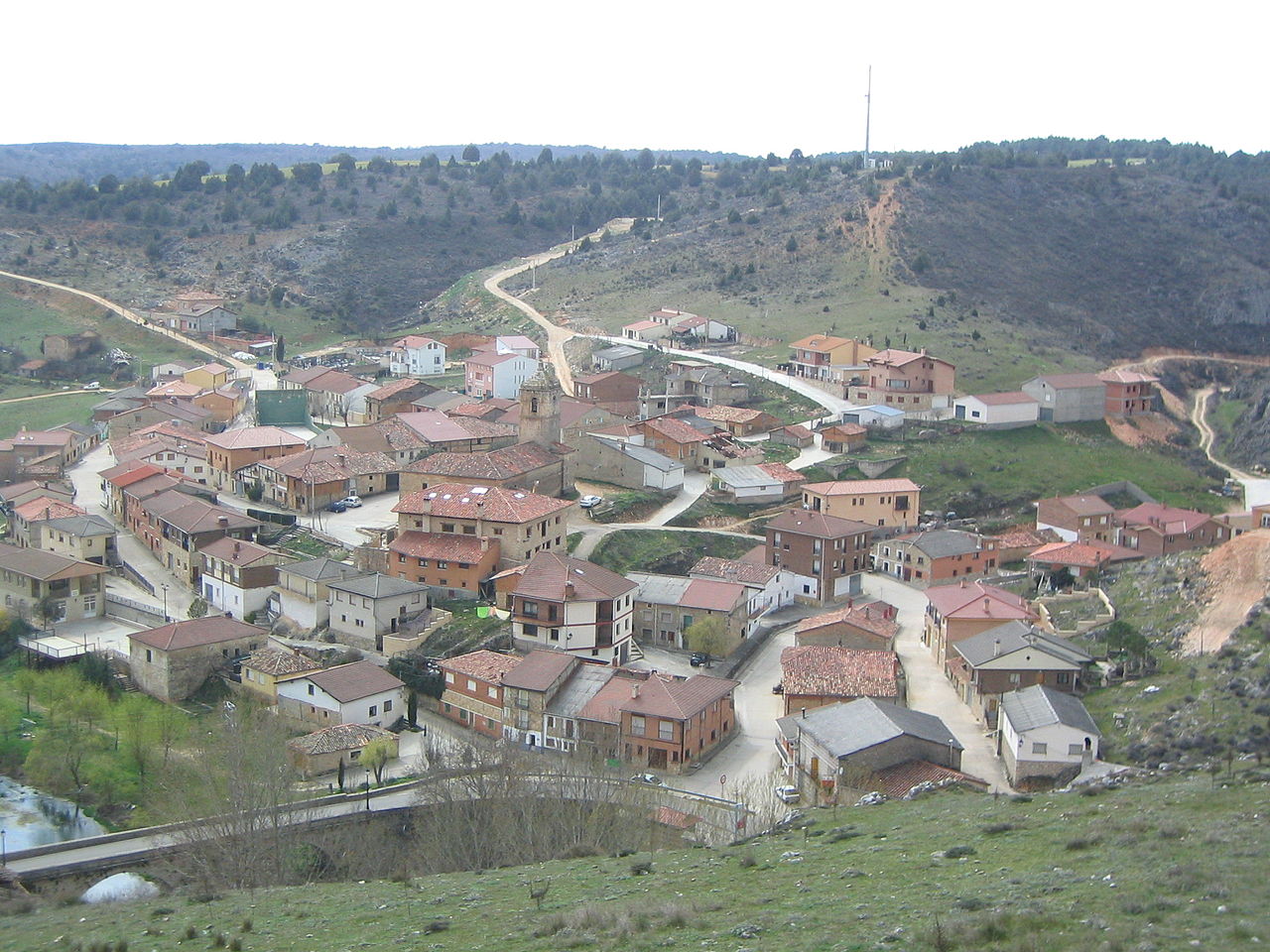
There is no grand main square designed for postcards, no streets laid out for quick photographs. Instead, you find a cluster of stone houses placed wherever the terrain allowed, with corrals, vegetable plots and tracks leading out towards the hills. The layout feels practical rather than decorative, shaped by weather and work rather than aesthetics.
What Remains in Plain Sight
A walk around Nafría de Ucero is simple: stroll slowly and notice how things have been built. Stone houses with thick walls dominate the small centre. Their windows are small, the kind that close tightly when winter sets in at this altitude. Some wooden doors look as though they have seen more winters than most visitors ever will.
The parish church stands close to the main group of houses. It is modest in scale, with a bell gable that can be spotted from various points in the village. Inside, there are no grand surprises. The atmosphere suggests a building that is still used rather than one preserved as a relic. That sense of continuity matters here.
Pay attention and small details begin to surface. A traditional oven here, the remains of old washhouses there, walls of former corrals that hint at how life was organised when agriculture shaped everything. Some houses have been restored with care, keeping their original character. Others remain much as they were, with the slightly rough appearance common in many villages across Soria province.
Nothing feels curated for visitors. The appeal lies in observation rather than in ticking off sights.
Paths Towards the Open Landscape
The tracks leading out of Nafría have no set script. There are no large information boards or specially designed visitor routes. These are the old paths, used by residents to reach their fields, move livestock or walk to neighbouring villages.
The landscape opens out among holm oaks and junipers. At certain points, particularly towards sunset, the plateau reveals that dry, expansive tone typical of this part of Soria. The horizon stretches wide, and the land seems to breathe slowly. Those who enjoy scanning the sky may spot birds of prey gliding overhead with unhurried ease.
The Cañón del Río Lobos lies relatively close, and its presence shapes the surrounding scenery. Limestone rock, ravines and a slightly austere character define much of the area. Many people combine both places in a single day: the canyon in the morning, then a quieter walk through villages such as Nafría later on.
In autumn, as in much of the province, some head into the nearby hills in search of mushrooms. It is wise to check the relevant permits and regulations beforehand, as mushroom picking in Soria is often regulated. Even this seasonal activity follows its own rules here.
Walking in the surroundings is less about reaching a specific viewpoint and more about absorbing the terrain. The altitude makes itself felt, particularly in winter, and the vegetation reflects the harsher climate. The overall impression is one of openness rather than drama.
When the Village Fills Again
With so few permanent residents, festivities in Nafría de Ucero function more as reunions than large-scale events. Relatives who live elsewhere return for a few days, and the village briefly changes rhythm. Celebrations are linked to religious traditions and customs that have been maintained over time.
For a short while, there is more movement in the streets and more voices echoing between the houses. Then, once the festivities end, Nafría returns to its usual state: quiet streets, smoke rising from a chimney in winter, and unhurried conversations among those who remain all year round.
The contrast is part of the experience. It shows how small rural communities in this part of Castilla y León continue to balance continuity and change. The village does not transform itself for visitors. It simply continues.
A Pause Rather Than a Plan
Nafría de Ucero is not a destination for filling an itinerary from morning to evening. It is the sort of place you approach for a while, take a walk, look around and reflect on how much of this land once functioned in similar ways. For many travellers, that is reason enough to stop.
The lack of spectacle becomes the point. Stone, wood and earth define the village more than monuments do. The altitude, the silence and the open plateau create a setting that feels consistent with the wider landscape of Soria.
For those already exploring the Tierras del Burgo or visiting the Cañón del Río Lobos, a detour here offers context. It provides a glimpse into everyday rural life at over 1,000 metres, where thick walls guard against the cold and paths still follow the logic of fields and livestock.
Nafría does not demand attention. It rewards it quietly.