Full Article
about Quintanas de Gormaz
On the banks of the Duero near the fortress of Gormaz
Hide article Read full article
A small village on the Soria plateau
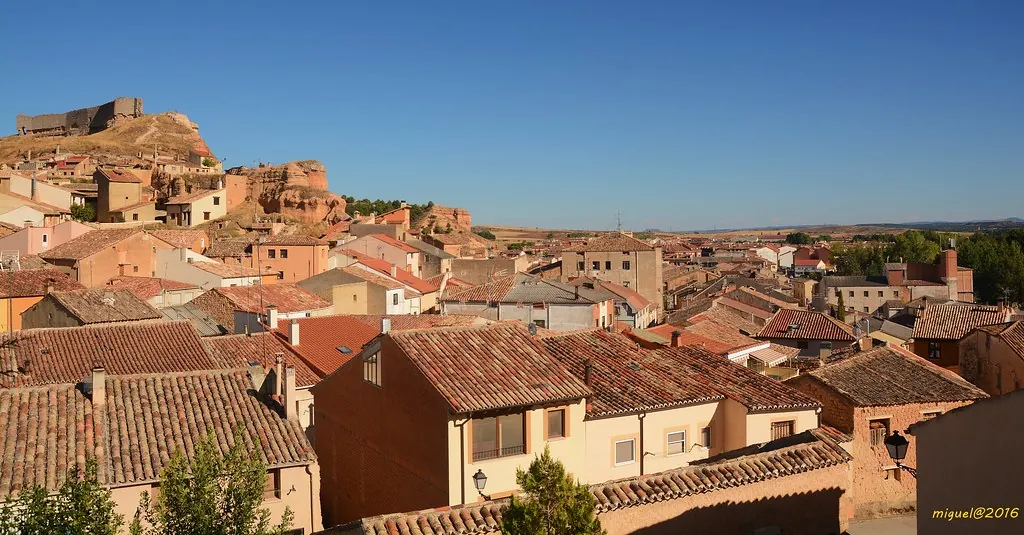
Tourism in Quintanas de Gormaz begins with a sense of place. The village sits in the central part of the Tierras del Burgo, on the Soria plateau, at around 937 metres above sea level and close to the Duero valley. With just over a hundred residents, it keeps the scale typical of agricultural settlements in this part of Castilla León: short streets, houses built from stone and adobe, and a daily rhythm shaped by farming.
The surrounding area has long been tied to cereal agriculture and to the network of routes linking the Duero valley with inland Soria. That position helps explain why, just a few kilometres away, stands one of the region’s key historical landmarks: the castle of Gormaz. During the Middle Ages, this was a frontier zone for long periods between Christian kingdoms and Al‑Ándalus, and the fortress controlled movement along the valley.
The landscape today remains much as it has been for centuries. Gentle hills, wide cereal fields and a strong sense of openness define this stretch of Soria. Quintanas itself is quiet and modest. There are no grand monuments or monumental old quarters, but the layout of the village offers a clear picture of how people have lived here across generations.
Everyday architecture and village layout
The parish church is the main building in Quintanas de Gormaz. It is simple in appearance, in keeping with rural Castilian architecture. Like many churches in the area, it has been altered over time, combining older sections with later additions.
The rest of the village is arranged around it. Many houses follow a practical construction style: stone at the base, with adobe used for the upper parts. This is a common solution on the plateau, as adobe provides good insulation against the cold. Streets are compact and relatively short, designed more for shelter from the climate than for creating large open spaces.
A slow walk through the village reveals small details from everyday life in earlier times. There are wide gateways that once led into courtyards, agricultural spaces integrated into homes, and old washhouses. There is no marked route or official trail. The best approach is simply to wander without a fixed direction for a while.
Beyond the houses, the surrounding landscape is open and changes noticeably with the seasons. In spring, the fields are often green; as summer progresses, golden tones take over as the cereal ripens. The agricultural tracks leading out from the village make it easy to understand how the land is organised, with broad plots, rolling hills and long, uninterrupted horizons.
Gormaz Castle and the Duero valley
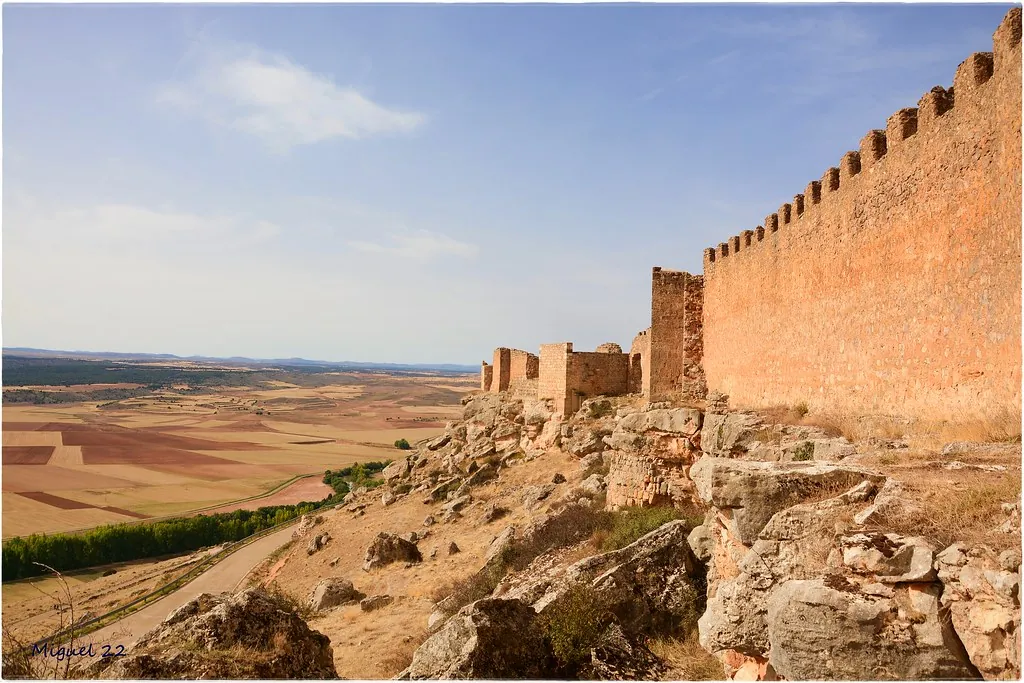
A short distance away lies Gormaz and its castle, a caliphal fortress built in the 10th century. For centuries it held strategic importance, overseeing the Duero valley and the routes crossing this part of the plateau.
The walled enclosure is extensive, and much of its original layout is still visible. From the top, the geography becomes clear: the river in the distance, the surrounding hills, and the natural corridors that have guided movement through the area. Even today, it works as a vantage point over the wider region.
A visit to Quintanas de Gormaz often forms part of a broader route through this section of the Duero valley. Nearby villages and stretches of the river itself are typically included in the same journey, giving a wider sense of the landscape and its history.
Walking the surrounding countryside
The area around Quintanas is well suited to walking, without requiring demanding routes. Agricultural tracks link the village to nearby settlements and cross farmland and low hills. These are not signposted trails in the usual sense; they are working paths used for accessing the fields.
The terrain is generally gentle, though after rain some sections can become heavy with mud. In more open areas, birds of prey are a common sight, taking advantage of the air currents over the fields.
Autumn brings a different kind of activity. As in much of Soria, mushroom gathering is part of local life during this season. Nearby pinewoods tend to see more movement at that time of year. It is important to know the different species or to go with someone who can identify them properly, as not all are safe to collect.
Visiting with context
Quintanas de Gormaz is small and can be explored in a short time. Most visits are combined with a trip to the castle of Gormaz and other villages in the Duero valley.
For those interested in rural architecture, it is worth paying attention to the materials used in the houses and how the village adapts to the climate of the Soria plateau. Thick walls, sheltered streets and buildings designed for harsh winters all reflect a way of life shaped by the environment.
Rather than offering standout attractions, Quintanas provides something quieter: a chance to understand how settlement, landscape and climate fit together in this part of Castilla León.