Full Article
about San Esteban de Gormaz
Historic quarter with two gems of porticoed Romanesque and wine cellars
Hide article Read full article
A small town with a long memory
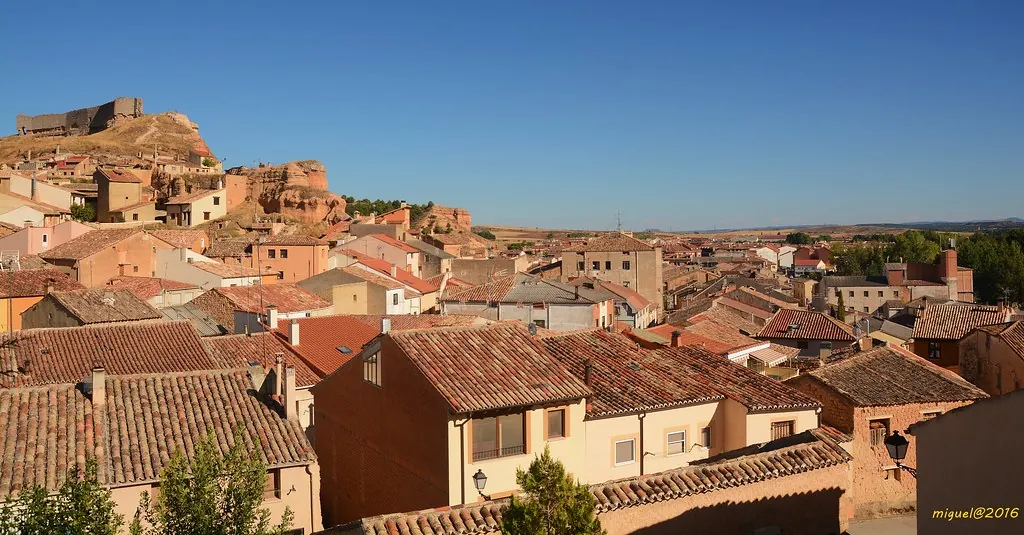
Tourism in San Esteban de Gormaz feels a bit like meeting that friend who never boasts, then casually unrolls one story after another. It sits along the Duero, the sort of place you might expect to pass through quickly, and then it starts mentioning Celtiberians, a Christian resettlement in 912, and medieval Cortes that locals say were among the earliest in Europe. The town has around 3,000 residents, but the past it carries is far larger.
The pace matches the setting. Nothing here pushes for attention, yet details keep surfacing once you begin to look. A bridge that still does its job, a church that appears in art history books, a walk by the river that stretches time a little. It is easy to underestimate at first glance.
The bridge that refuses to retire
The so called Roman bridge of San Esteban, with about 16 arches and close to 200 metres in length, continues to carry daily traffic as if it has always been part of the routine. This is not a fenced off relic. Cars cross it every day.
On arrival, most people cross it straight away and wonder how much of it is original. Over the centuries it has been repaired several times, especially from the 16th century onwards, so what stands today is a blend of periods. From the railing, it is common to spot storks settled high above. They have been there so long that they feel almost like fixtures.
A practical note helps here. If arriving by car, it is usually easiest to park just after crossing the bridge, near the Arco de la Villa. From there, the old quarter can be explored on foot without having to deal with the uphill stretch on the way back.
San Miguel and the wrong door
The church of San Miguel is one of those examples of Romanesque architecture from Soria that regularly appears in books. Built in the 11th century, it is known for its porticoed gallery, something quite unusual at the time that later spread across much of the province.
Many visitors approach it instinctively from the wrong side. The entrance that seems obvious is not where the main feature is. The gallery, the part everyone comes to see, opens to the north. Standing in front of it, with its aligned columns and carved capitals, it becomes clear why it is so often photographed.
Inside, the atmosphere is typical of many Castilian churches. There is sober Romanesque stone, a much later Baroque altarpiece, and wooden benches that creak with every movement, as if quietly commenting on what is going on.
If a guided visit happens to be available, usually organised on some weekends, it is worth asking about the “mamparo” of the choir. It is essentially a wooden screen that separated the clergy during services, a very practical solution to limit distractions.
A simple walk along the Duero
From San Miguel to the hermitage of the Virgen del Rivero, there is an easy walk following the river. It is less than two kilometres and requires little planning.
The path runs alongside the Duero, and from certain points the castle of Gormaz appears in the distance. Technically it belongs to a neighbouring municipality, yet it forms part of the same landscape. On clear days the view opens wide, very much in keeping with the plateau: big sky, fields all around, and the river marking a green line through it.
In spring, trees in blossom often line parts of the route, and the walk tends to take longer than expected. The light encourages lingering. That said, the sun here can be intense when it decides to be. With the altitude and the dry climate, it is easy to end up with a throat like sandpaper without noticing, so carrying water makes sense.
Eating the meseta way
Food in San Esteban revolves largely around the asador, the traditional wood fired oven. Red meat, steady heat, and dishes that do not need much explanation.
A common approach is to order a large chop to share, accompanied by local products: sheep’s cheese, a simple salad, and potatoes cooked in the fat from the roast. It is straightforward cooking, but when done well it works.
If the visit coincides with mushroom season, it is worth asking what has come in that day. In this part of Soria, varieties such as níscalos and rebozuelos appear regularly, usually prepared in a very simple way, in a pan with garlic and little else.
Towards the end of summer, the bollo de San Esteban shows up. This sweet, flavoured with anise and sugar, appears during the local festivities and disappears almost as quickly.
Festivals that still belong to the town
Several dates during the year draw more people than usual. In spring there is typically a fair linked to agriculture and livestock, closely tied to the everyday life of the surrounding area.
In summer, a medieval market sometimes fills the streets with stalls and people wandering until late. It carries that atmosphere of a village night celebration where locals, visitors and those returning for holidays all mix together.
September is traditionally when the festival of the Virgen del Rivero takes place, with a procession and meals outdoors. It is not designed for outside visitors. What appears instead are folding tables, extended families with homemade food and large containers of wine, and long conversations that carry on after the meal.
Is it worth stopping?
San Esteban de Gormaz is not a place for rushing between monuments over a couple of packed days. In a calm morning, it is possible to see the bridge, visit the church, take a walk by the river, and feel that the essentials are covered. The appeal lies in that unhurried rhythm and in the way its history emerges without fuss.


