Full Article
about Valdemaluque
Municipality near the Cañón del Río Lobos
Hide article Read full article
Early light over stone streets
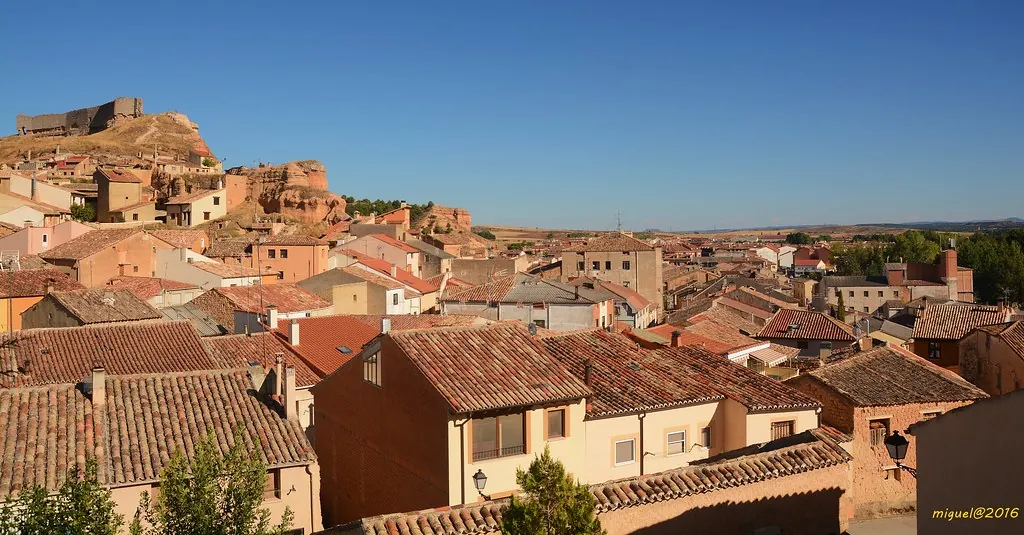
At first light, the stone still holds the night’s chill. In Valdemaluque, as the sun begins to filter between low houses, the streets remain empty and birds are heard before people. A shutter lifts slowly. The smell of firewood or coffee drifts from a half-open window.
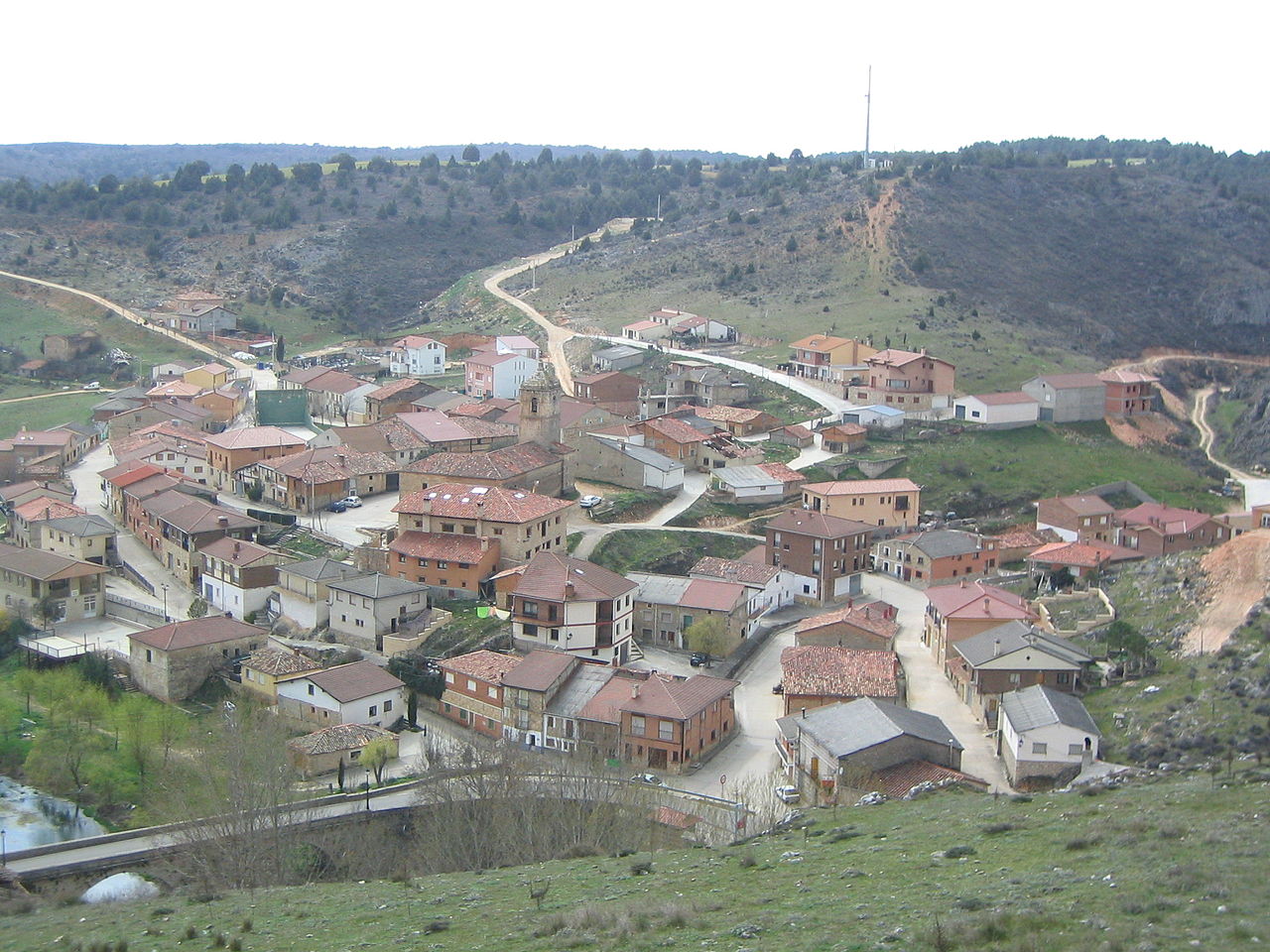
This small municipality in Soria, set at 947 metres in the Tierras del Burgo, has just over a hundred residents. Daily life moves at a pace that has barely shifted in decades. There is no rush to break the silence of the morning, and the village seems to wake on its own terms.
A slow walk through the centre
The name Valdemaluque is often linked to the Arabic “Wadi Malik”, a reminder of its distant origins. What stands today is more immediate: a simple layout of narrow streets, lined with houses built from stone and adobe.
Calle Mayor leads towards the parish church of the Asunción. The uneven paving makes you slow down. At that speed, small details begin to appear. A wooden door with dark iron fittings. A carved crest above a lintel. The rough surface of a wall that has endured many winters.
The church tower is visible from most points in the village. Its appearance is restrained, without elaborate decoration. The building dates from the late 16th century and still anchors local life. In the late afternoon, as the light softens, the stone takes on a warmer tone and the square falls into a half-silence that feels entirely natural.
Underground cellars and older habits
Several courtyards still hide entrances to underground bodegas. These are low doors, sometimes partly concealed by vegetation. For a long time, wine was produced here for personal use.
That practice gradually faded, but the galleries remain beneath the ground. Older residents often recall small harvests and presses shared between families. Those memories survive even as the activity itself has largely disappeared.
Open land beyond the village
The landscape opens almost immediately once you leave the built-up area. Fields of cereal stretch outwards, broken by scattered holm oaks and the occasional gentle rise. The terrain is not rugged, yet it feels expansive.
Seasonal changes come quietly. In autumn, colours shift from muted green to ochre and gold. Summer brings stronger sun and long, exposed hours. Shade is scarce beyond the village, so early mornings and late afternoons are the more comfortable times to walk.
Some nearby paths offer views over the soft valleys surrounding Valdemaluque. The overall impression is one of space and stillness. Wind often makes itself known before anything else moves.
Routes, flocks and a wider landscape
A network of rural tracks connects Valdemaluque with nearby places such as Espejón and Torlengua. These are dirt paths crossing farmland and passing the occasional isolated agricultural holding.
Close by runs the Cañada Real Soriana Occidental, one of the historic routes used for transhumance, the seasonal movement of livestock across Spain. For centuries, herds travelled along this corridor between summer and winter pastures. Today, the traces are quieter. You might come across a few walkers, the occasional flock, and long stretches where the landscape changes very little.
Signage is not always clear. Anyone planning a longer walk will find it useful to carry a map or a route app.
Watching the sky above the oaks
Birdlife is easy to notice, especially early in the day. Kites glide over the fields, tracing slow circles. Kestrels hover briefly in place before dropping towards the ground. In summer, hoopoes appear, searching for insects among the dry grass.
There is no need to travel far for this. A short walk to the nearby holm oak groves is enough. Sitting quietly and watching the sky often reveals more than expected.
Food, seasons and returning voices
The cooking in this area follows the rhythm of the year. Roast lamb appears on certain days, its aroma carrying through the streets. Autumn brings mushrooms from nearby pine forests, always gathered with care and in line with regional regulations.
Valdemaluque does not always have services open throughout the year. Eating out often means heading to neighbouring villages, so it helps to check what is available in advance.
Festivities tend to take place in August. Many residents who spend the rest of the year elsewhere return during this period. The square fills with long conversations, shared tables and familiar faces that appear just once a year.
When that brief summer bustle ends, the village settles back into its usual rhythm. Quiet streets, unhurried steps, and a sense that time is measured differently here. Not through urgency, but through habit.