Full Article
about Burgohondo
Key town in the Alberche Valley; known for its medieval abbey and river bathing spots.
Hide article Read full article
Between the Alberche and the Eastern Gredos
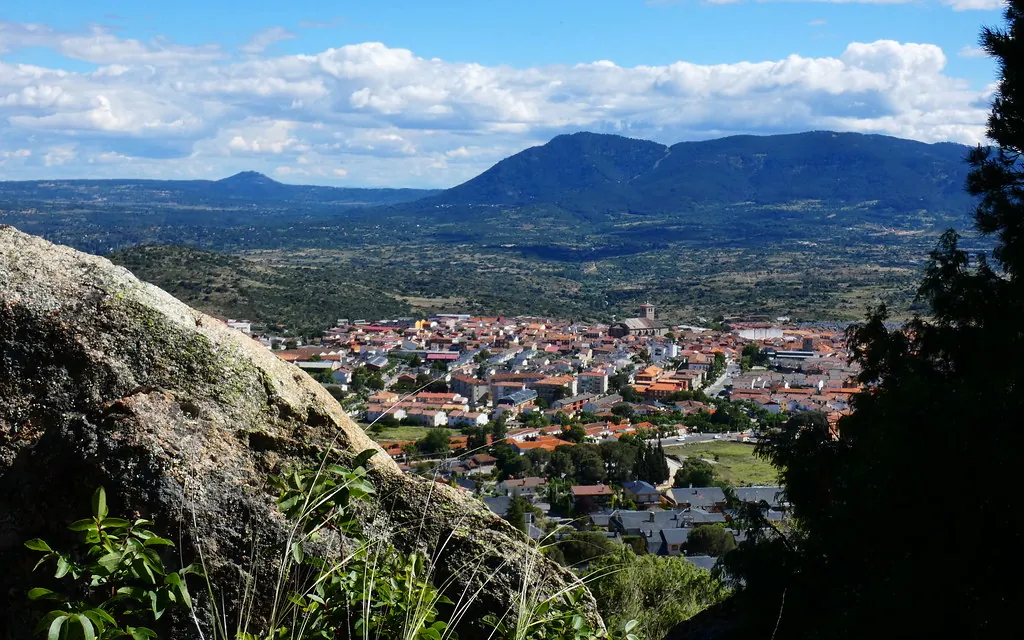
Burgohondo sits in the Valle del Alberche, on the eastern flank of the Sierra de Gredos in Ávila. The village follows the river’s course and climbs the adjacent slopes, a layout dictated by geography. The landscape here is one of mixed woodland: chestnut groves, oak stands and pine forests grow together. It’s about fifty minutes by car from the city of Ávila, and the rhythm here feels more aligned with the mountain and the fields than with the seasonal tourism found further down the valley.
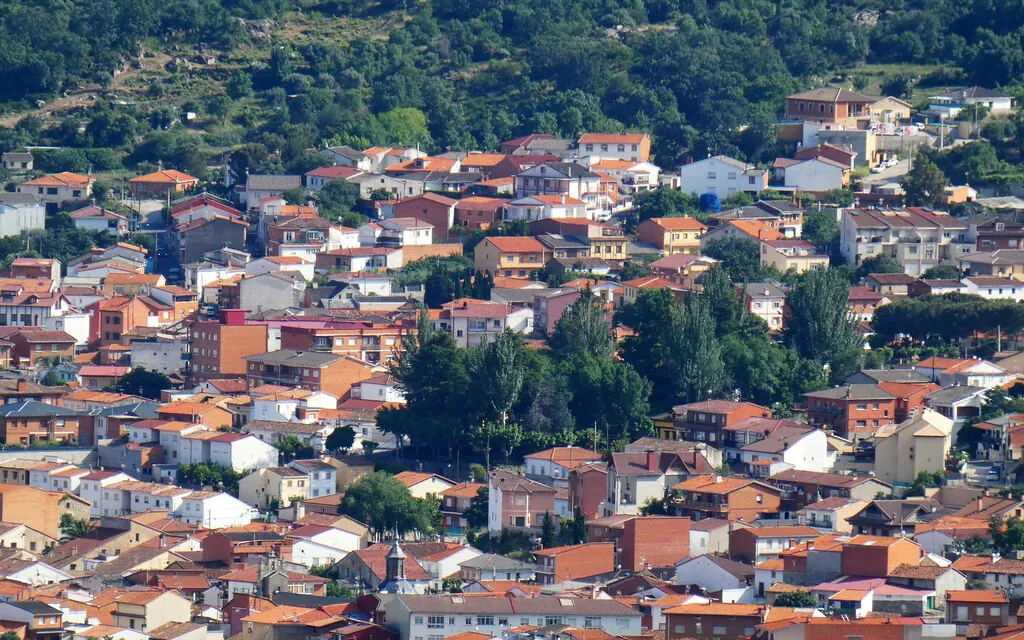
Houses are built on the incline descending to the Alberche. Many retain stone walls and clay-tiled roofs, common in this part of the province. Burgohondo isn’t densely packed. Some streets give way to small vegetable gardens or open directly onto the hillside, blurring the line between the village and the land around it.
The surrounding countryside defines the place as much as its streets. Chestnut groves ring much of the municipality, and in autumn they change the colour of the entire valley. Scattered pines and oaks create a varied forest cover, shaped historically for grazing and timber.
San Esteban and the Village Streets
The parish church of San Esteban Protomártir is the most visible structure. Its fabric shows masonry work with late Gothic details, though it has been modified over time. The tower still marks the skyline, a logical feature for a settlement that for centuries lay on routes connecting the valley with the higher pastures of Gredos.
Inside, a Baroque altarpiece of modest scale fits the proportion of the building. It speaks more to the devotional practices of a rural community than to any major artistic patronage.
Walking through the older quarters, you’ll see granite houses with wooden balconies and interior courtyards. Some still show traces of old wine presses or small cellars, reminders that the local economy wasn’t solely about livestock. The Plaza Mayor, with its arcades and a longstanding fountain, remains a daily meeting point.
The village layout makes the overlap with the countryside explicit. Streets gradually become paths leading to orchards or the lower slopes, and the sound of the Alberche is seldom out of earshot.
Water, Woods and Mountain Paths
In summer, activity shifts towards the gorge known as the garganta de las Pozas, where the river has carved natural pools among the rocks. These pools draw crowds on summer weekends. A visit on a weekday morning offers a different atmosphere entirely.
A number of footpaths start in or near Burgohondo, linking the valley floor with the first rises of the sierra. Some trace old watercourses and springs. Others climb steadily to viewpoints over the Alberche valley. There are short, manageable routes and longer ones that require better preparation and familiarity with mountain trails.
Autumn brings those interested in mycology. Various fungi appear in the chestnut and oak woods. As anywhere, knowing what you’re picking and following local foraging guidelines is essential.
The chestnut groves are particularly striking in late autumn, when the ground is covered in fallen leaves and the valley turns ochre. The seasonal change is palpable and affects how it feels to walk here. Spring and autumn are generally the most settled periods for hiking.
Food and Seasonal Customs
The cooking follows the traditions of inland Ávila. Beef from the Sierra de Gredos is a staple, and robust stews are common. When chestnuts are in season, they find their way into both savoury dishes and desserts. Winter menus are built around warming food.
Local customs are tied to the agricultural year. The fiestas of San Roque in mid‑August draw the biggest crowds, with processions, open‑air dances and other public events. Many former residents return to the village for these days.
As autumn sets in, the chestnut harvest is often marked by informal gatherings around a fire, a custom known locally as a magosto. It’s not a scheduled festival so much as a shared practice that resurfaces as the evenings grow cold.
The patron saint, San Esteban, is honoured with quieter celebrations at the end of December, fitting into the village’s winter calendar.
Choosing the Moment
Each season alters Burgohondo. Summer increases activity at the river pools and banks, part of the wider valley’s rhythm. For a quieter visit, start early or take paths that lead away from the village centre.
Spring and autumn provide milder conditions for walking. The transformation of the chestnut groves in November is one of the year’s most distinct visual changes, when the light softens and the air turns crisp.
Burgohondo isn’t about a single monument. Its character comes from the relationship between village, river and sierra, from stone houses built into the slope, and from woods that influence daily life as much as any built square. An hour from Ávila, it remains governed by rural patterns, where the seasons still set the pace for both work and time spent outdoors.