Full Article
about El Tiemblo
Known for the Toros de Guisando and the Castañar de El Tiemblo; nature and history
Hide article Read full article
A hillside town at first light
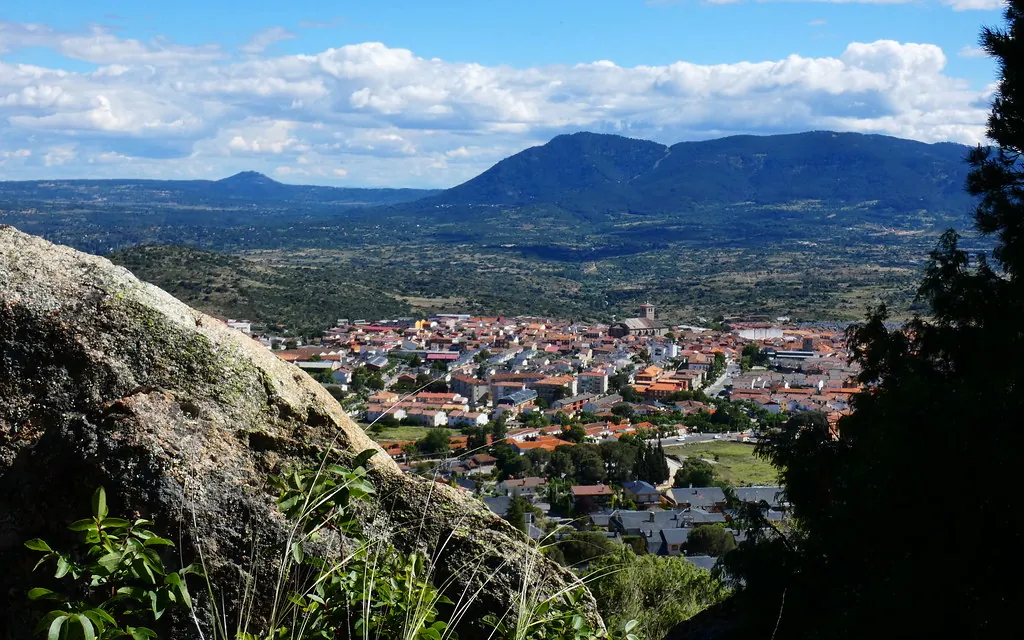
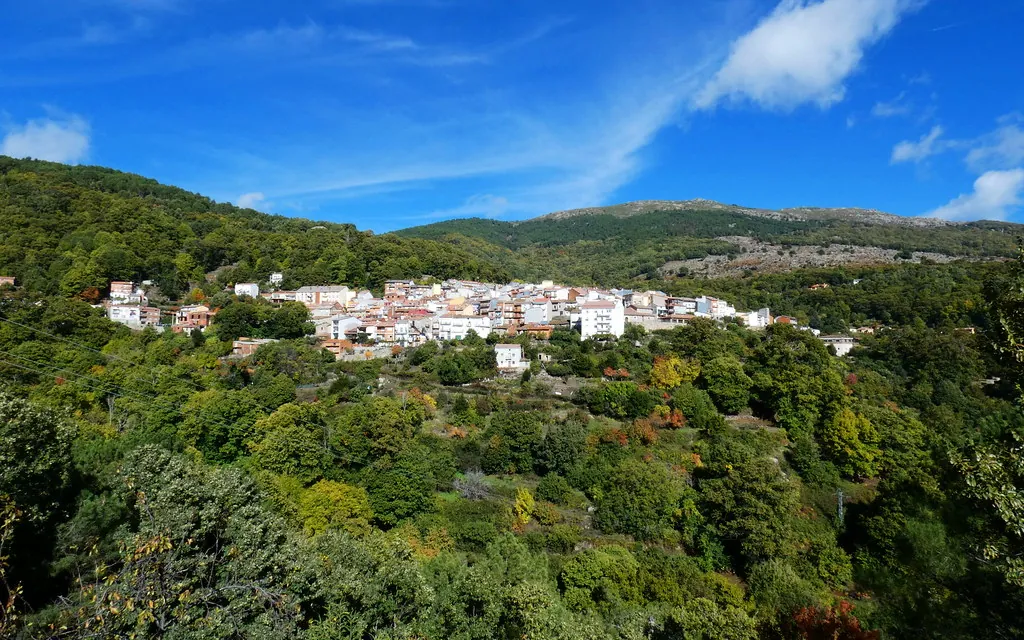
At seven in the morning, as sunlight begins to touch the slopes of the Valle de Iruelas, the first stones on the path crunch underfoot. Autumn brings the scent of damp leaves and chestnuts drying in courtyards. At that hour, tourism in El Tiemblo has barely stirred. The town appears as a patch of granite set against the hillside, with the Burguillo reservoir tracing a silver line in the distance.
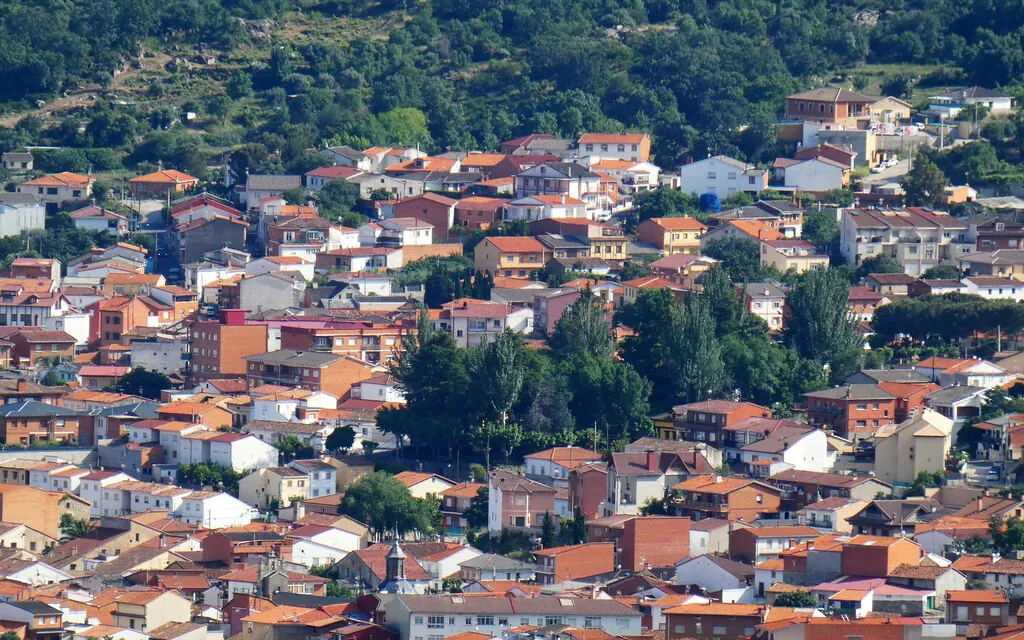
Under those tiled roofs, kilns once worked steadily, sending jars and earthenware across much of central Spain. That past still lingers, though it does so quietly, woven into walls and street names rather than displayed outright.
Clay, smoke and what remains
Steep alleys wind between stone walls marked by dark traces of old smoke. Pottery played an important role here during the 19th century, and some streets still recall the kilns where clay was fired. Once finished, the pieces were loaded onto carts and carried along mule tracks to other regions.
No workshops are active today, yet the memory surfaces in unexpected ways. Around midday, in the area where those kilns once stood, the smell of toasted bread and tomato can carry a faint earthy note, something like damp clay. There are no information panels or marked routes explaining this history. It survives in the fabric of the place and in stories shared by older residents.
Four granite bulls and a turning point
About nine kilometres from the town, beside the road, stand the Toros de Guisando. These granite sculptures date back to the Vettones, a pre-Roman people, and have watched the nearby mountains for more than two thousand years.
The site also holds a place in Spanish history. In 1468, King Henry IV of Castile and his sister Isabel, the future Isabel I, reached an agreement here. Known as the Concordia de los Toros de Guisando, it attempted to resolve a dispute over succession, though tensions would later return.
At midday, the light falls directly onto the granite, making the inscriptions easier to pick out. The surroundings are dry, with low thyme and rockrose. A step on the shrubs releases a scent that lingers in the air. Late afternoon or a weekday visit changes the atmosphere. Once the car park empties, the site regains a sense of stillness.
A monastery among the pines
The road climbing from El Tiemblo towards the mountains gradually enters a dense pine forest. Around a bend, the Monastery of the Jerónimos appears without warning, a large complex of golden stone set against the dark green of the trees.
Its origins go back to the 14th century. Over time, it gained importance and attracted frequent visits from the Castilian court. Kings and nobles left donations, commissioned works of art or spent periods here in retreat.
Inside, the church carries the familiar scent of wax and aged wood. Light filters through high windows and settles softly on the benches, creating a calm that contrasts with the livelier feel of the town below. Visiting requires a bit of planning, as access tends to follow specific time slots and the building is not always open throughout the day.
A chestnut grove with its own sound
Forest tracks leave the outskirts of El Tiemblo and lead into the Valle de Iruelas Natural Reserve. As the path climbs, pine trees give way to increasingly large chestnut trees.
Some trunks measure several metres in circumference and are covered in moss. Certain specimens are well known locally, such as the “Castaño del Abuelo”. Its scale becomes clearer up close, where the bark splits into deep grooves.
In autumn, the ground is carpeted with leaves. Each step produces a steady crunch, like dry paper being broken. During chestnut season, people from the town can be seen carrying bags or baskets. Traditional gathering is allowed in many areas under certain rules, so it is worth checking beforehand and taking only what will actually be eaten.
Water and light at the Burguillo
The descent towards the Burguillo reservoir brings a shift in scenery. The road winds through pink granite cliffs before opening out onto the wide surface of the water. On calm days, the reservoir reflects the slopes like a mirror.
Summer draws cars to the bathing areas and small prepared beaches. Outside the high season, the atmosphere changes. A fisherman may sit by the shore, the sound of oars carries from a canoe, and the scent of sun-warmed pine drifts through the air.
The Alberche river feeds the reservoir with cold water even in the hottest months. Near the shore at sunset, the drop in temperature is noticeable, rising gently from the surface.
When to go
Autumn is often one of the most rewarding times to visit El Tiemblo. The chestnut grove shifts through changing colours, and the mornings have a distinct clarity. The pace of the town remains measured, and much of what defines it, from old pottery traces to forest paths, reveals itself gradually rather than all at once.