Full Article
about Navalacruz
Mountain village with its own identity, famous for its Mascaradas (Harramachos) fiestas.
Hide article Read full article
Navalacruz: a high plain in the shadow of Gredos
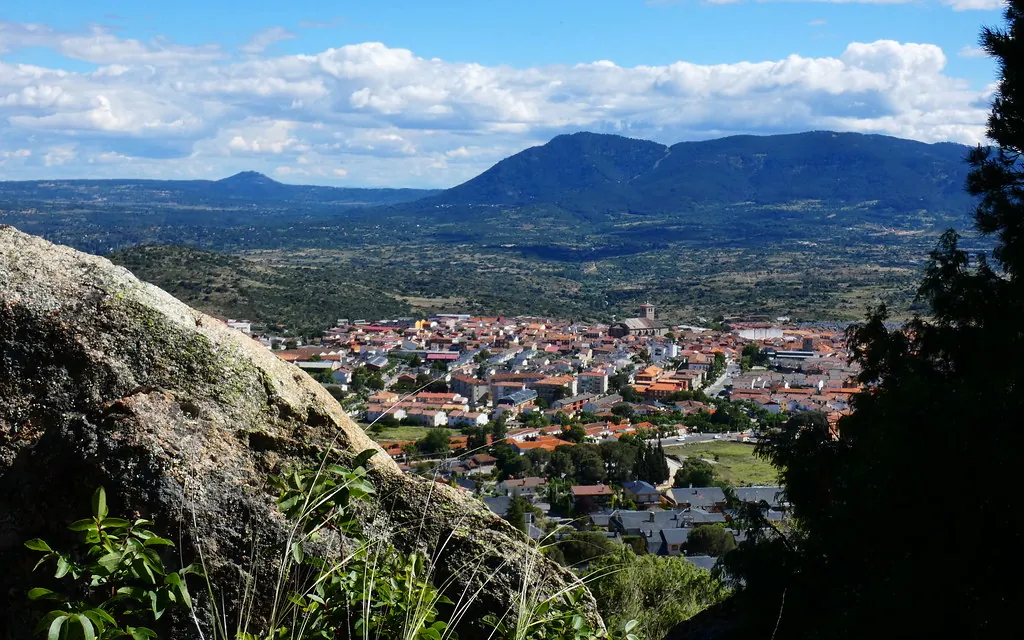
Navalacruz occupies a stretch of high plain, a nava, on the northern slopes of the Sierra de Gredos in Ávila. Its name comes from that geography and from an old stone cross that once marked a junction of livestock trails. With around two hundred inhabitants, the village is a quiet point in the Valle del Alberche, defined more by its exposure to the sky and its use as pasture than by any dramatic mountain scenery. Life here has long been organised around cattle, timber, and the seasonal demands of this altitude.
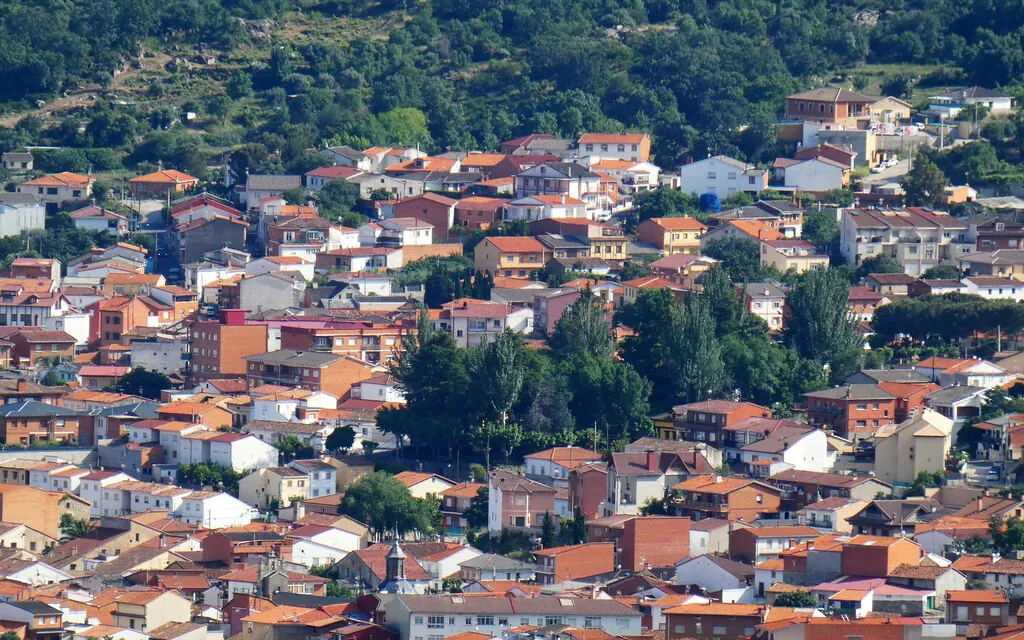
The parish church, built from local granite, anchors the settlement. Its solid, unadorned tower is the first thing you see when approaching along the network of country tracks. The surrounding houses show a practical architecture: thick stone walls, deep eaves to shed winter snow, and large doorways designed for carts. Wooden balconies face south. Old haylofts and corrals remain integrated among the homes, a layout that speaks of a working village, not a curated one.
Outside the village, the land is a managed mosaic. Patches of pino resinero forest alternate with pastures and stands of melojo, or Pyrenean oak. This mix is the result of centuries of grazing and forestry, particularly resin tapping. The colours shift sharply with the seasons: the green of spring meadows, the deep gold of the oaks in October, the greys and whites of a winter that can isolate the area for days.
Walking here follows the old tracks. Paths lead from the village into the pine woods or up to gentle ridges with long views over the Alberche valley. These are not strenuous hikes, but the weather is changeable; a sudden mist or a drop in temperature is common. In autumn, these same forests draw people foraging for wild mushrooms. Knowledge of the species and respect for the terrain are assumed.
The local cooking relies on what such an environment provides: beans from the nearby Barco de Ávila area, potatoes, beef, and game. Stews are common, built for sustenance. Cured meats from local livestock are typical. This is domestic, family cooking.
Social life peaks in summer, during the patron saint festivities in August, when former residents return and the population swells. A different rhythm arrives in January with the luminarias, the traditional bonfires around which people gather to share food and ward off the winter cold. Holy Week is observed with modest, community-led processions.
To get there from Ávila, take the N-502 south and then follow the regional roads into the Valle del Alberche. The drive itself tells the story: the land opens up, the air thins, and the scattered settlements like Navalacruz appear as outposts in a wide, upland space.