Full Article
about Navalmoral
Set in the pass of the same name; noted for its church and the Sierra de la Paramera setting.
Hide article Read full article
Morning light in the Alberche Valley
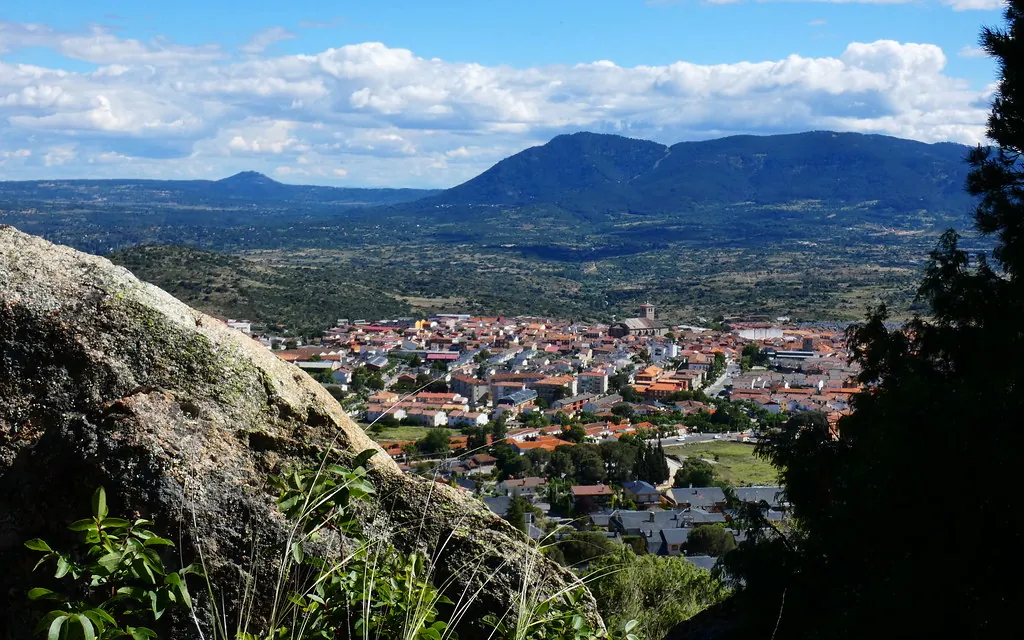
Early in the day, as the sun begins to filter through the pines of the Valle del Alberche, Navalmoral is still only half awake. Low light slides across stone walls, leaving muted greys and greens on the façades. At just over 1,000 metres above sea level, the air carries that dry mountain freshness that clears the head with each breath.
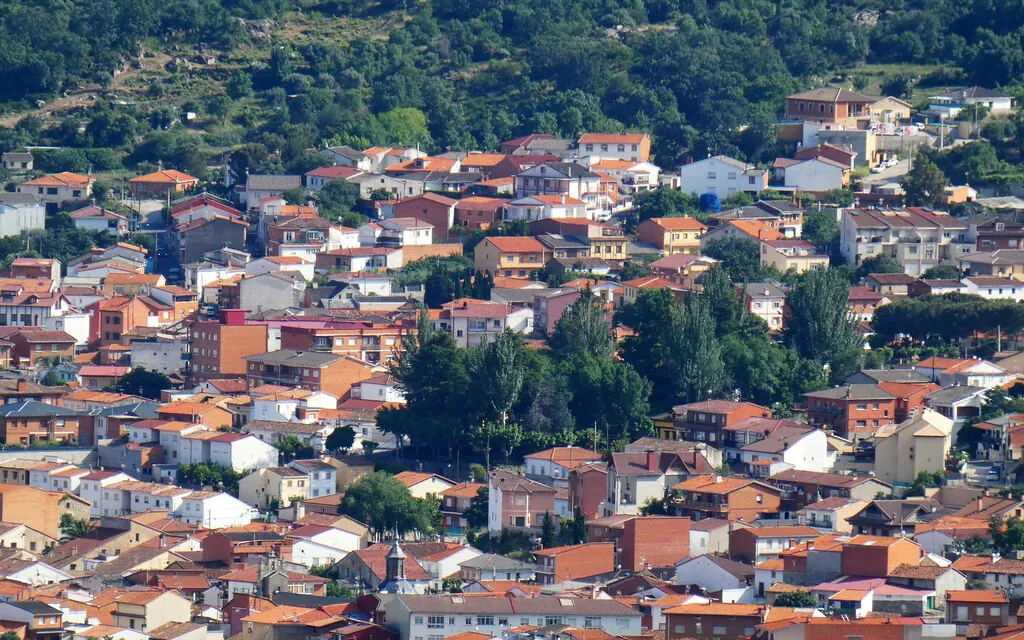
Navalmoral, with around 445 registered residents, sits quietly on a slope above the valley. It is small and can be crossed in a matter of minutes, though it makes more sense to take your time. Streets are narrow, with stretches of stone paving and some adobe houses. There are wooden gates darkened by age, small enclosures for animals, and chimneys that in winter trace thin lines of smoke above the rooftops.
Life follows a familiar rhythm seen across many villages in the Sierra de Ávila. There is some livestock, small kitchen gardens, and neighbours who know each other by name. It is not set up for large numbers of visitors, and there is little in the way of infrastructure aimed at tourism. That absence helps keep the atmosphere calm for most of the year.
The main square is simple, more an open space between houses than a formal plaza. At certain times of day, voices carry easily from one bench to another: talk of whether it has rained enough, the state of the paths, or which part of the hills might be best for a walk that afternoon.
Stone, wood and quiet details
At the centre of the village stands the parish church dedicated to San Pedro. It is a sober building, with thick stone walls and small windows, much like many rural churches in this part of Ávila. The bell tower rises just above the rooftops, and the bells still mark out the hours of the day.
There are no standout monuments as such. What defines the village is its vernacular architecture. Houses built from irregular masonry, roofs covered with curved clay tiles, and wooden doors fitted with ironwork worn smooth over time. On some façades, logs are stacked ready for winter, and it is not unusual to see chickens moving about in small enclosures beside the houses.
Walking through the streets, small details begin to stand out. A stone bench set beside a doorway. A vine climbing a south-facing wall. A glimpse into an inner courtyard where the ground is laid with cobbles. None of these elements demand attention, but together they give the place its texture.
Paths through pinewoods and open ground
Leaving the village, dirt tracks lead out into the surrounding hills. Not all are signposted, and some split off without much indication of where they go. They are part of an older network of routes that once connected plots of land, grazing areas and neighbouring villages.
Pinewoods cover much of the landscape. Between the trees, clearings open up where livestock often graze, and from certain points there are views across the Valle del Alberche stretching into the distance. The light changes noticeably over the course of the day. By late afternoon it turns warmer, casting longer shadows from the trunks across ground carpeted with pine needles.
The slopes can be deceptive. From afar they look gentle, but on foot they demand more effort than expected. Anyone heading out into the surrounding countryside would do well to carry water and have a basic sense of direction, as it is easy to end up on a different path from the one first intended.
Autumn mushrooms and shaded streams
With the first autumn rains, the pinewoods around Navalmoral begin to attract people searching for wild mushrooms. Níscalos, a type of saffron milk cap common in Spanish forests, appear regularly, and in some years boletus can also be found among the damp pine needles. There is not always an abundance, and each season depends heavily on the weather, so it is worth checking conditions beforehand and, above all, only collecting what is properly recognised.
Close to the village, small streams run between rounded stones and patches of riverside vegetation. In summer, these shaded areas offer a welcome sense of coolness, with water that keeps the air slightly fresher even on hotter days.
During the height of summer, timing matters. Early morning or the last hours of the afternoon are the most comfortable moments to be outside. At midday, the sun falls hard on the stone surfaces, and the slopes feel longer than they appear on a map.
A place that moves at its own pace
Navalmoral is not a destination built around a packed itinerary. It works better as a place to walk for a while, to sit quietly, or to listen to the wind moving through the tops of the pines. Time passes slowly here, in much the same way as it does in many small villages across the Sierra.
Nothing insists on attention, and there is little sense of urgency. The appeal lies in that steady rhythm, in the combination of stone, landscape and everyday life that continues without much alteration. It is a setting where the simplest activities, a short walk, a conversation in the square, a pause in the shade, become enough to fill the day.