Full Article
about Navalosa
Known for its 'cucurrumachos' (masquerade) and typical stone huts.
Hide article Read full article
At the edge of the Sierra
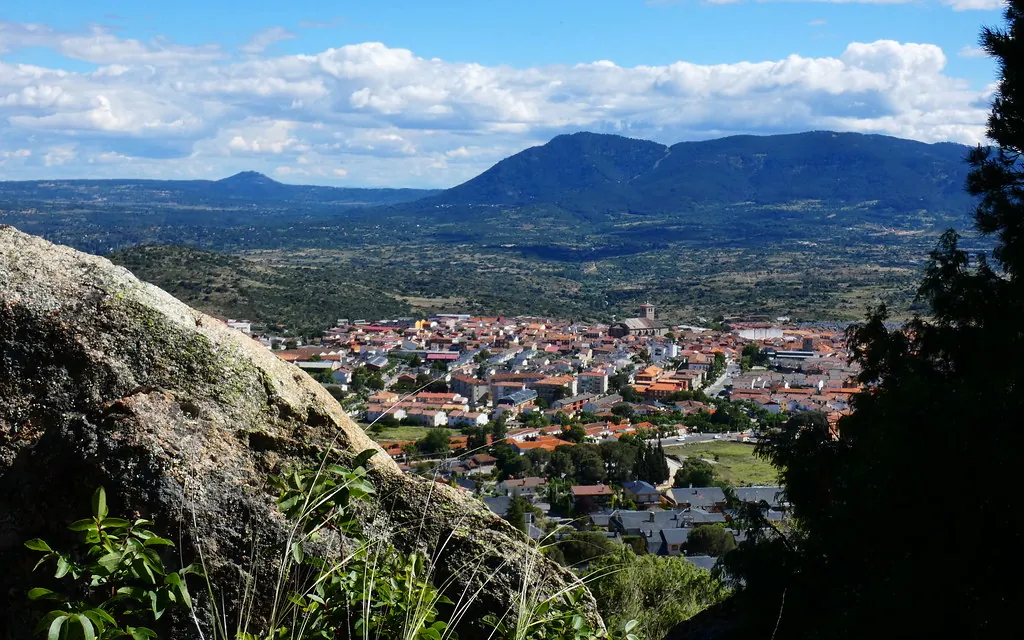
Just outside the village, on the slopes that descend from the Sierra de Gredos, the silence feels different. On a clear day, once the sun has taken the chill off the morning, the air carries the scent of resin and damp earth. Navalosa lies in the Valle del Alberche, a small settlement with barely more than three hundred residents, set at over 1,300 metres above sea level. When night falls and the sky is clear, the stars appear with a sharpness that is rare in larger places.
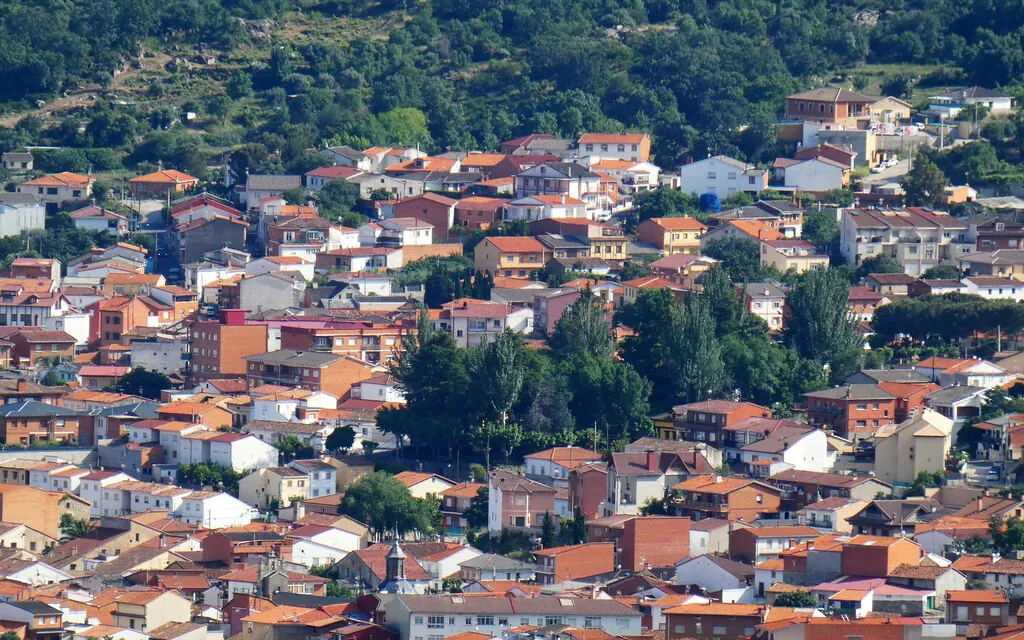
The streets are short and paved with stone. Houses are built in granite, with darkened wooden balconies and heavy doors. There is no sense of display in the architecture. Everything seems designed to withstand long winters and cold winds. Near many homes there are still small vegetable plots, where potatoes, cabbages or a few rows of beans are grown when the weather allows.
The heart of the village
At the centre stands the church of San Juan. Its thick masonry walls and restrained appearance are typical of villages in this part of the mountains. Around it sit some of the oldest houses, with uneven stone façades and tall chimneys rising above the roofs.
A walk through Navalosa does not take long, as the village is small, yet it rewards a slower pace. At certain times of day, everyday sounds carry clearly: hens clucking in a yard, a dog barking from a nearby threshing ground, or a tractor making its way up the main street.
Paths into the pine forest
The built-up area gives way quickly to woodland. Dense stands of Scots pine spread across the slopes, their floors covered in dry needles. Open clearings break up the forest, turning into meadows that fill with livestock during the summer months. Many of the paths have no formal signposting. Some follow old livestock routes, others are tracks used by locals to reach distant grazing land or vegetable plots.
After rain, the scent of resin becomes stronger, and the dark forest floor holds moisture for hours. Tracks of roe deer or wild boar often appear along the edges of the paths, although sightings depend on luck.
Anyone unfamiliar with the area would do well to carry a map or GPS. Mist can appear easily on certain days, and several track junctions look very similar.
Looking over the Valle del Alberche
The landscape opens up where the terrain rises. The pine forest breaks apart, giving way to meadows with views south across the Valle del Alberche. On clear days, the line of peaks in the Gredos range forms a rugged backdrop that feels close at hand.
Summer brings more movement to these higher areas. Cows and sheep graze in the clearings, and the sound of bells often carries across the slopes.
Winter in the mountains
Winter makes itself felt here. Snow covers the forest tracks, and sound becomes muted, almost absorbed by the landscape. Some routes can be explored with snowshoes by those who have the right experience and equipment, although there are no facilities or organised activities linked to snow.
It is sensible to check the weather before heading into the hills. Conditions can change quickly, and the cold at this altitude becomes serious as evening approaches.
Food, seasons and local rhythm
Cooking in the area centres on hearty dishes. Beef raised locally features alongside legume stews and potatoes. When the season arrives, mushrooms from the pine forest also appear. As Navalosa is a small village, options are limited and opening times can vary depending on the time of year. It is worth checking what is available on the day, especially outside the summer months.
In August, the village usually celebrates its patron saint festivals. During those days, Navalosa feels different. Residents who live elsewhere return, and evening dances take place in the main square. September brings another celebration linked to food and the traditions that mark the end of summer.
For the rest of the year, the pace remains calm, closely tied to the mountains and to livestock. There are no major attractions or extensive tourist facilities. What exists is a small village surrounded by pine forest, where the rhythm of daily life follows the sierra. Time matters here. A visit works best when there is no rush, as most things unfold slowly.