Full Article
about Navarredondilla
Mountain village near El Burguillo; rocky terrain and vegetation.
Hide article Read full article
Between the Plateau and the Peaks
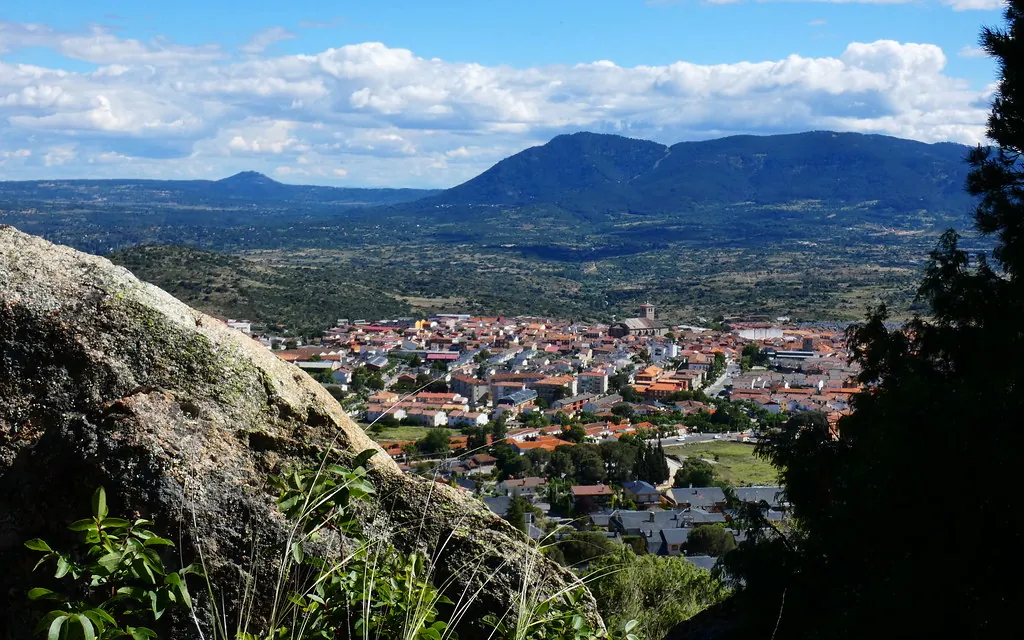
Tourism in Navarredondilla only makes sense when you understand where the village stands and how it came to be. It sits on the northern slope of the Sierra de Gredos, in the upper valley of the Alberche, in an area that for centuries functioned as a corridor between the Castilian plateau and the mountain passes. Today around 150 people live here, yet the cluster of houses and the network of paths around them speak of an older community shaped by woodland use, livestock farming and seasonal movements of herds.
Most of the villages in this part of the province of Ávila took shape during the medieval repopulation led from the city of Ávila. After the frontier with al‑Ándalus shifted, the Castilian Crown reorganised and settled these territories. There are not always clear documents for every small settlement, but the pattern is recognisable: hamlets tied to high pastures, with dehesas, oak woods and natural routes leading towards Gredos. Navarredondilla fits that model.
The village stands at more than 1,000 metres above sea level. Its surroundings combine oak woodland, pine trees and open meadows where cattle can still be seen grazing. Streams descending from the sierra feed into the Alberche, which further south continues its course towards southern Castile and Madrid.
A Mountain Village Shaped by Livestock
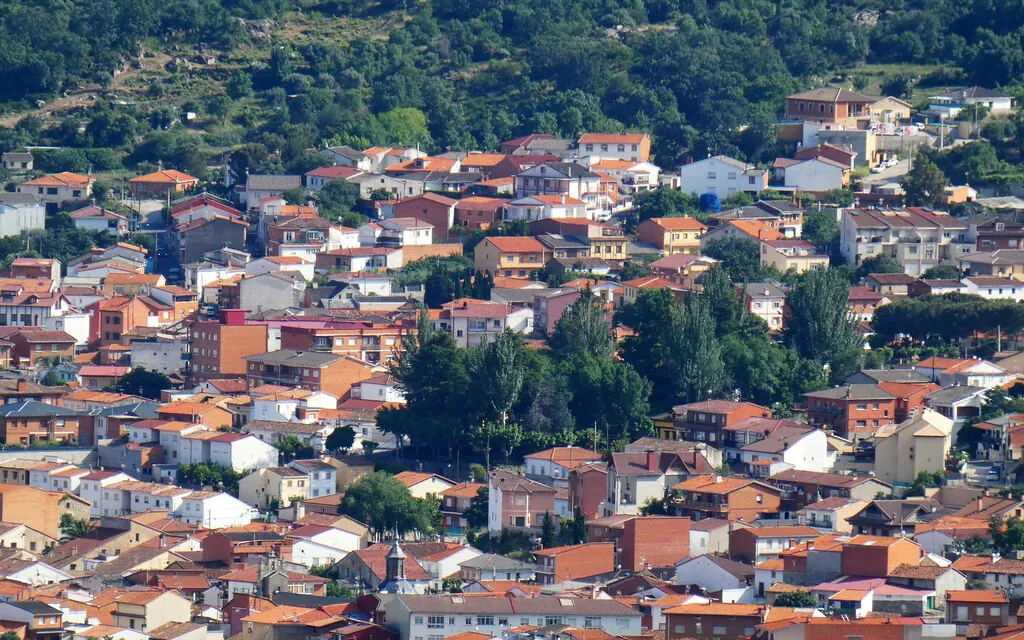
The layout of Navarredondilla follows the logic common to many villages in Gredos. Granite houses, thick walls and very little ornamentation define the built fabric. Stone was used because it was readily available underfoot. Timber appears mainly in balconies and sun-facing galleries, practical rather than decorative features.
The streets are short and gently sloping. In certain stretches the old layout is still visible, designed for the movement of animals rather than cars. For centuries the local economy revolved around livestock, communal grazing land and small vegetable plots. That close relationship with the land explains the presence of paths connecting the village to meadows, springs and routes leading to neighbouring hamlets.
These tracks were not secondary features but essential infrastructure. They linked winter and summer grazing areas and opened access to woodland where firewood was gathered. Even now, they form part of the landscape’s structure, reminding visitors that the village grew in response to practical needs.
The Parish Church and Collective Memory
At the centre of the village stands the parish church. It is not a monumental building, but it follows the rural architectural models of the province of Ávila: stone construction, a compact volume and alterations accumulated over time. In many churches across the area, the base dates from the late Middle Ages or the early centuries of the Early Modern period, with later interventions layered on top. Something similar has occurred in Navarredondilla.
Its significance lies less in architectural detail than in its role in local life. For generations it served as the meeting place for the concejo, the traditional village council, and as the setting for communal decisions. Festivals were organised here, agreements discussed and family celebrations marked. In small mountain communities such spaces concentrate both religious and civic life, and this church has fulfilled that function.
Walking through the village, the church acts as a reference point. The streets converge around it, reinforcing its position at the heart of daily routines and annual festivities.
Paths Through the Upper Alberche
Around Navarredondilla several traditional paths remain, once linking it to other settlements in the Alberche valley. Many were created to move livestock between seasonal pastures or to reach woodland areas for firewood collection.
Today some of these routes are used for walking. Not all are signposted, so it is wise to carry a map or ask local residents for guidance. The scenery alternates between oak woods, open meadow clearings and shallow dips where streams run. When the sky is clear, certain points offer views southwards towards the peaks of Gredos.
The wildlife is typical of these mountain ranges: deer, wild boar and birds of prey. In autumn, during the berrea, the rutting season of the red deer, their calls can be heard echoing from different parts of the valley. It is a reminder that despite the long history of human presence, the surrounding landscape remains largely rural and connected to natural cycles.
The Alberche itself begins here as a mountain river fed by small streams. Further downstream it will broaden and continue towards more densely populated areas, but in this upper section it is part of a quieter environment shaped by pasture and woodland.
Traditions and a Slower Rhythm
The patron saint festivals are usually held in summer, when many former residents who live elsewhere during the year return to the village. Processions, shared meals and gatherings in the main square set the rhythm. These are not events designed to attract large numbers of outsiders, but celebrations that maintain continuity within the community itself.
Navarredondilla can be walked end to end in about an hour. The compact size of the settlement makes it easy to grasp its structure quickly. What gives it depth lies beyond the houses: the network of paths, the landscape of the upper Alberche and the ongoing connection between village and surroundings.
This is a place where geography explains history. The altitude, the pastures and the natural passes towards Gredos shaped how people lived and moved. Even with a small permanent population today, those patterns remain legible in the built fabric and the terrain.
Reaching Navarredondilla is easiest by car. Public transport in this part of the sierra is limited, and the distances between villages are not insignificant. Once there, however, the scale encourages exploration on foot, following the same routes that once linked grazing land, woodland and neighbouring communities in the high valley of the Alberche.