Full Article
about Navatalgordo
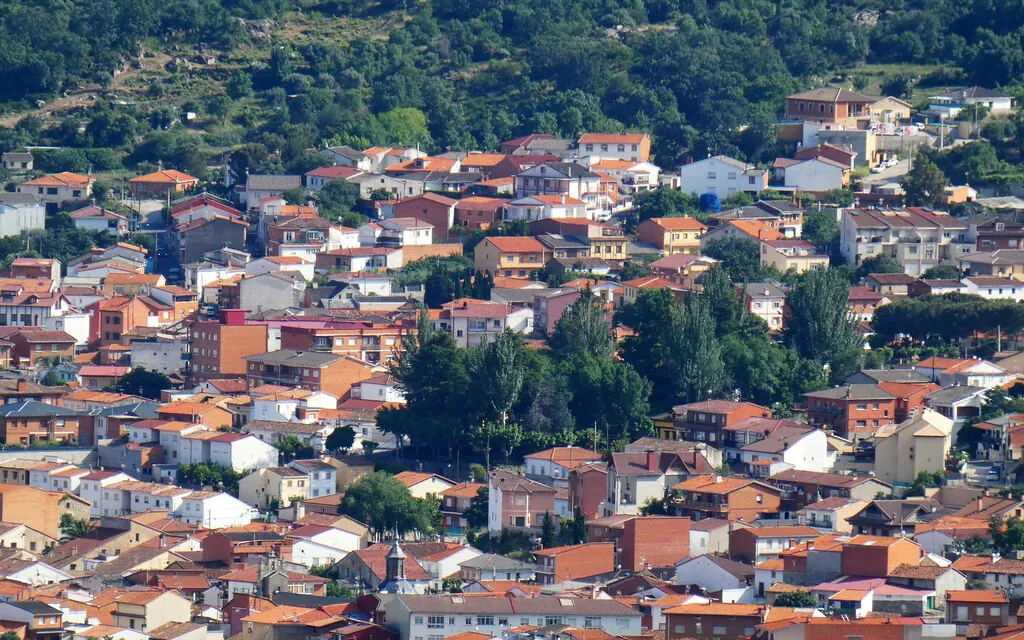
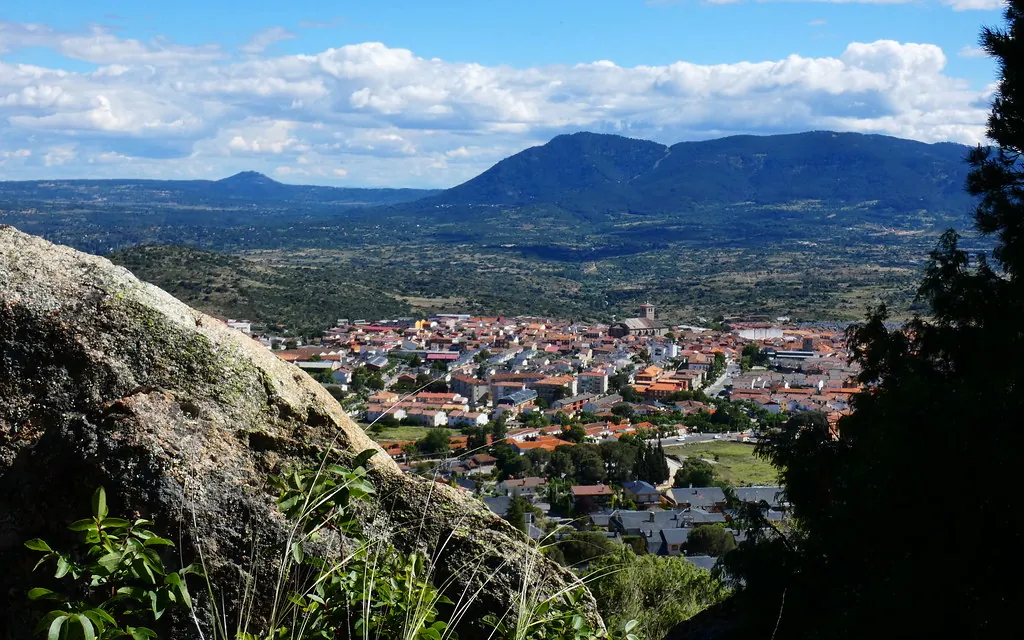
Mountain village overlooking the Alberche valley, known for its granite formations.
Hide article Read full article
A village that doesn’t try to impress
Some places appear everywhere, in guidebooks, on maps, on lists of must-sees. Others turn up almost by accident, when the road narrows and it feels like there’s nothing left ahead. Tourism in Navatalgordo fits more into that second category. You arrive without expecting much and find a village that simply carries on at its own pace, with few concessions to visitors.
Navatalgordo sits at around 1,260 metres above sea level in the Valle del Alberche, in the province of Ávila. It has a population of roughly 230 people. This is not a place that has reshaped itself for tourism. It still works as a mountain village: animal pens, kitchen gardens, granite houses and paths that lead straight out into the surrounding hills.
Inside Navatalgordo
The centre is quick to explore. Short streets, plenty of granite, and houses that look as though they have been standing there for generations. Some have updated windows or roofs, of course, but overall the village keeps that mountain feel, without any sense of being recently rebuilt or redesigned.
The parish church of San Juan Bautista is probably the most recognisable building. It is constructed in granite and has fairly simple lines. There are no elaborate decorations or striking interiors. That simplicity suits the place. Here, things lean towards the practical rather than the monumental.
Walking without a fixed route brings small details into view. Old doorways, small vegetable plots right next to houses, or stone enclosures. These are modest features, but they help explain how life has been organised here over generations.
Walking out into the Alberche landscape
The surroundings are where Navatalgordo becomes more interesting. The landscape mixes pine forests, oak trees and meadowland, and it changes noticeably with the seasons. In winter, the peaks of the Sierra de Gredos can often be seen in the distance when the sky is clear.
Several paths begin directly from the village. Some head towards nearby places such as Navalacruz or El Hornillo. Others simply disappear into scrubland and pasture. Not all of them are signposted, but many have been used for years as routes between plots of land or grazing areas.
It is not especially difficult terrain if you are used to walking in mountain areas. There are, however, plenty of slopes. This is Ávila, after all.
Stone shelters and traces of pastoral life
One of the more distinctive features of the area is the presence of stone huts known as chozos. They are scattered across meadows and hillsides. These small constructions were used by shepherds as shelter or for storing tools.
They do not form any kind of organised site or monument. In fact, some are partly hidden by vegetation. Even so, coming across one makes it easy to understand how pastoral life worked in this part of Gredos.
Stone enclosures are still visible, and livestock can be seen grazing on some plots of land. This is not a display arranged for visitors. It is simply the activity that has sustained the village for a long time.
Eating and planning your visit
It is worth coming prepared. Navatalgordo is small, and during the week there may be very little activity. In some cases, the simplest option is to bring something to eat or plan to head to another nearby village.
When food is prepared locally, the dishes are typically classic for the province. You might find judías del Barco, a type of bean dish from the area, patatas revolconas, mashed potatoes with paprika and pork, as well as beef or cured meats from the sierra. These are hearty meals, the kind that suit a day spent walking in the hills.
A simple piece of advice: do not arrive expecting to fill the day with activities. This is more the kind of place where you walk for a couple of hours, sit for a while, and then continue your journey through the valley.
Festivities and everyday rhythms
The main celebrations usually take place in August in honour of San Juan Bautista. They follow the pattern of many mountain villages: evening dances, a procession, and plenty of reunions as residents who live elsewhere return for a few days.
In January, the bonfires of San Antón are still part of local tradition. This custom is common across the area. Depending on the year, they may be more or less visible to visitors, but they remain part of a rural calendar that continues to shape the rhythm of winter.
Navatalgordo does not try to stand out. That is part of its appeal. It is a place where the point is not so much to see specific sights, but to spend some time within a landscape that still feels largely unchanged in the Valle del Alberche.