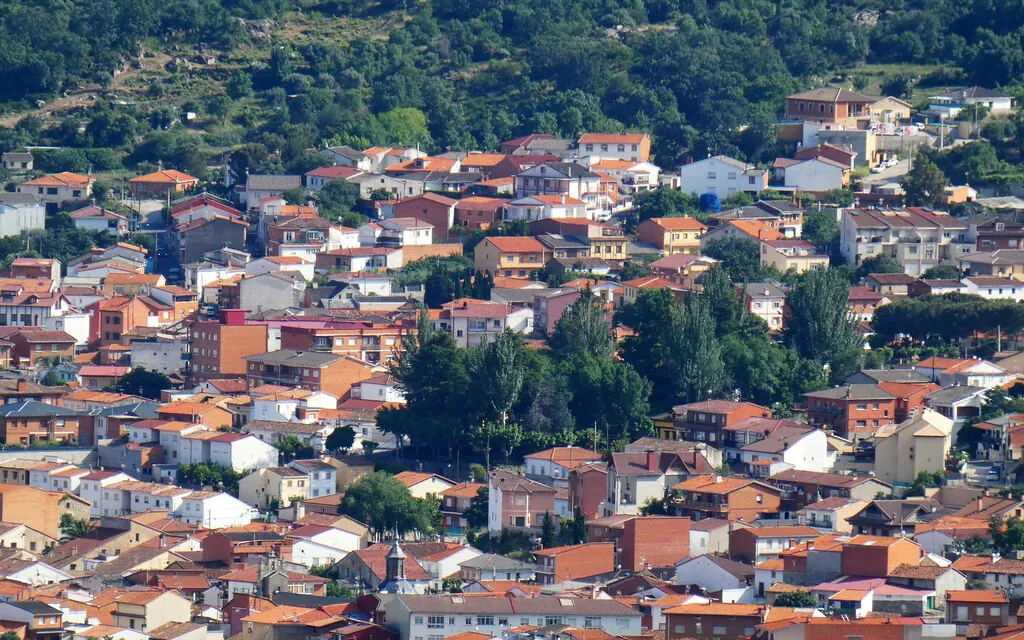
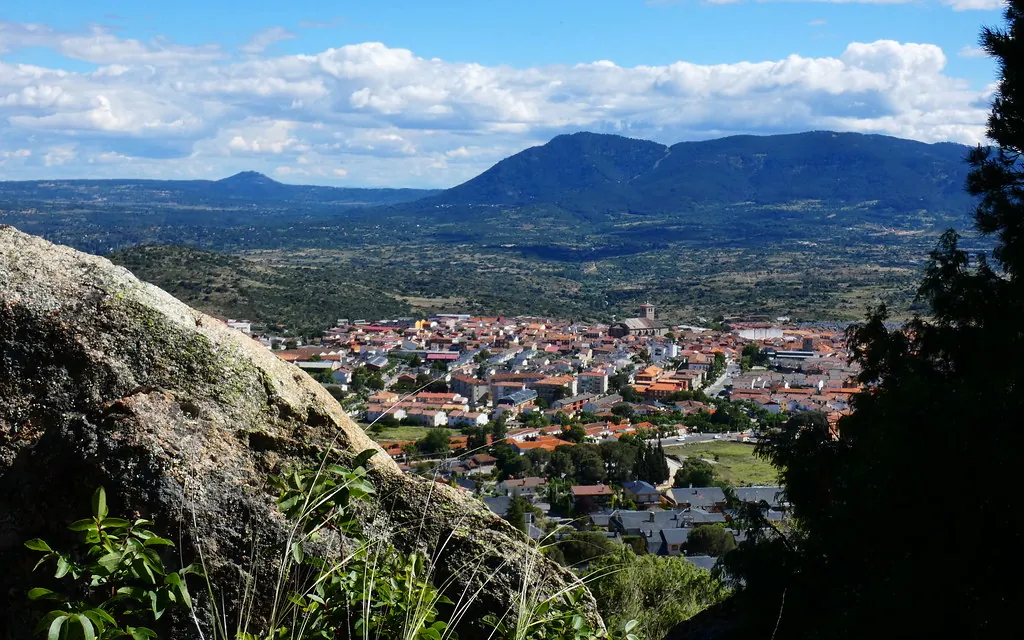
Vista aérea de San Juan de la Nava
Instituto Geográfico Nacional · CC-BY 4.0 scne.es
Castilla y León · Cradle of Kingdoms

San Juan de la Nava

The church bell strikes noon and the only other sound is a tractor grinding through lower gear somewhere beyond the stone houses. At 1,117 metres a...

422 inhabitants · INE 2025
1117m Altitude

Why Visit

Mountain Church of San Juan Hiking

Best Time to Visit

summer

Fiestas of the Virgen de la Misericordia (October) octubre

Things to See & Do
in San Juan de la Nava

Heritage

  • Church of San Juan
  • views over the Burguillo

Activities

  • Hiking
  • Water sports (nearby)

Festivals
& & Traditions

Fecha octubre

Fiestas de la Virgen de la Misericordia (octubre)

Las fiestas locales son el momento perfecto para vivir la autenticidad de San Juan de la Nava.

Full Article
about San Juan de la Nava

Town overlooking the Burguillo reservoir; mountain-and-water setting

Ocultar artículo Leer artículo completo

The church bell strikes noon and the only other sound is a tractor grinding through lower gear somewhere beyond the stone houses. At 1,117 metres above sea level, San Juan de la Nava is already five degrees cooler than the baking plain of Ávila forty minutes behind you, and the air carries the sharp scent of pine rather than sun-baked straw.

Four hundred residents, one proper bar, no cash machine, and a landscape that demands sturdy shoes rather than flip-flops: this is the southern flank of the Sierra de Gredos, where the province of Ávila tips into the Valle del Alberche and village life still answers to the seasons, not to TripAdvisor.

Granite, Timber and Winter-Proof Walls

Forget the sugar-cube villages of Andalucía. Houses here are built for snow-load and January nights that plunge below –10 °C. Granite blocks the colour of storm clouds rise two storeys, wooden balconies taper to shed weight, and every front door is thick enough to blunt a shoulder. Wander the few lanes that make up the centre and you will spot the giveaways of a working past: iron hitching rings set into garage walls, stone troughs now filled with geraniums, bread-oven mouths bricked up when electricity arrived. Nothing is prettified; paint flakes, weeds colonise roof tiles, a yapping terrier launches itself at a gate. It feels lived-in, not curated.

The Iglesia de San Juan Bautista squats at the top of the slope rather than dominating a plaza. Step inside and the temperature drops another three degrees. Inside is plain stone, a modest baroque retablo and pews polished by centuries of Sunday obligation. Mass is still advertised on a hand-written card Blu-tacked to the door; turn up at 11 a.m. on a Sunday and you will be nudged into a pew by widows in black who sing the responses without glancing at the hymn sheet.

Walk Out of the Door and Keep Going

San Juan is essentially the last stone comma in a sentence that runs straight up into the Sierra. Three way-marked paths leave the village: the gentlest follows the Arroyo de la Nava for 45 minutes to a stone bridge where midwives once washed newborns; the middle climbs through Scots pine to the Puerto de Chilla (1,550 m) in two hours; the serious one keeps going to the Circo de Gredos and the refuge at Laguna Grande, a full day’s haul requiring a dawn start. In May the path edges are laced with wild peonies; by October the same slopes echo with shotgun ricochets as hunters flush red-legged partridge.

Maps are sold at the bar for €6, but the barman will draw a route on a napkin if you order a coffee. GPS works until the canyon walls narrow, then it is back to map-reading and the rule that every junction looks identical in a pine forest. Mobile coverage is patchy; tell someone where you are going or, better, pay local guide Diego Martín (€60 half-day) who can explain why the bark of the wild pine was once worth more than the timber.

What Arrives on the Back of a Pick-Up

The weekly fruit-and-veg van pulls into the plaza at 10:30 every Thursday. By 10:35 half the village has appeared: housewives testing peaches for ripeness, the mayor in work boots, a teenage couple already arguing. Ask for calçots and you will be laughed at—this is Castilla, not Catalonia. What you get is potatoes that still smell of earth, flat beans the width of a cigar, and tomatoes with cracked skins that taste of something. The same van sells tinned tuna, cheap sunglasses and gossip.

For anything more exotic you drive 18 km to Piedrahíta, the nearest proper market town, where there is a Dia supermarket and a chemist that stocks mosquito repellent in summer and Ibuprofen for hikers all year. The road wriggles over the Puerto de Piélago; in winter the pass is closed by snow more often than the council admits, so bread and milk vanish from the village shop overnight and locals revert to the habit of keeping a whole pig in the freezer.

Eating Without a Menu in English

The Bar Casa Julian opens at seven for farm workers and does not close until the television is showing static. There is no written menu; instead the owner reels off what his wife felt like cooking. Standards are cocido (a three-pot chickpea feast that feeds two), judías con chorizo (beans simmered with paprika-heavy sausage) and patatas revolconas, a mash of potato, bacon and sweet pimentón that sticks to the ribs at altitude. A plate costs between €8 and €12, wine from the barrel is €1.50 a glass, and pudding is whatever fruit the bar man’s sister-in-law brought from her garden. Vegetarians get eggs—fried, scrambled or in a Spanish omelette thick as a textbook.

If you are self-catering, the butcher in neighbouring Hoyos de Miguel Muñoz sells morcilla that crumbles like Christmas pudding and beef from animals that grazed within sight of the village. Ask for "carne para guisar" and you will get shin, gelatinous and cheap, perfect for a slow pot on the wood-burner while the fog rolls up the valley.

When the Village Lets its Hair Down

Fiestas begin on the evening of 23 June, the eve of San Juan. Teenagers drag bundles of pruned pine into the plaza, douse them with diesel and light a bonfire hot enough to scorch the church eaves. The brass band arrives on the back of a flat-bed lorry, tunes up for forty seconds and launches into pasodobles until three in the morning. Locals claim the fire jumps over which couples hold hands will last the year; outsiders usually trip on the cobbles and singe their eyebrows instead. Entry is free, beer is €1 a plastic cup, and at some point everyone processes behind the statue of the saint, carried by eight men who learned the shoulder rhythm in the army.

August brings the Fiesta de la Vaquilla, a gentler version of Pamplona’s madness. A heifer is let loose in a makeshift ring of hay bales; children dart about, adults bet beers on who will last longest, and the animal is rewarded with feed rather than slaughter. It is silly, good-natured and over by dusk so the bar can resume normal service.

Beds, Barking Dogs and Early Wake-Up Calls

Accommodation is limited. Casa Rural El Alcornoque (two doubles, one single, from €80 per night) is a converted grain store with Wi-Fi that flickers whenever the microwave turns on. The owner, Pepa, leaves freshly-laid eggs on the windowsill and will lend wellies if the fields are muddy. Alternatively, the village association has restored three stone cottages that can be rented by the room (€35 pp) but bathrooms are shared and hot water depends on solar panels—long showers are discouraged.

Dogs patrol roof terraces and announce dawn at the first glow. There is no street lighting beyond the plaza; bring a torch and expect to be offered a shot of orujo by a neighbour who wants to know why you are wandering about in the dark. Check-out is 11 a.m. sharp because the cleaner has to get back to her goats.

The Practical Bit Without the Bullet Points

San Juan de la Nava sits 108 km west of Madrid. Public transport is theoretical: one bus leaves Madrid’s Estación Sur at 16:00, reaches Piedrahíta at 18:20, and you still need a taxi for the last quarter-hour. Hiring a car is simpler; the final 12 km snake up the AV-931 with enough hairpins to test the handbrake. In winter carry snow chains even if the forecast is benign—weather in the Sierra flips in the time it takes to finish a coffee.

Phone reception is Vodafone-only in the upper streets. The nearest petrol is in Piedrahíta, the nearest hospital 35 km away in Ávila. Bring cash: the bar takes cards reluctantly and the fruit van never does. And if the church bell rings at an odd hour, someone has died; locals will close the road for the hearse—wait, remove your hat, let the village pass.

Key Facts

Region
Castilla y León
District
Valle del Alberche
INE Code
05211
Coast
No
Mountain
Yes
Season
summer

Livability & Services

Key data for living or remote work

2024
Connectivity5G available
HealthcareHospital 19 km away
EducationElementary school
Housing~5€/m² rent · Affordable
Sources: INE, CNMC, Ministry of Health, AEMET

Planning Your Visit?

Discover more villages in the Valle del Alberche.

View full region →

More villages in Valle del Alberche

Traveler Reviews