Full Article
about San Juan del Molinillo
Mountain municipality made up of several hamlets; rugged, peaceful landscape
Hide article Read full article
Getting There and First Impressions
If you’re planning a visit to San Juan del Molinillo, the first thing to think about is the car. At the entrance to the village there’s a small area where people usually park. Space is limited, and at weekends or in summer it fills up quickly. Arriving early saves you the trouble of circling around.
The village lies about 50 km from Ávila. The usual route follows the N‑502 towards Arenas de San Pedro, then branches off onto narrower roads through the Valle del Alberche. Expect bends and stretches with minimal signage. That’s fairly typical in this part of Spain, but it’s worth taking your time.
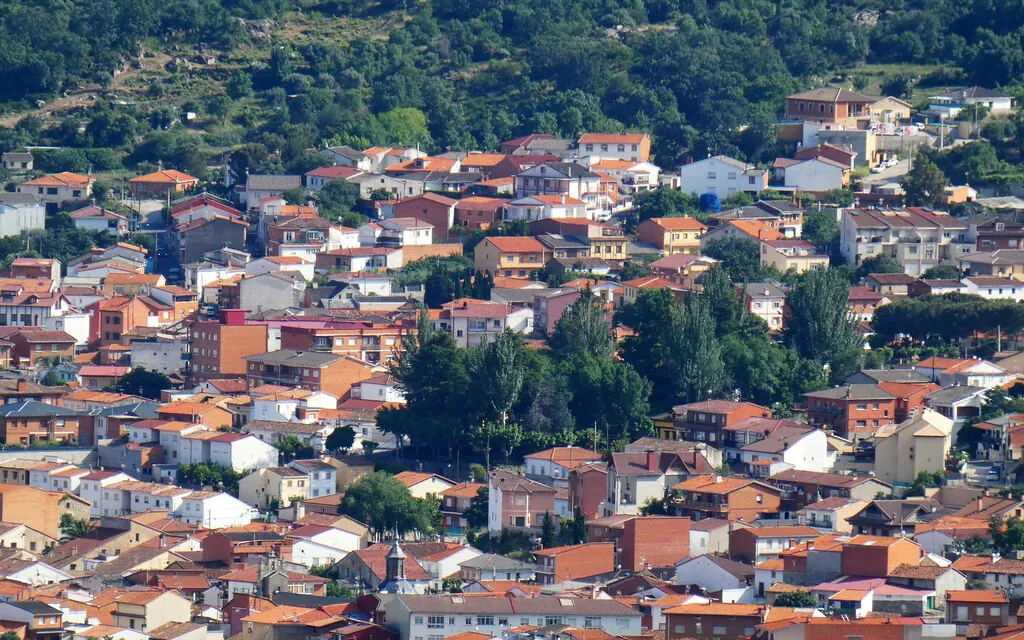
From a distance, San Juan del Molinillo doesn’t immediately stand out. It blends into the landscape rather than announcing itself, which is part of its character.
A Village Shaped by Work
San Juan del Molinillo is small and straightforward. Stone houses, tiled roofs and a scattering of buildings that still preserve old corrals or traditional ovens reflect a long history tied to farming and livestock. This isn’t a place that has reinvented itself for visitors. Its appearance still follows the rhythms of everyday rural life.
The parish church is simple. Built in berroqueña stone, with thick walls and little decoration, it serves its purpose without drawing attention. It feels part of the village rather than a separate monument.
Walking through the streets, small details start to emerge. Wooden balconies, stones once used for shoeing horses, and traces of old ovens appear here and there. Not everything has been restored, and that absence of polish says as much about the place as anything carefully preserved.
Walking Beyond the Village
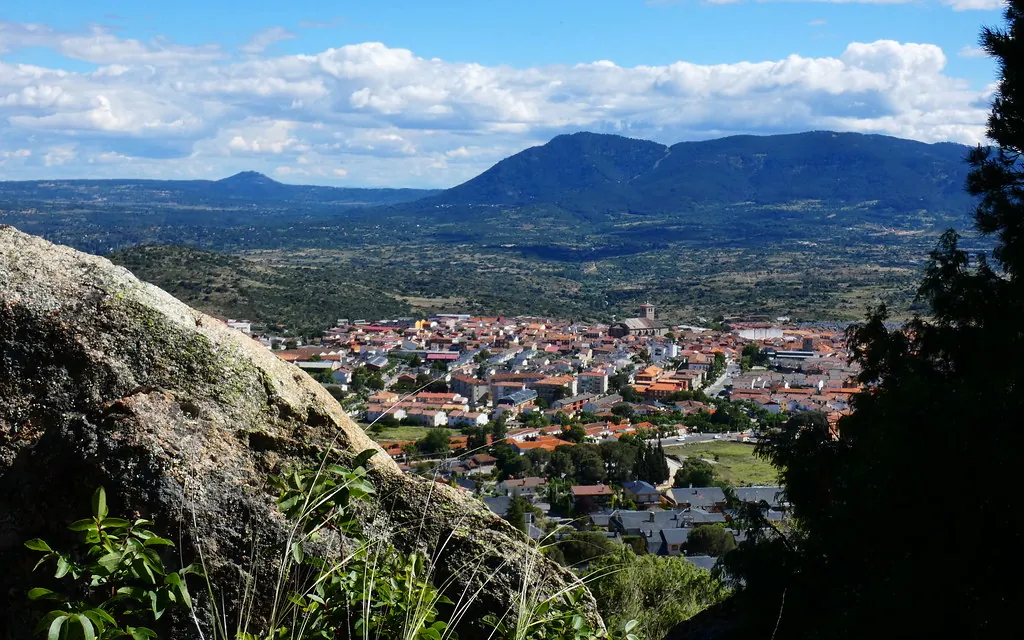
The most interesting parts lie outside the built-up area. The surrounding land shifts between pine forests, oak groves and open pasture typical of the Valle del Alberche. Granite formations are scattered across the hills: large rounded boulders and rock outcrops that break up the terrain.
Old paths still exist, originally used for livestock or access to plots of land. Many of them lack modern signposting. If you plan to wander further out, it’s sensible to have a map or a GPS track.
From higher points, the view opens across the valley and towards nearby mountain ranges. The landscape changes noticeably depending on the time of day. Early morning and late afternoon soften the light and bring out contrast, while midday flattens everything under stronger sun.
For those wanting a more demanding walk, some routes connect with the lower slopes of the Sierra de Gredos. There are steep footpaths and nearby passes. Distances aren’t especially long, but the gradients can be.
Wildlife leaves its mark on the area. Tracks appear on forest paths, and there’s movement at dawn. Deer, wild boar and birds of prey are present, though they tend to stay out of sight during the day.
Autumn in the Pines
In autumn, the nearby pine forests often produce níscalos, a type of saffron milk cap mushroom common in Spain. In some years, boletus also appear. It depends heavily on rainfall.
As in any mushroom-growing area, knowing what you’re picking matters. Local people are familiar with the varieties. Anyone coming from outside would be wise to get informed before collecting anything.
Festivities and Everyday Life
The main celebration usually takes place at the end of June in honour of San Juan Bautista. It includes religious events along with gatherings among neighbours. Many people who have family ties to the village return during those days.
August often brings a more informal kind of celebration, linked to those who spend the summer in the area.
Livestock is still part of daily life. Sheep are commonly seen in the surrounding fields, and horses near corrals. This isn’t a staged reminder of the past. It remains part of how the village functions, even if less than before.
Before You Go
Services are limited, and not everything stays open year-round. It’s best to bring what you might need before arriving.
If you’re only stopping briefly, a simple plan works well: walk through the village, then head out along one of the nearby paths. Footwear with a solid sole is useful, as there are slopes and plenty of loose stone.
And one final point. If you arrive late and can’t find a place to park, don’t overthink it. Leave the car at the entrance and walk in. The village is small. You can cross it in about ten minutes.