Full Article
about Villanueva de Ávila
Mountain village, recently independent (formerly part of Navaluenga); privileged natural setting
Hide article Read full article
Morning arrives with the scent of cold firewood and damp earth. The first light slips through narrow streets and catches the granite façades, which still hold the chill of the night. This is how the day begins in Villanueva de Ávila, a village in the Alberche valley with just over 200 inhabitants, where life moves at the pace of the weather rather than the clock.
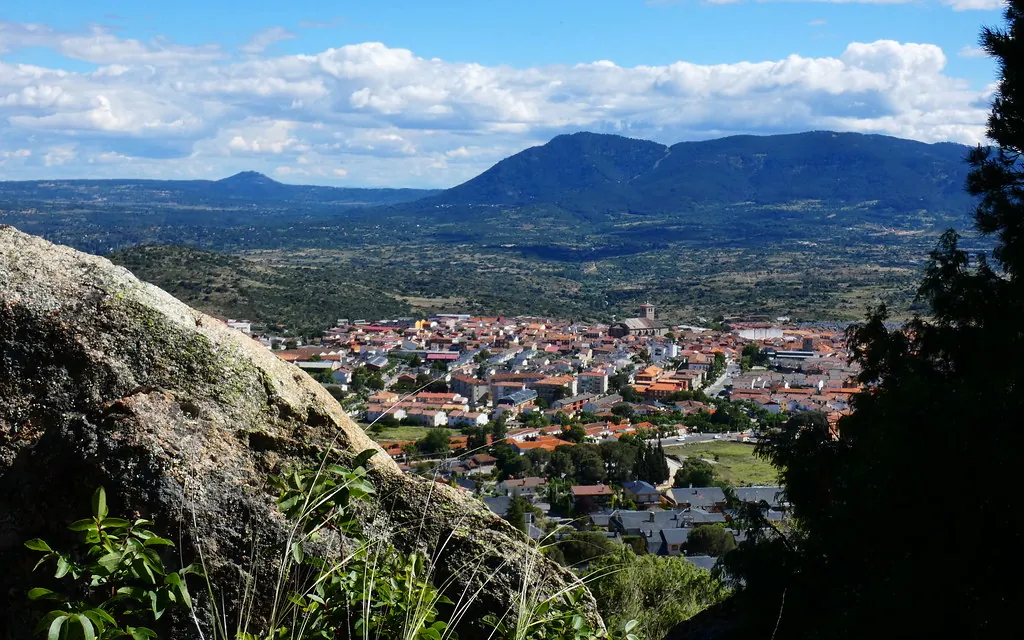
The village sits more than a thousand metres above sea level, surrounded by pines and oaks that close in the horizon on almost every side. The woodland reaches practically to the last houses. On clear days, from the edge of the village, the Alberche valley opens out below, and further off the shapes of the Sierra de Gredos rise in the distance.
Life here remains closely tied to the seasons. In winter, smoke from chimneys hangs low, caught between the slopes. In summer, evenings stretch out and the dominant sounds are insects in the grass and wind shifting through the pine tops. The changes are not subtle. They shape the rhythm of each day.
Granite Streets and Unhurried Walks
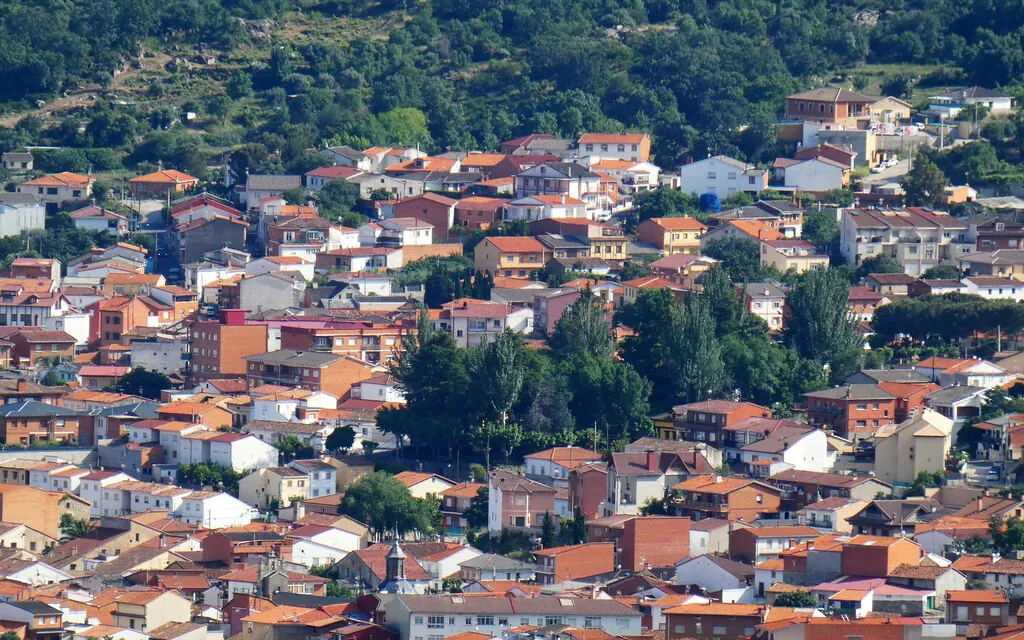
Villanueva de Ávila can be crossed in a short time, yet it rewards a slow walk. The streets follow the natural slope of the land, fitting in thick masonry houses with solid wooden doors and iron balconies that sometimes hold flowerpots or stacked firewood.
Granite defines the character of the village. It appears in walls, in worn steps and in the low enclosures that mark out small yards or vegetable plots. In the late afternoon, when the sun begins to drop, the stone takes on a soft orange tone and long shadows stretch across the façades.
There is little in the way of conventional sights. The appeal lies in the overall feel of the place: the weight of the stone, the quiet of the streets, the way the mountain seems to press close. Details emerge as you wander. A corner where the granite has been smoothed by decades of use. A doorway left slightly ajar. A stack of logs ready for colder days.
In summer, it is worth walking around the village early in the morning or towards dusk. At midday the sun can be strong, and some streets offer very little shade. At those hours the village feels almost paused, as if waiting for the heat to ease.
Paths Through Pines and Oaks
The surrounding landscape truly defines tourism in Villanueva de Ávila. There are no major waymarked routes or visitor centres. Instead, there are old paths that leave the village and head into the hills.
Some follow tracks used for years by livestock farmers and local residents to move between plots of land, streams and grazing areas. Many of these routes are short. Parts are along wider tracks, others narrow into footpaths where the ground is covered with pine needles and the air carries the resinous scent of the trees.
The woodland changes markedly in autumn. Mushrooms appear along the edges of paths, including boletus and níscalos, a type of saffron milk cap common in Spain. It is usual to see people walking slowly with a basket and a knife, eyes fixed on the ground. Anyone considering mushroom picking should check the local regulations beforehand and, above all, proceed with care. Some years are abundant, others produce very little.
Wildlife keeps its distance, yet it is present. At dawn or late afternoon a roe deer may cross between the trees. There is no guarantee of such encounters. They simply happen when the woodland is calm and footsteps are quiet.
These paths are not about reaching a summit or ticking off a landmark. They are about moving through the landscape at its own pace. A short walk can be enough to feel the shift from stone streets to forest floor.
The Year in a Village of Two Hundred
With just over two hundred residents, the calendar leaves a visible mark on daily life. In winter there are days when barely a car passes through and the streets remain almost empty for hours at a time. The cold settles in, and the presence of smoke above rooftops becomes part of the view.
The feast of San Pedro at the end of June brings together those who live here all year with relatives who return for those days. It is one of the moments when the village feels fuller and more animated. In August the atmosphere changes again. More houses open, and voices that are absent for much of the year are heard once more in the streets.
Food follows the traditions of this part of the province of Ávila. Veal from the local area features prominently. When the cold sets in, hearty stews appear on tables. Pulses arrive from nearby villages in the valley and form the base of many dishes. It is straightforward, substantial cooking shaped by altitude and climate rather than trends.
Visitors should bear something simple in mind: in conventional tourist terms, very little happens in Villanueva de Ávila. There are no headline attractions, no packed schedules of activities. The village does not try to fill the day for you.
That absence is, in many ways, the point. The experience here is pared back. A short walk into the hills. Sitting in the shade as evening falls. Listening to the wind move through the pines. At times, the entire village seems to fit inside a single quiet moment like that.
Villanueva de Ávila does not demand attention. It asks only for time and a willingness to slow down. In a world that often measures travel in checklists and photographs, this small village in the Alberche valley offers something less tangible but equally real: the steady passing of hours shaped by stone, forest and sky.