Full Article
about Arenas de San Pedro
County capital of the Tiétar; a monumental town with a castle and royal palace, ringed by lush nature on the southern face of Gredos.
Hide article Read full article
A castle that watches its own town
The castle of Arenas de San Pedro does not face outward towards distant threats. Its gaze falls squarely on the town below. From its battlements, the Condestable Dávalos kept an eye less on borders than on his own neighbours, the same people he had granted a town charter to in 1393. The building worked as a symbol of lordly authority rather than a defensive stronghold, and that idea still makes sense on a walk through the area.
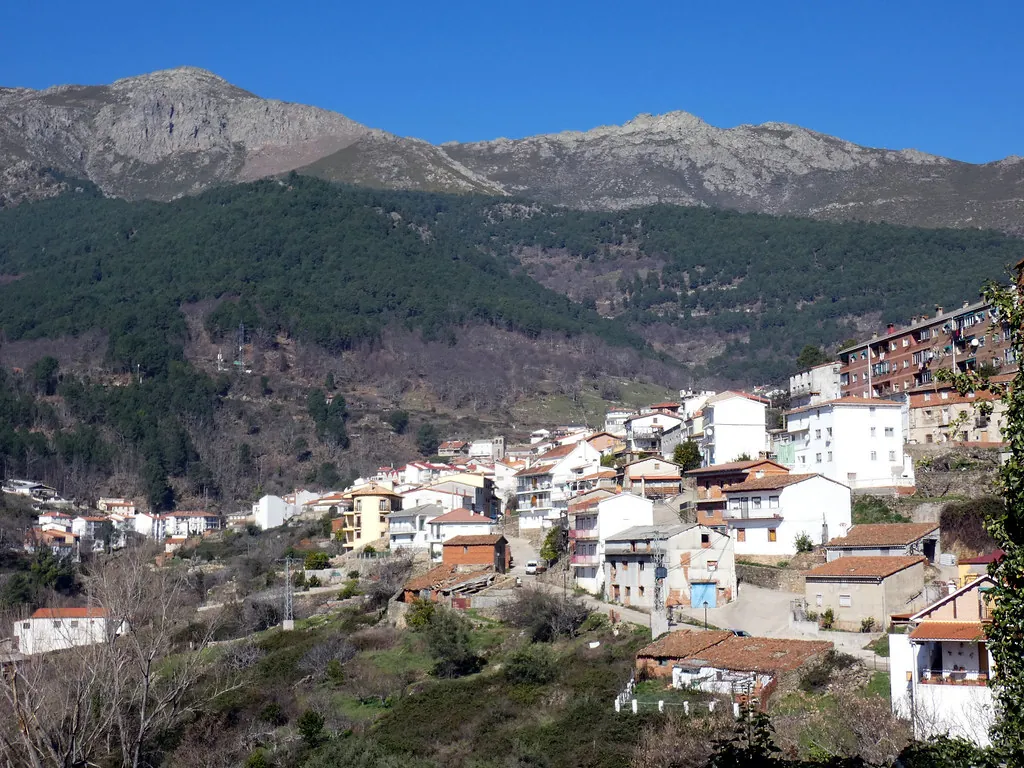
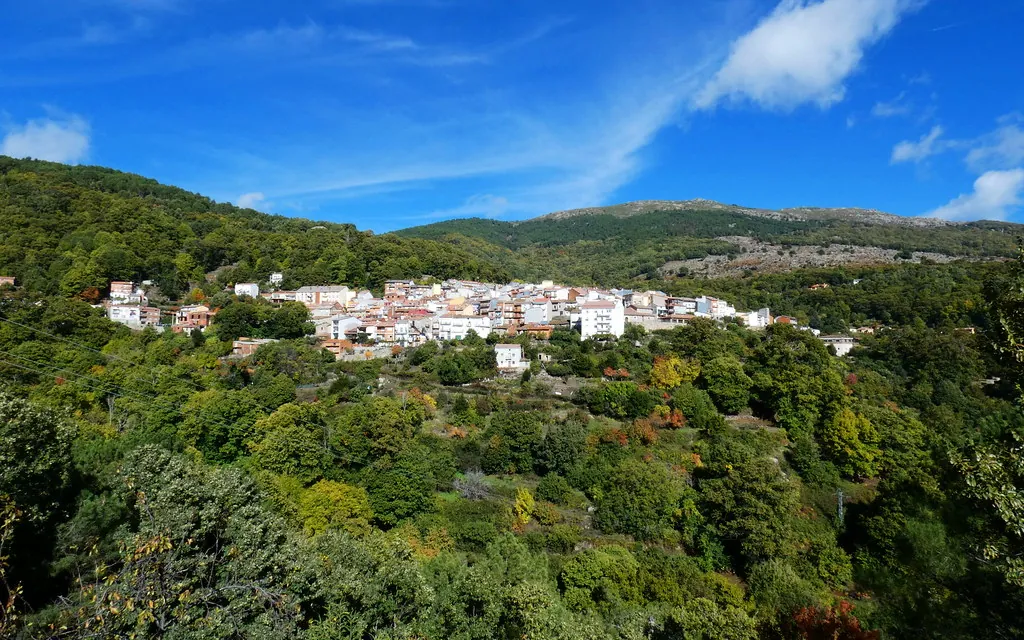
Arenas leans against the Sierra de Gredos, yet it always opens towards the Tiétar valley. The setting explains the town’s character: part mountain, part fertile lowland, with a long history shaped as much by control as by geography.
The infante and the unfinished palace
In 1779, Don Luis de Borbón, the younger brother of Carlos III, arrived with plans to establish his own court here. He commissioned Ventura Rodríguez to design a palace that, had it been completed, would have ranked among the most ambitious architectural projects of 18th-century Spain. The plans included hundreds of rooms, along with a chapel, a theatre, workshops and Italian-style gardens arranged with careful order.
His death just five years later brought everything to a halt. What remains today tells that story clearly. Visitors can walk through the basements, part of the ground floor and a handful of rooms where Goya painted portraits of the infante’s family in 1783. Beyond that, there are bare brick walls and structures left open to the sky. The unfinished surfaces say more than any display panel could about how dependent such grand plans are on the person funding them.
Ventura Rodríguez had already worked nearby at the sanctuary of San Pedro de Alcántara. The Franciscan friar founded a small convent there in 1558, set on a remote pass several kilometres from the town. He died in that same place, which later became a destination for pilgrims. Each autumn, tradition holds that his image is carried in procession from the parish church to the sanctuary.
Inside the cloister grows a thornless rosebush. The friars attribute it to a miracle of the saint. The plant itself is a known variety, but the story has endured for centuries, held in place by belief rather than botany.
Streets that remember
One street in the old quarter carries the direct name of Sinagoga. Documents from the late 15th century record the Jewish community paying tithes to the prior of San Pedro, suggesting there was a Jewish quarter here until the expulsion of 1492. After that moment, the community disappeared, but the street name remained. In many places such traces faded over time. In Arenas, it stayed in everyday use.
The castle also took on an unexpected role once its original purpose declined. Between the 19th century and the early 20th century, its parade ground was used as a cemetery. Graves were dug within the enclosure, and records were even kept in the tower itself. When the practice was later banned, the remains were moved elsewhere and most physical evidence disappeared. Only a single gravestone set into the stonework recalls that period.
The valley and its produce
The Tiétar valley changes the feel of this part of the province. Compared with the northern areas, the climate is milder and the fertile plain supports market gardening that has long supplied nearby towns and cities, including Madrid. Seasonal rhythms are still visible. In winter, large beans known as judiones are laid out to dry on nets. In summer, the same plots fill with melons and other vegetables.
Local cooking reflects the meeting point between cultivated land and mountain terrain. Dishes include chickpea stews with cod, patatas revolconas seasoned with pimentón de la Vera, and beef from Ávila, often served with roasted peppers. Traditional sweets rely on lard and spices, with the bollo de chicharrones appearing regularly on Sunday tables as well as during family celebrations.
Water, rock and quiet paths
A few kilometres from the town centre, in the direction of Ramacastañas, lie the Cuevas del Águila. They were discovered in the 1960s during work in a nearby quarry. Inside, a network of galleries reveals what water can do over time: stalactites hang from the ceiling, columns rise from the ground, and large sheets of rock form curtain-like shapes. Visits are guided and pass through several prepared chambers.
Closer to Arenas, the path along the río Arenal follows the water through alder trees and granite outcrops. Along the way stands a small single-arch bridge often described as Roman. Many specialists think it may be later, perhaps medieval, though the exact origin remains uncertain. Beneath it, pools form where people from the valley swim in summer. The shade carries the scent of thyme mixed with damp vegetation, accompanying the entire walk.
Moving through Arenas
The town is best explored on foot, though it involves a fair amount of climbing. Streets rise steadily from the river up towards the castle, so comfortable footwear makes a difference. The most commonly used parking area is near the sports facilities, from where it is easy to continue walking.
The tourist office usually opens morning and afternoon, although times can vary depending on the season. If it is closed, the municipal library in the square often has maps of the town and nearby routes.
From Arenas also begins the route known as the Cinco Villas, which is signposted and leads out into the surrounding area.