Full Article
about Candeleda
Tourist town on the southern slope of Gredos; mild microclimate
Hide article Read full article
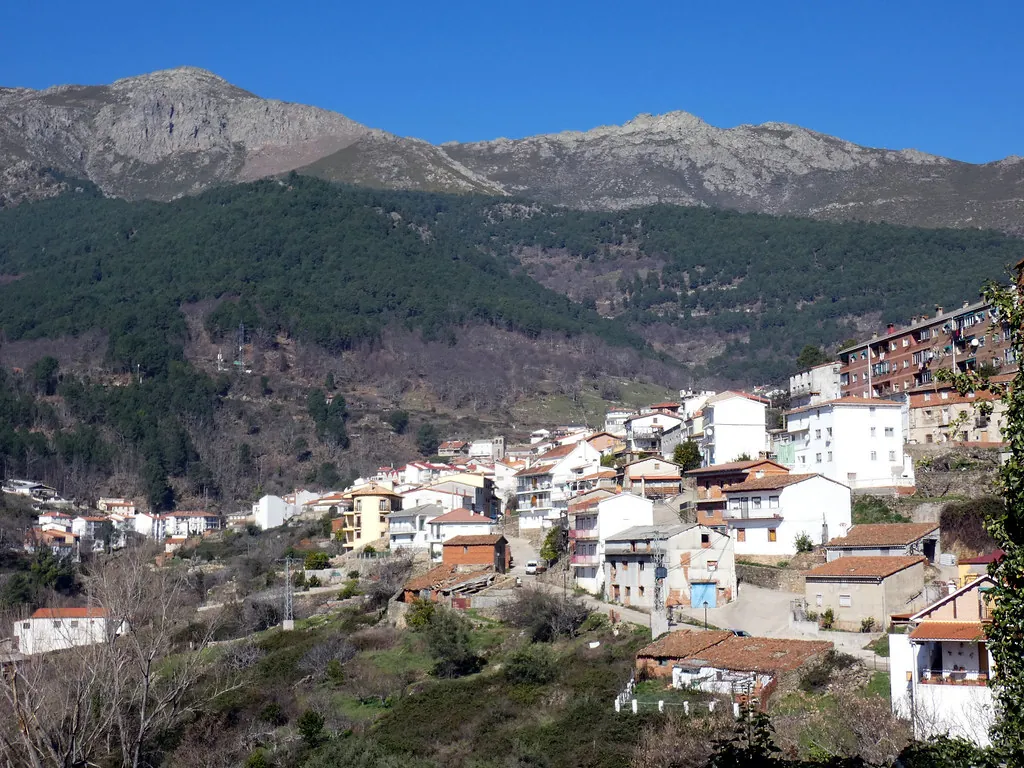
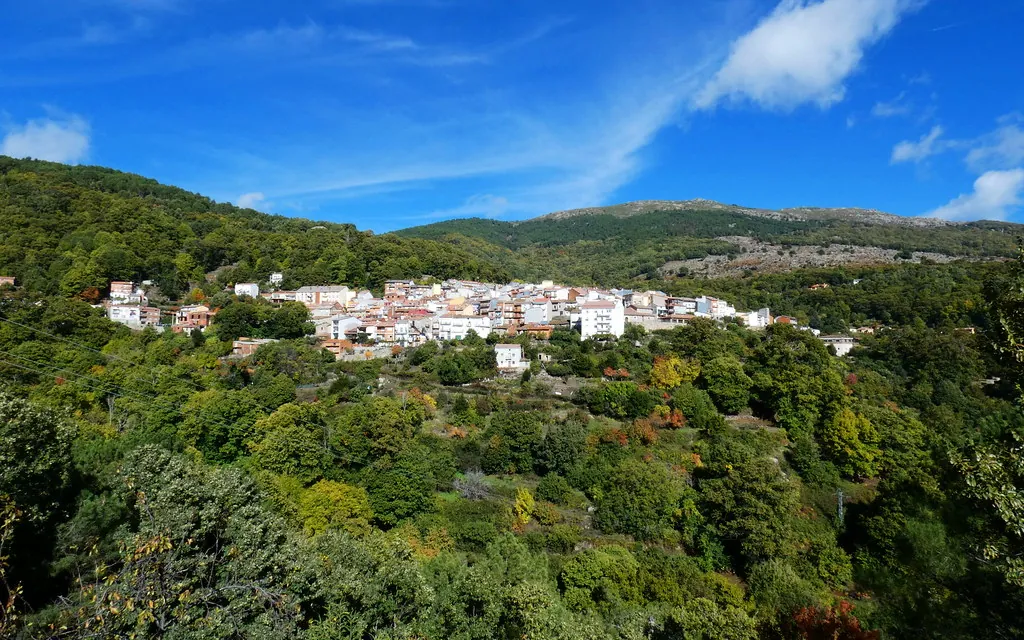
The smell of wood smoke and drying peppers reaches you before the first houses come into view. The road drops gently towards the floor of the Valle del Tiétar, passing olive groves and plots edged with stone walls. As the car rolls into Candeleda, the landscape tightens into narrow streets and timber-framed façades, with the Sierra de Gredos rising behind like a grey-blue wall.
This is the southern edge of Castilla León, close to Extremadura, where mountain and valley shape daily life. Water runs down from the high ground, summers are intense, and traditions linked to the land still set the pace of the year.
When the valley pauses in the morning
Early in the day, Plaza del Castillo is still half empty. A shutter creaks open. A van unloads bread. Light slips at an angle between the houses. The Iglesia de Nuestra Señora de la Asunción takes up almost the entire front of the square. It feels large for a town of this size, built in dark stone with the restraint typical of many mountain churches constructed between the 15th and 16th centuries.
From certain points in the old quarter, a glance above the rooftops brings Gredos into view. In winter the peaks remain snow-covered for weeks. In summer, perhaps only a pale streak lingers on the highest summits. The closeness of the range explains much about Candeleda: the constant presence of water, the kitchen gardens, and the fast-flowing gorges that rush down towards the Tiétar.
Two streets from the square stands the Casa de la Judería, an old building now used for cultural activities. Its name recalls the Jewish and converso communities that lived in the area in the Late Middle Ages. In this part of Castile, that history left more traces than is sometimes acknowledged.
The old centre is easy to explore on foot, though there are slopes and uneven surfaces in places. It rewards a slow wander rather than a checklist.
When the water runs down from the sierra
In Candeleda, water sets the rhythm of summer. Several gargantas, mountain streams, descend from Gredos and form natural pools where locals swim when the heat intensifies. The Garganta de Santa María is one of the best known. The path begins where the tarmac ends and within minutes the sound of water striking rock carries through the trees.
The pools have names repeated by residents year after year. Some are known as El Carreras or El Palomas, although everyone seems to have their preferred corner. Even in August the water is very cold. Stepping in takes resolve, then the body adjusts.
During the week there is usually a sense of calm. Weekends in July and August are different, and it is wise to arrive early, before the sun sits directly on the rocks. Footwear with good grip makes a difference, as the stones have been smoothed by the current and can be slippery.
These gorges are not ornamental features but part of daily life in the hotter months. Families return to the same spots each year. The mountain remains close, visible above the trees, a constant reminder of where the water begins its descent.
Strings of red in late summer
As summer draws to a close, strings of peppers begin to appear on balconies and façades. They hang in red rows that sway in the dry air of September. This stretch of the valley shares a tradition with the neighbouring comarca of La Vera, where pimentón, smoked paprika, has been part of the local economy for centuries.
Small drying houses still exist where peppers are slowly dehydrated over wood smoke. They are not always open to visitors, yet a respectful question can sometimes lead to an explanation of how the process works. Here it remains everyday work rather than a performance for photographs.
The scent that greets visitors on arrival makes more sense once you have seen the peppers hanging in the sun or drying indoors over smoke. It is part of the seasonal cycle that shapes the town’s identity.
Summer fairs bring a noticeable increase in activity. Families arrive from nearby villages and the atmosphere gathers around the square and surrounding streets. In February there is also movement during the celebrations of San Blas. It is customary then to prepare chorizo asado, grilled chorizo, and to gather around bonfires. The ritual is simple and communal, tied to the colder time of year rather than the heat that defines July and August.
The sanctuary on the hillside
About six kilometres from the centre, a narrow road climbs towards the Santuario de la Virgen de Chilla. The route passes through pine woods, and in some stretches the sierra presses in so closely it seems to close the way ahead.
The sanctuary appears suddenly on a bend, white against the slope. From the atrium, the Valle del Tiétar opens out in full. Olive groves spread across the lower ground, small kitchen gardens break up the landscape, and the town lies alongside the road that continues towards Extremadura.
On the second Sunday of September the romería of the Virgen de Chilla usually takes place here, one of the busiest days of the year. A romería is a pilgrimage and local festival combined, drawing people together in a shared celebration. Outside those dates the site is generally quiet, particularly during the week.
The contrast between festival day and an ordinary afternoon is marked. At one time there are crowds and movement; at another, only the sound of wind in the pines.
Before setting off
Candeleda has very hot summers. In July and August temperatures rise easily, and at midday many streets are almost empty. The most comfortable approach is to head out early or wait until late afternoon when the light softens and the heat eases.
The old quarter is best covered on foot, despite its slopes. If arriving by car, it is practical to leave it in the outer areas and continue walking.
September is often a good moment to get to know the town. The heat loosens its grip, the valley remains green, and the gargantas still carry enough water for a brief swim before autumn arrives.
Candeleda does not present itself with grand statements. It unfolds through daily gestures: shutters opening onto Plaza del Castillo, cold water over stone, peppers drying in the sun, smoke rising from wood fires. Mountain, valley and town sit close together, each shaping the other in ways that become clearer the longer you stay.