Full Article
about Cuevas del Valle
Picturesque village at the foot of Puerto del Pico; noted for its folk architecture with wooden balconies and the Roman road.
Hide article Read full article
At nine in the morning, light slips at an angle through the stone-framed windows of the houses in the centre, softening the grey of the walls into something almost golden. A dog barks somewhere in the distance, blackbirds call to one another from the wires, and the air carries the scent of damp earth and, depending on the time of year, cherry trees in blossom. Cuevas del Valle does not suit a rushed visit or a checklist approach. It is the kind of place best explored without a fixed plan, letting the valley reveal itself gradually.
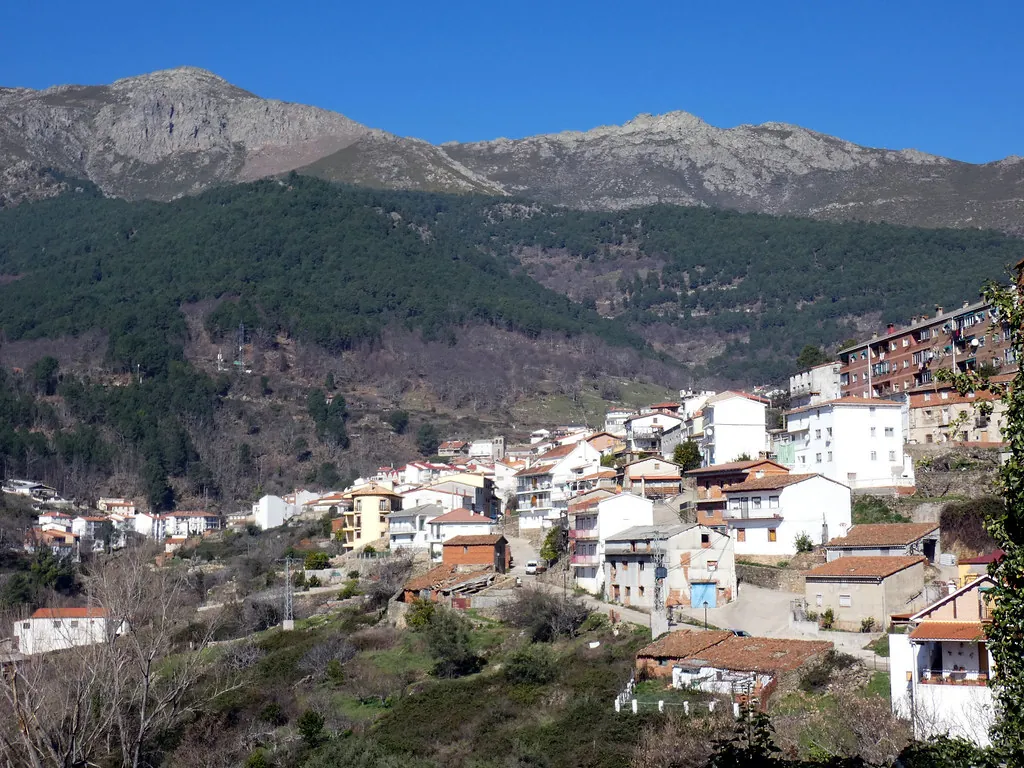
This small municipality in the province of Ávila, home to just over five hundred people, sits at around 840 metres above sea level on the eastern edge of the Sierra de Gredos. The landscape explains much about local life. Stone terraces hold vegetable plots and fruit trees in place, paths carpeted with pine needles muffle footsteps, and mountain streams descend from the sierra towards the valley floor. The Valle del Tiétar enjoys a milder climate than other parts of the province, with relatively short winters and dry summers. That gentler weather shows in the vegetation: chestnut trees, fig trees, cherry trees and the occasional old walnut standing close to the houses.
Stone Streets and Village Rhythms
Walking through the town centre quickly reveals the work that has sustained Cuevas del Valle for generations. Many houses retain their traditional structure, with thick stone walls, wooden balconies darkened by the sun and small windows that help keep warmth inside during winter.
At the heart of the village stands the parish church of Nuestra Señora de la Expectación. The building is generally dated to the 16th century, although it has undergone later alterations. Its granite façade and square bell tower shape the village skyline. At certain times of day, especially towards evening, the square falls almost silent. The only sounds are the echo of the bells or a conversation drifting out from an open doorway.
Life here follows a steady pace. Doors remain open in warmer months, neighbours pause to talk in the street, and daily routines are visible rather than hidden away. Cuevas del Valle is small enough for familiar faces to be the norm, yet it never feels closed to newcomers passing through.
Water and Rock: La Garganta de las Pozas
A short distance from the village centre runs the Garganta de las Pozas, one of those places where residents have long gone to cool off in summer. The stream flows between rounded boulders, forming small waterfalls and natural pools where people take a dip when the heat intensifies.
It takes about twenty minutes to reach it on foot from the village, following a signposted path. The route is not difficult, though there are sections where the rock can be damp and slippery, so it is worth descending carefully. In July and August there is usually plenty of activity from mid-morning onwards. Those hoping for a quieter moment are better off setting out earlier in the day.
The water shapes the valley in subtle ways, carving out channels and nourishing the orchards lower down. Even outside the height of summer, the sound of running water accompanies a walk here, mingling with birdsong and the rustle of leaves.
Cherries, Chestnuts and Old Terraces
Around the village lie the agricultural plots that have supported life here for decades. Rows of cherry trees stretch across the slopes, interspersed with large chestnut trees that predate many of the current farms. The layout of the land still reflects older ways of working, with stone terraces built to create flat ground on uneven hillsides.
In spring the slopes turn white with blossom for a brief period. In autumn the ground is carpeted with orange leaves that crunch underfoot. Among the terraces stand half-leaning stone walls and small agricultural sheds, reminders of a slower, more manual approach to farming.
During cherry season, usually in late spring and early summer, it is common to see small stalls by the roadside or beside the plots selling freshly picked fruit. The harvest shapes the rhythm of those weeks, bringing movement to the fields and a steady trickle of visitors passing through the valley.
Paths into the Sierra de Gredos
Several footpaths leave Cuevas del Valle, linking it with other villages in the valley or climbing towards higher areas of the Sierra de Gredos. One traditional route ascends to the Puerto del Peón, a mountain pass from which the valley opens out fully to the south.
The path crosses pine woods and clearings where the wind moves constantly through the treetops. It is not a short walk, so carrying water and keeping an eye on daylight hours is sensible for anyone planning to reach the top. The sense of distance increases as the village recedes below and the horizon widens.
Other paths connect with nearby villages such as El Hornillo and Mijares. Many residents still use these routes for walking or heading into the hills to gather mushrooms when autumn arrives. These tracks are part of everyday life rather than marked attractions, tying together communities across the valley.
Festivals that Mark the Year
The local calendar retains celebrations that remain firmly rooted in village life. The patron saint festivities dedicated to San Bartolomé usually take place towards the end of August. For a few days the rhythm of Cuevas del Valle shifts. There are processions, music in the evening and long gatherings in the streets.
Winter brings mountain-style carnivals, known as carnavales serranos, with masks and traditional characters that vary slightly from year to year depending on who takes on the task of organising them. When spring arrives, it is common for a romería to be held in the surrounding countryside. A romería is a local pilgrimage that combines a religious element with shared food outdoors, often under the trees if the weather allows.
These events punctuate the seasons and bring together residents of different generations, reinforcing ties that extend beyond individual households.
When the Valley Changes
Cuevas del Valle shifts noticeably with the seasons. In spring the valley is at its greenest, and for a few fleeting days the cherry blossom transforms the landscape. Summer draws people towards the Garganta de las Pozas and stretches long into dry, warm evenings. Autumn softens the hillsides with copper tones and brings mushroom gathering along the paths. Winter is quieter, with shorter days and colder air descending from the sierra.
No single season defines the village. Each reveals a different aspect of its character, shaped by altitude, climate and longstanding ties to the land. Cuevas del Valle rewards time and attention rather than speed, inviting visitors to follow its stone streets, listen to the water and watch how the light changes across the valley floor.