Full Article
about Guisando
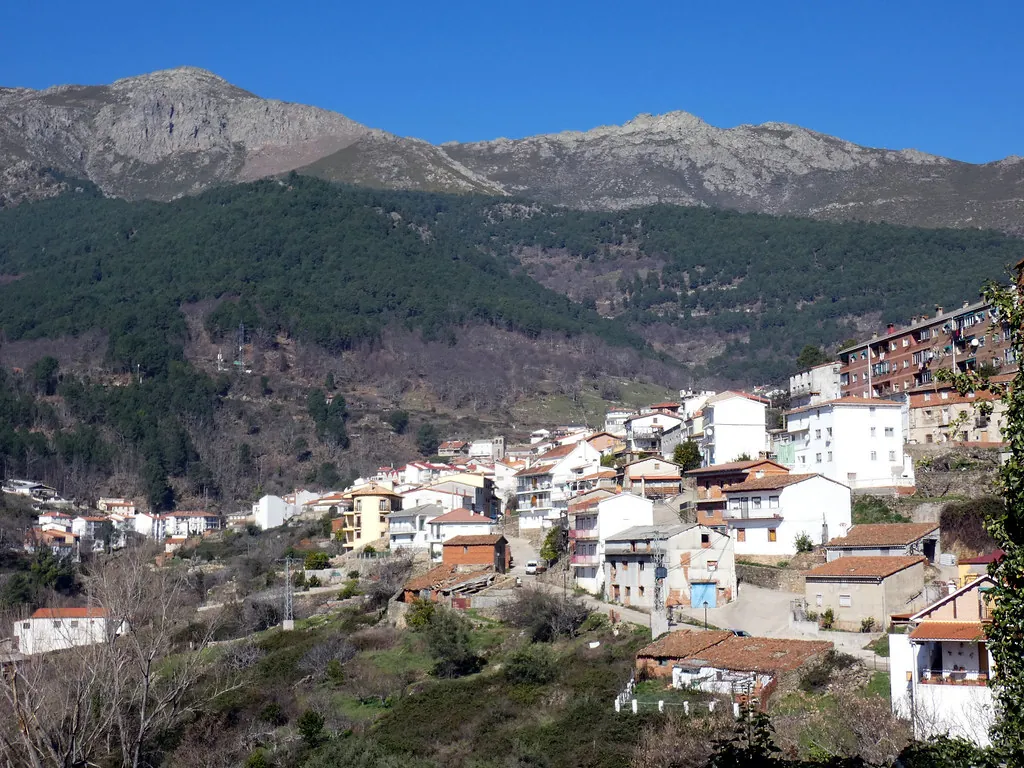
Historic-Artistic Site on the Gredos slope; whitewashed vernacular architecture and steep, charming streets
Hide article Read full article
Between the Tiétar Valley and Gredos
Guisando sits in the southern part of the province of Ávila, in Castilla y León, within the Tiétar Valley, where the Sierra de Gredos begins to rise more decisively. It has around five hundred residents, and that scale shapes everything. There is no traffic to speak of and no streets designed with coach parties in mind.
The village appears much like many mountain settlements in central Spain. It comes into view suddenly between bends in the road and chestnut trees, without grand entrances or bold announcements. Once there, the pace shifts almost without notice.
Houses cluster along narrow lanes, many with exposed stone walls and steady slopes that slow your steps. The gradients are not dramatic, yet they encourage an unhurried rhythm. Walking here tends to become less about getting somewhere and more about simply moving through the space.
Water is a constant presence. A small stream runs through the centre, forming little pools and corners where people sit when the heat builds. It is not a vast natural spectacle, but rather a steady murmur that accompanies a stroll through the village. That sound, especially in warmer months, becomes part of the atmosphere.
The Church at the Centre
At the heart of Guisando stands the Iglesia de San Pedro Apóstol. Its tower acts as a natural point of reference, useful in a place where it is easy to lose your bearings among twisting streets.
The church has ancient origins, although, as with many rural churches in this part of Spain, it has changed over the centuries. Additions and alterations have shaped the building into what stands today. It is not monumental in scale, and it does not dominate the skyline in dramatic fashion. Instead, it fits the size and character of the village: sober, practical and clearly intended for everyday use by the local community.
The square around it reflects the same feeling. This is a working village centre rather than a showpiece, and that sense of normality defines much of Guisando’s appeal.
The Toros de Guisando and a Medieval Agreement
One point often causes confusion. The famous Toros de Guisando are not actually in the village itself. They stand a few kilometres away, within the municipal area of El Tiemblo.
These four granite sculptures are associated with the Vettones, a pre Roman people who inhabited this region more than two thousand years ago. Seen up close, they are larger than many expect from photographs. Their solid forms in open countryside give them a quiet, enduring presence.
The site is also linked to a well known historical episode. In the fifteenth century, an agreement was signed there in which Enrique IV recognised Isabel as heir to the Crown of Castile. That Isabel would later become Isabella I of Castile. Today, the meadow around the sculptures feels calm and spacious, and it takes some imagination to picture the political weight of that moment. Yet the association remains an important part of the story of the place.
For anyone staying in or passing through Guisando, visiting the Toros is a short drive and an easy addition to the day.
Walking Out into Gredos
If Guisando has a particular strength, it lies in its surroundings. Being so close to the Sierra de Gredos means that leaving the last houses behind quickly leads to paths among pines, holm oaks and chestnut groves.
There is no need to plan complex routes. Many of the most rewarding walks begin simply by following one of the tracks that depart from the village and continuing for as long as feels right. In spring the Tiétar Valley turns intensely green. In autumn, the chestnut trees shift the palette of the landscape, bringing warmer tones and a different texture to the hillsides.
The road that climbs towards the Puerto del Pico also passes through the area. This mountain pass has long been one of the classic routes between the northern and southern sides of Gredos. Although many people now drive it, there are historic paths and stretches of old stone roadway nearby that hint at earlier forms of travel across the mountains.
Back down towards the valley floor, the vegetation changes quickly. Olive trees, fig trees and small vegetable plots begin to appear, breaking up the more wooded scenery. The transition is noticeable over a relatively short distance, adding variety to even a brief excursion.
Summer Water and Village Life
When temperatures rise, life in the Tiétar Valley tends to revolve around water. Near Guisando there are several areas along the river where people go to cool off. They are not beaches in the coastal sense, yet they serve well for an afternoon outdoors. Families and groups of friends gather by the water, making the most of the shade and the current.
Despite these seasonal rhythms, Guisando never feels overrun. Its scale keeps things contained and relatively calm.
The main local celebrations are the fiestas in honour of San Bartolomé, usually held at the end of August. They are typical of a small Spanish village: music, gatherings in the square and people returning for a few days even if they now live elsewhere. The focus is less on attracting large crowds and more on bringing neighbours and acquaintances together, often well into the evening.
A Place to Pause
Guisando works best as a quiet stop rather than a destination packed with headline sights. A walk through its streets, some time by the stream and perhaps a short ramble into the surrounding countryside are enough to form an impression.
In a couple of hours it is possible to see most of the village itself. Staying a little longer, without rushing, tends to change the experience. The steady sound of water, the slopes of the lanes and the proximity of Gredos begin to make more sense together.
In the end, Guisando is less about ticking off landmarks and more about settling into the slower cadence of the Tiétar Valley. That is when the village reveals its character.