Full Article
about La Adrada
Historic town in the Tiétar Valley, dominated by its restored castle and ringed by pine and chestnut forests.
Hide article Read full article
A stronghold on the road south
The castle appears before the village itself. From the road that descends from Ávila towards the Valle del Tiétar, its battlemented towers stand out against the hillside. La Adrada took shape at a crossroads: routes from the Castilian plateau met here on their way down to the fertile Tiétar plain and towards the mountain passes of the sierra. For centuries this was a place of control rather than settlement, something that still makes sense when looking at the fortress dominating the cluster of houses below.
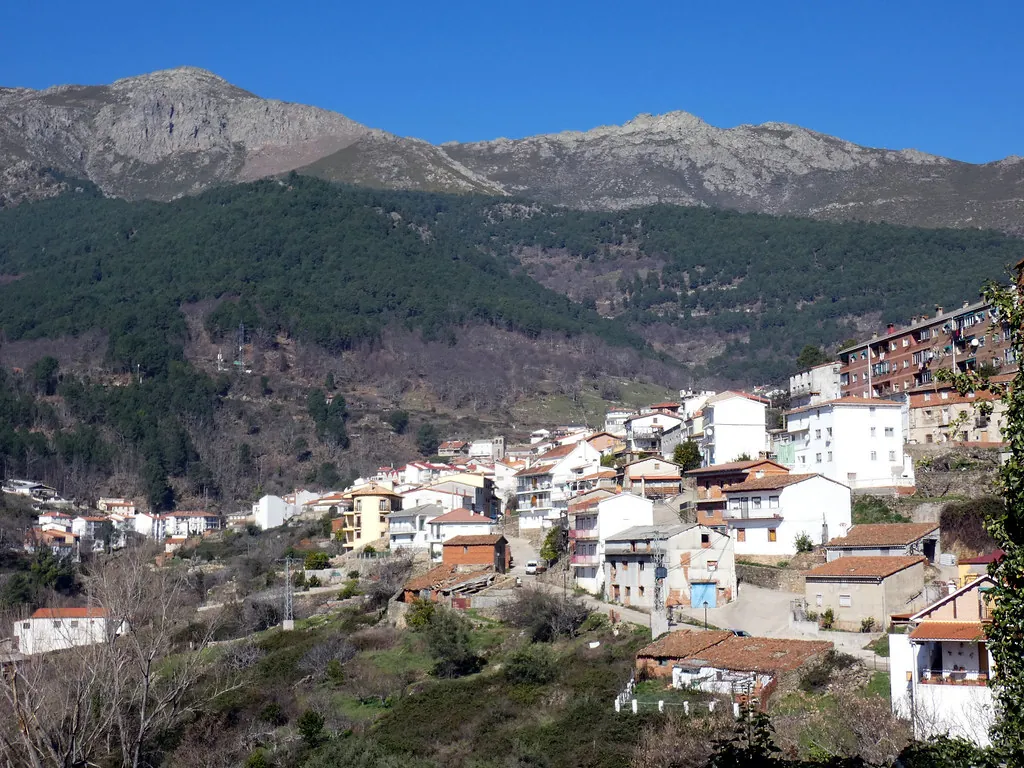
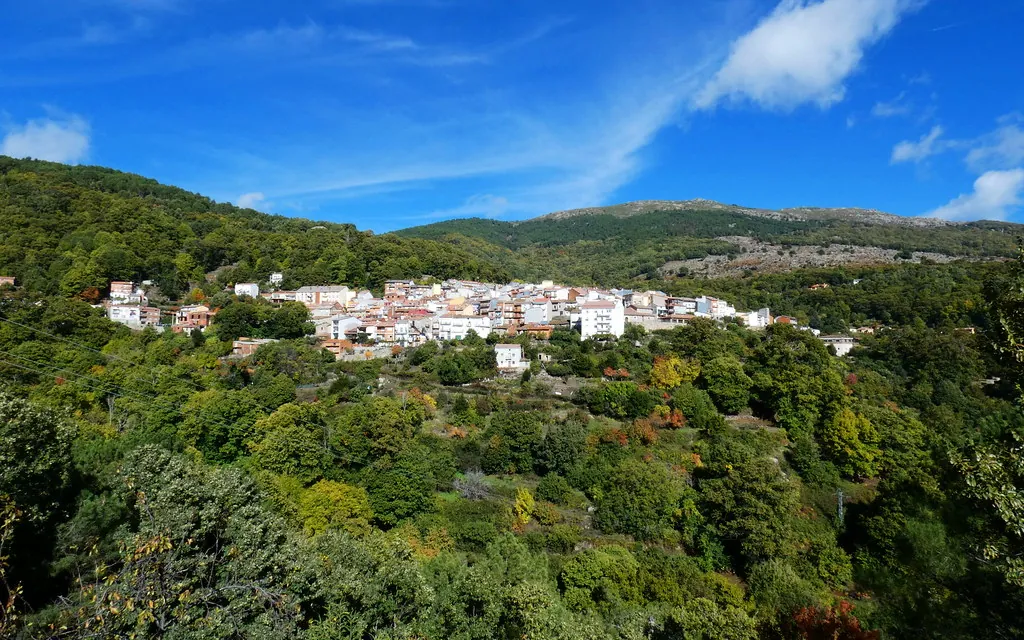
That relationship between landscape and history remains clear. The sierra forms a natural barrier to the north, while the valley opens out to the south. Movement through this terrain has always followed those lines, and La Adrada grew in response to them.
The privilege of López Dávalos
At the end of the 14th century, La Adrada was granted the title of villa, a status that brought new rights and autonomy. The concession is linked to the reign of Enrique III and to Ruy López Dávalos, constable of Castile. With this change, the settlement ceased to depend directly on the council of Ávila and gained the right to hold its own fairs and market. For a place positioned on a commercial route between plateau and valley, that shift mattered.
The castle overlooking the old quarter reflects this role of oversight. It was not designed primarily as a residence but as a fortified structure tied to the surrounding territory. Its walls combine masonry and brick, and the keep rises above everything else, visible from across the valley. Over time, the building passed through the hands of several noble families connected to the political life of 15th-century Castile.
Today the castle has been restored. Its layout helps explain how a seigneurial fortress of that period functioned, from defensive elements to internal organisation. It still anchors the identity of the village, just as it once defined its purpose.
Festivals shaped by memory
The calendar in La Adrada preserves traditions that reflect the valley’s past. In February, during Santa Águeda, women symbolically take control of the village. Over those days, older rituals blend with carnival celebrations that fill the streets with activity.
Spring usually brings a market inspired by medieval times, held around the castle. Stalls and historical reenactments occupy the central streets, turning the area into a stage that echoes earlier centuries. At night, a fire display takes place beside the fortress, recalling its defensive role and the atmosphere of a fortified settlement.
At the end of October, the fair linked to Todos los Santos arrives. Traditionally, it served as a meeting point for trading livestock and agricultural goods across the valley. That character remains, now framed as an autumn fair. The Valle del Tiétar begins to carry the scent of chestnuts, and the first mists drift down from the sierra, marking a seasonal shift that still shapes local life.
The pine on the hillside
Around three kilometres from the town centre, on a rise above the garganta de Santa María, stands the Pino Aprisquillo. It is not the tallest tree in the valley, yet it is one of the most recognisable. Its irregular shape, sculpted by the wind over time, gives it a distinct presence. It was named Tree of the Year in Spain some years ago, valued more for what it represents than for its size.
The path leading up to it passes through low vegetation of rockrose, holm oak and young pines. The climb is gradual, and as the ground rises, the view opens out across the Valle del Tiétar. The river winds through orchards and small dehesas, a landscape shaped by both agriculture and terrain.
From this vantage point, the geography of La Adrada becomes easy to read. The mountains limit expansion to the north, while the valley offers space and resources. The village has always grown in that direction, following the natural slope towards the Tiétar.
Cinema under the night sky
In the Plaza Mayor, a summer cinema has been in operation since the mid-20th century. It is one of the few that still shows films outdoors each season. The seating is simple, and the screen is set up facing the surrounding houses, creating a setting that recalls how entertainment once worked in many Spanish villages before television became widespread.
During summer evenings, when the heat of the day fades and the temperature drops slightly in the valley, the cinema fills again. Families and long-time residents return to the same seats they have used for years. The experience remains familiar, shaped by routine rather than novelty.
Moving through La Adrada
La Adrada sits at the eastern end of the Valle del Tiétar, just over an hour and a half by road from Madrid and somewhat closer to the city of Ávila. Its location still reflects its historical role as a point of passage.
The historic centre can be explored on foot without difficulty. The castle provides a clear reference point, visible from most angles. From there, narrow streets slope down towards the main square, creating a layout that follows the terrain rather than imposing order on it.
The church of El Salvador contains elements from different periods, showing how the building has evolved over time. On the outskirts stands the bridge known as Puente Mocha, a structure of medieval origin linked to the old routes that once crossed the valley.
Beyond the built area, the sierra offers access to the gargantas, or mountain gorges. Paths that follow the garganta de Santa María pass through chestnut groves and areas of exposed granite rock. It is common to see vultures gliding above the valley, carried by the air currents that rise from the slopes.
La Adrada continues to function as a gateway to the eastern Tiétar. It is a place shaped by movement and by its position between mountain and valley, where the relationship between settlement, landscape and history remains visible in everyday life.