Full Article
about Mombeltrán
Noble town in the Barranco de las Cinco Villas; its striking castle of the Dukes of Alburquerque stands out.
Hide article Read full article
A village beneath four towers
Around midday, when the sun falls almost straight onto the Valle del Tiétar, the castle of Mombeltrán casts a compact shadow over the houses gathered at its base. Even in summer, the streets in the centre hold on to the coolness of stone. A car might pass slowly, and on a quiet day you can catch the echo of a conversation rising from the square.
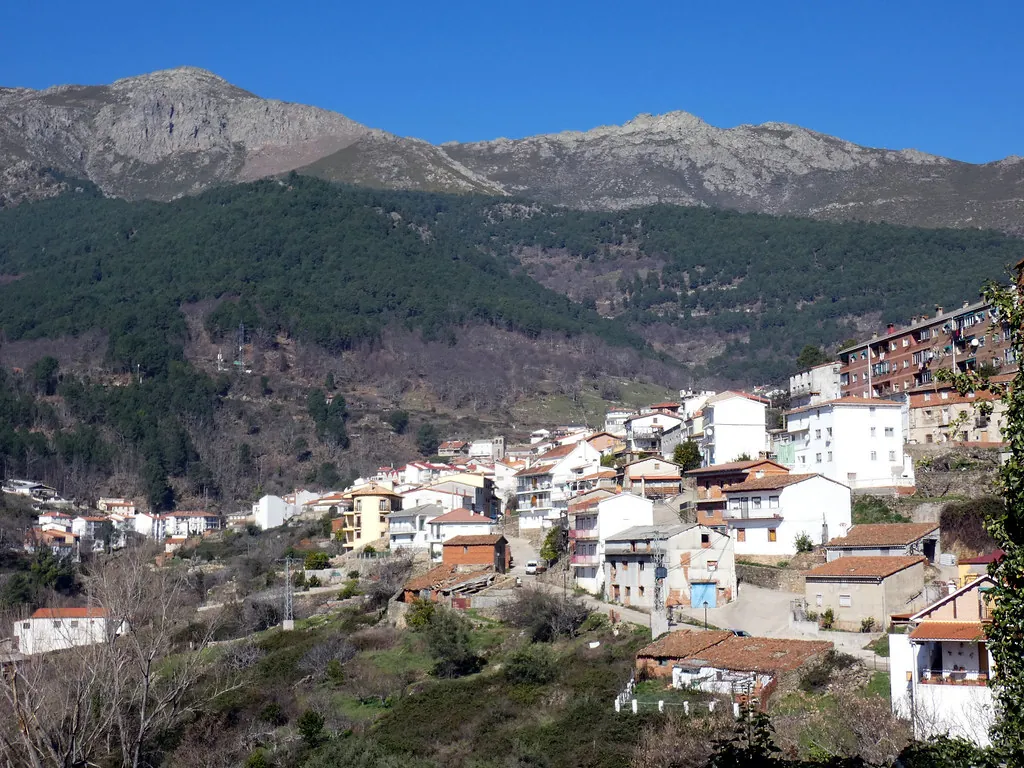
Tourism in Mombeltrán often begins by looking up. The four round towers of the castle appear suddenly as you turn a corner, solid and grey, their granite shifting in tone depending on the light. The village sits at about 635 metres above sea level, right on the edge of the valley, where the climate already feels softer than on the higher plateau of Ávila.
The castle and its neighbour
The castle of the Duques de Alburquerque dates from the 15th century and still sets the visual rhythm of the town. Its cylindrical towers and straight battlements give it a firm, almost geometric presence, which contrasts with the irregular layout of the surrounding streets.
At certain times, it is possible to go inside and walk through the courtyard and up the stone staircases. From above, the landscape opens out across the valley: patches of olive groves, scattered kitchen gardens, and beyond them the slopes rising towards the Sierra de Gredos. At sunset, when the light turns more slanted, the whole valley briefly takes on a muted green tone that lasts only a few minutes.
Access is not always available, so it is worth checking in advance.
Right next to the castle stands the former Hospital de San Andrés, built in the 16th century. It is not large, but its portico and a few Renaissance details stand out unexpectedly against the overall simplicity. Entry is not always possible here either, but walking around it slowly gives a good sense of its shape and the contrast between pale stone and the shadows cast by the covered areas.
In the heart of the old town
The church of Nuestra Señora de la Asunción occupies a very central position within the village. Its structure combines Gothic and Renaissance elements, something fairly common in churches that were built or altered over several centuries.
Inside, there is usually a main altarpiece with a strong visual presence. The overall feeling is restrained: thick walls, light filtering through high windows, and the kind of silence often found in village churches when no one else is around.
From here, the old town unfolds in a compact network of streets that can be explored in under an hour if taken at an easy pace. Calle de las Peñuelas is known for several noble houses with stone coats of arms above their doorways. Not all are well preserved, but the worn heraldic symbols are still visible.
At certain times of day, the village becomes very still. You might hear only the wind slipping through narrow streets or the sound of a shutter closing somewhere. Early morning, before the sun fully warms the stone, is the most comfortable moment to walk here.
Paths into the hills
From the upper part of Mombeltrán, paths lead out towards nearby pine and oak woods. Not all of them are signposted, so anyone planning a longer walk should bring a map or a route app.
Underfoot, the ground often crunches with dry pine needles. Birds can be heard moving through the branches, and now and then there is a rustle in the undergrowth. These are simple routes, more suited to a gentle walk than a long-distance hike.
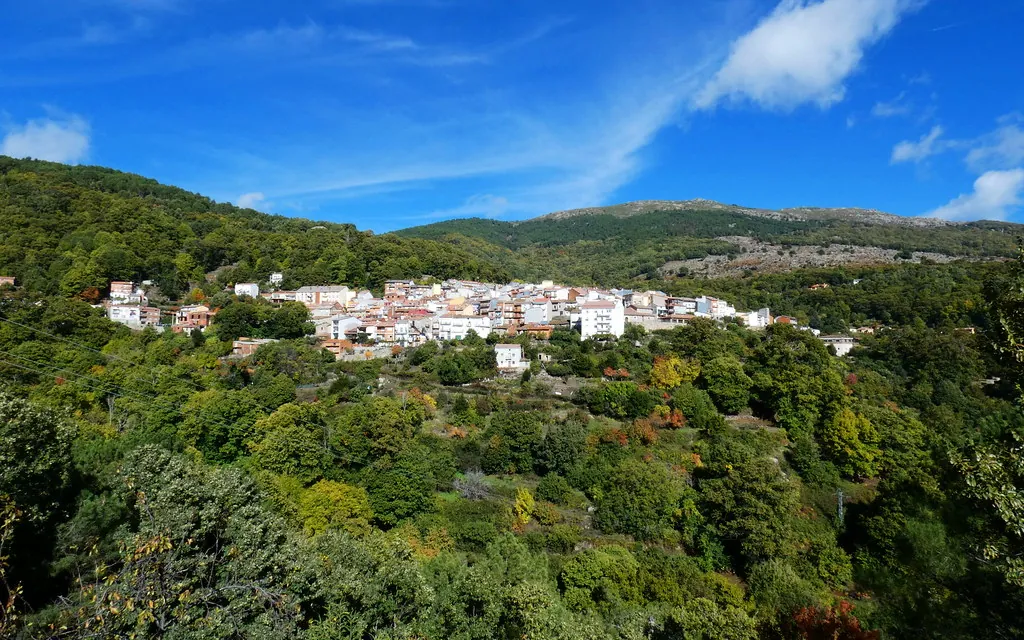
The wider setting of the Valle del Tiétar gives the area much of its character. Compared with the plateau, the climate here is milder, and the vegetation reflects that difference. Olive trees, fig trees and chestnuts shape the landscape, changing its appearance noticeably with the seasons.
For those who want to go further, the first slopes of the Sierra de Gredos are within reach, where longer walking routes begin. Even so, many visitors prefer to stay within the valley, moving between nearby villages and taking in the gradual shifts in scenery.
Seasonal food and village life
Food in the area follows the rhythm of the seasons. In autumn and winter, more substantial dishes appear, with stews based on legumes, potatoes and meat, and chestnuts when they are in season. Olive oil from the valley is also a regular part of local cooking.
During autumn, mushrooms often grow in the nearby pine woods. It is common to see local people heading out with a basket and a knife, although it is important to recognise the different species before picking anything.
In summer, celebrations dedicated to the Virgen de la Asunción bring together residents and people who return to the village for those days. Processions and activities spread through the streets and the square, giving the centre a different rhythm.
A little later, around mid-September, a fair is usually held, where products from the area appear alongside a more local atmosphere.
Mombeltrán is not a place of long itineraries or a succession of major landmarks. It is better understood as a village to walk through slowly, to look at the castle from different angles, and to let the valley reveal itself little by little between the streets. In summer, it is best to avoid the middle hours of the day, when the sun is at its strongest and the heat settles heavily over the stone.