Full Article
about Navahondilla
Eastern Tiétar municipality; known for the Toros de Guisando, within or just outside its boundary depending on historic lines.
Hide article Read full article
A small village on the southern side of Gredos
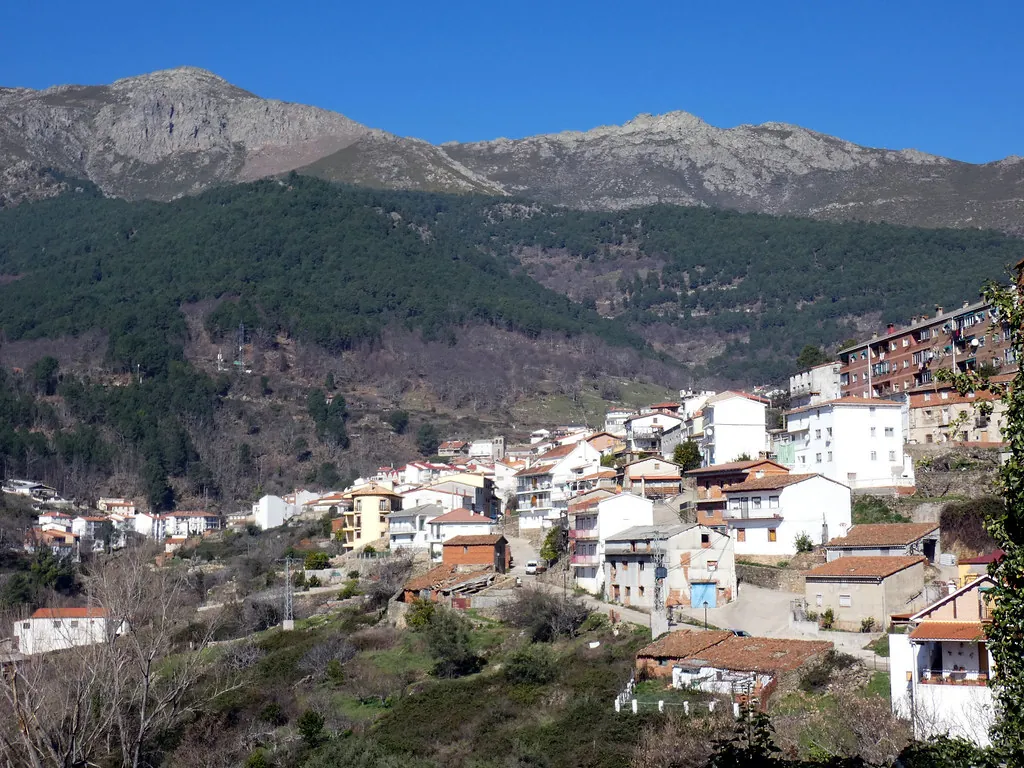
Navahondilla is a small village in the Valle del Tiétar, on the southern slopes of the Sierra de Gredos. It sits in the province of Ávila, in a landscape that feels more open and mild than the harsher northern side of the range.
Before anything else, it helps to know how to get around once you arrive. It is best to leave the car at the edges of the village and continue on foot. The streets are narrow and often quite steep. There is little traffic, but there is also very little room to manoeuvre.
Fewer than 400 people live here. Daily life follows the rhythm of a typical agricultural village in southern Ávila, with small vegetable plots, some livestock and residents who still work the land. This is not a place set up for large numbers of visitors or for spending hours moving between major sights. It is compact and easy to take in without much effort.
The layout and buildings reflect the wider Tiétar Valley. Houses are built with stone walls or whitewashed facades, wooden balconies and reddish roof tiles. Nothing stands out as monumental, yet the overall look is consistent and easy to read. A short walk is enough to understand how the village is arranged.
A quick look around the village
At the centre sits the church of San Pedro, on the main square. It is the most visible building in Navahondilla, with a simple bell tower that marks the hours clearly across the village. Beyond this, there is little in the way of built heritage that demands attention.
The surroundings change quickly once you leave the streets behind. Paths begin almost immediately, leading through vegetable gardens, small meadows and patches of woodland. In this part of the valley, old chestnut trees grow alongside pines and oaks. In autumn, the slopes show a noticeable shift in colour as the leaves turn.
Several small streams run through the municipal area. In some sections, they form natural pools where people from the area go to cool off during hot weather. The water is usually cold, and the edges can be muddy or lined with slippery stones, so a bit of care is needed.
There are also remains of old mills and other constructions linked to the use of water. Many are partly hidden and not signposted, so finding them involves walking the paths and keeping an eye out.
Walking into the foothills
From Navahondilla, forest tracks and paths lead up towards the first hills of Gredos. These are not technical routes. They are straightforward walks through scrubland and woodland, with a noticeable quietness during the week.
Some of these paths gain height gradually and open up views across the Valle del Tiétar. Others are shorter loops closer to the village, suited to a brief walk before heading back. The terrain varies between open patches and shaded stretches beneath trees, without sudden changes in difficulty.
In autumn, people come to the pinewoods and chestnut groves to look for mushrooms. Boletus, níscalos and other common local species appear at this time of year. Anyone unfamiliar with them should be cautious and avoid picking, as some varieties resemble edible ones quite closely.
With a bit of patience, wildlife from the nearby hills can be spotted. Wild boar and roe deer move through the area, and birds of prey can often be seen circling above the slopes during the cooler parts of the day.
Local traditions and quieter gatherings
The main festivities usually take place in August. This is when many residents who live elsewhere during the year return to the village. It is the busiest moment in Navahondilla, with religious events, music at night and activities organised by the community itself.
In autumn, when chestnut harvesting begins, there is also a smaller celebration linked to this crop. It is not a large event or one designed to draw visitors from afar. It remains a local gathering that continues a long-standing custom in the area.
These occasions give a brief glimpse into how the village functions socially, tied closely to the agricultural calendar and the return of families at certain times of year.
A simple stop in the Tiétar Valley
Navahondilla is not a destination for a full day of sightseeing. It works better as a calm stop if you are already travelling through the Valle del Tiétar.
The visit can be simple. Park at the top, walk through the streets for a short while, then head out along one of the paths that run past the gardens and into the surrounding countryside. That is enough to get a clear sense of the place.
It is a village that does not try to present more than it has. The interest lies in its setting, its quiet pace and its connection to the land rather than in a list of attractions.