Full Article
about Pedro Bernardo
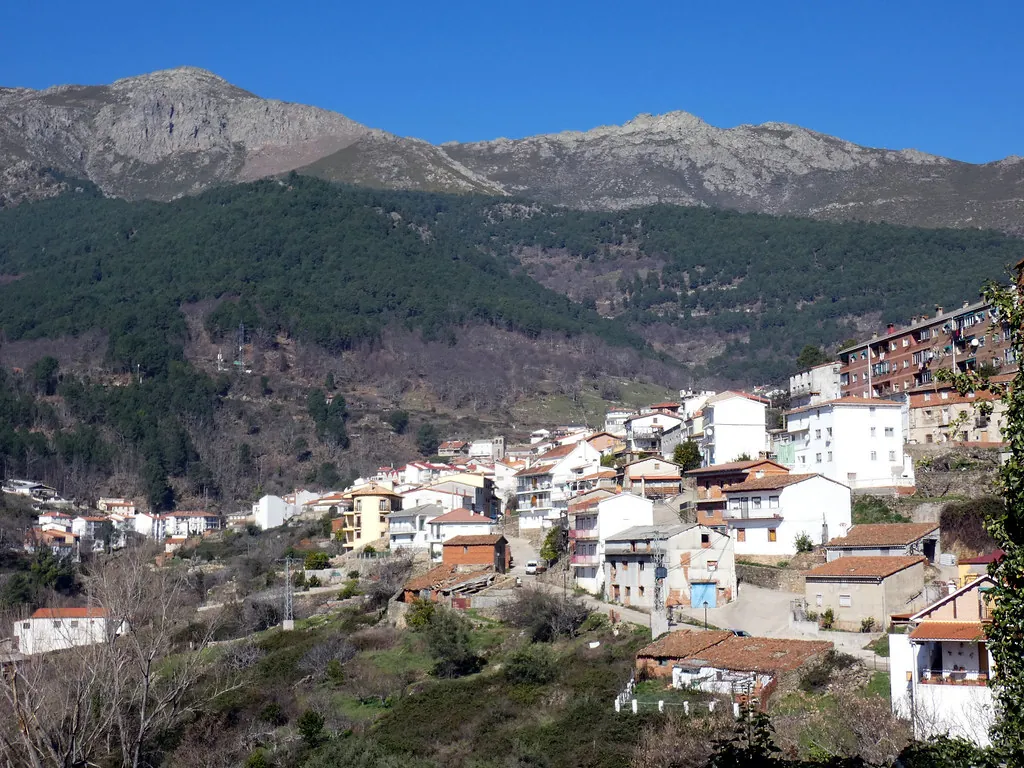
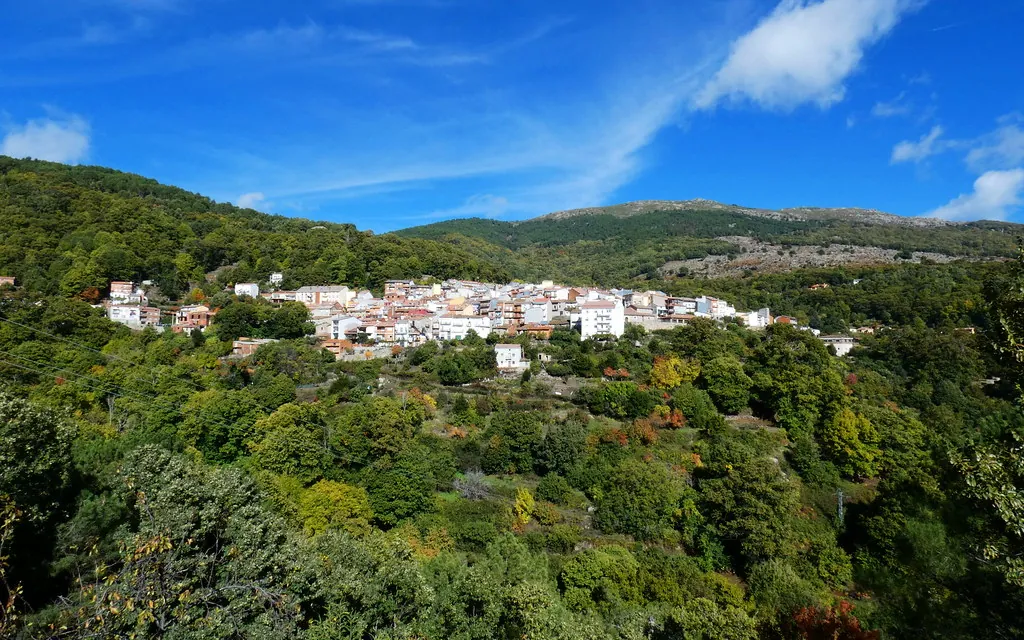
Known as the Balcón del Tiétar; a town with stepped vernacular architecture and stunning views.
Hide article Read full article
Arriving and finding your way in
In Pedro Bernardo, it makes sense to leave the car at the lower part of the village or near one of its entrances and continue on foot. The centre is made up of narrow streets, and in summer things become more complicated. If you are visiting at the weekend or in August, arriving early in the morning is a good idea. Later in the day the heat builds, and even a short walk can feel heavier than expected.
This is a place that reveals itself gradually. From below, the village rises along the slope, and the layout becomes clearer as you start to climb. There is no need to rush or to plan too tightly. The distances are short, and the rhythm of the visit naturally follows the incline.
Up towards the church
The Iglesia de San Pedro Apóstol sits at the highest point of the built-up area. To get your bearings, just look for the tower and head in that direction. The building is old and has been altered at different moments in its history, so its appearance reflects those changes rather than a single, unified style.
Inside, there are altarpieces and religious carvings that are still used during local celebrations. This detail connects the building to the present life of the village, rather than leaving it as a purely historical space. It is not a monumental church, and it does not try to impress through scale. What stands out more is its position. From the area around it, you can clearly understand how Pedro Bernardo is set along the hillside.
Reaching this upper point gives a sense of orientation. Streets, roofs and small squares fall away below, and beyond them the landscape begins to open up. It is a natural place to pause, not for long, but enough to take in the setting before heading back down by a different route.
Streets through the old centre
The historic centre can be explored quite quickly. Granite stone houses line the streets, with wooden doors and balconies where pots of plants add a bit of colour. The materials and layout reflect a practical approach to building, adapted to the slope and to the climate.
Some streets widen into small squares where you come across fountains or old washing places. These spaces break up the tighter passages and offer brief moments of openness. They also hint at how daily life used to be organised, with shared points for water and washing.
There is no need to follow a marked route. The most sensible approach is simply to work your way uphill towards the church and then come back down along a different street. This loose loop gives a good sense of the place without overcomplicating things. In around half an hour, the main features of the centre can be seen.
Even within that short time, small details stand out. Changes in paving, slight shifts in the width of a street, the way one corner opens unexpectedly into a tiny square. It is not about ticking off specific sights, but about noticing how the village is put together.
Looking out over the Tiétar Valley
Pedro Bernardo is set against the southern slope of the Sierra de Gredos, and this becomes clear as soon as you move slightly beyond the centre. From various points in and around the village, the Tiétar Valley opens out in full view. The landscape is made up of terraced fields, patches of pine forest and, in the distance, the peaks of the range when the day is clear.
The terraces show how the land has been shaped over time to make cultivation possible on the slope. The mix of textures and colours changes with the light, especially in the morning and towards the end of the day. The pines form darker areas that contrast with the lighter tones of the fields.
Around the village there are paths that were traditionally used by local people to move between orchards and nearby settlements. Many of these paths are still there. Some are signposted, others less so, but they all offer the chance to walk for a while through pine woods and terraced land with fig trees, chestnut trees or olive trees.
These walks do not require a strict plan. Even a short wander is enough to leave the built-up area behind and get closer to the landscape that surrounds it. The ground, the vegetation and the views shift gradually as you move away from the houses.
If you go a little further out towards sunset, it is quite common to see birds of prey gliding over the valley. Their movement is slow and steady, following the air currents. Occasionally, larger animals move through the pine woods, although they are not always easy to spot.
How long to spend
The centre of Pedro Bernardo can be seen in just over an hour without rushing. Adding a walk along the surrounding paths turns the visit into a half-day plan, or a relaxed afternoon.
A simple approach works best. Arrive early, walk up through the village, and find a spot with a view before the heat increases. The focus here is less on covering a long list of sights and more on taking time to look out over the valley and let the setting sink in.