Full Article
about Piedralaves
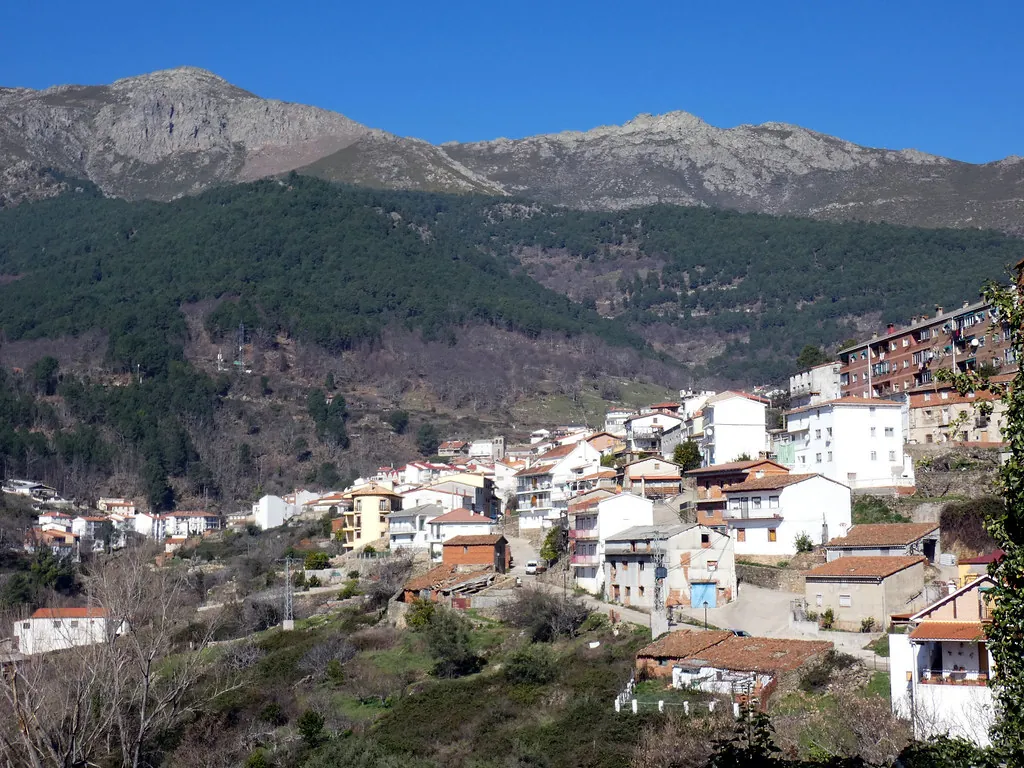
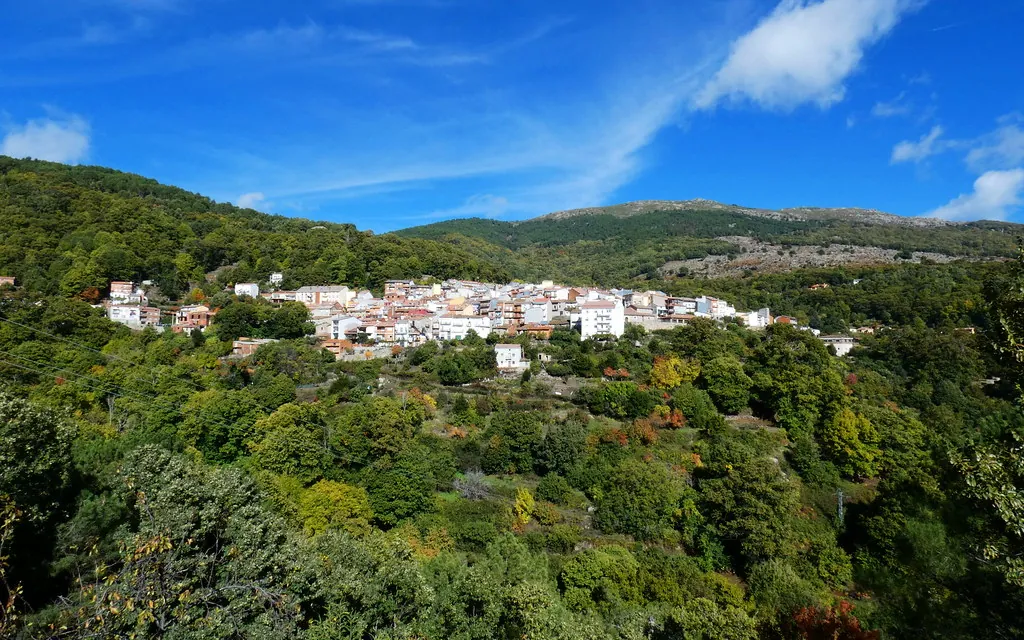
One of the prettiest villages on the Tiétar; known for its traditional architecture.
Hide article Read full article
Finding a village that doesn’t announce itself
The approach can feel uncertain. On the N‑502, a phone might insist there is a turn just ahead, yet there is only a drop and a sign for “Piedralaves, 2 km” pointing to a road that hardly looks like an entrance. This is a place that keeps itself out of sight until you are already there. Any look at tourism in Piedralaves starts with that idea: it does not advertise itself from the roadside.
The Tiétar’s bend
The River Tiétar sets the scene. It comes down from Gredos, crosses into the province of Toledo and then loops in a pronounced meander, almost doubling back on itself. At that bend in the valley, Piedralaves clings to the slope.
Over centuries the water has shaped the rock. Each winter alters the detail. Strong rises in the river carry away sand, shift stones and leave behind new pools that locals name as they go. La del Tío Canuto is the one most often mentioned, though ask around and everyone seems to have a preferred spot.
From dependency to its own town
For a long time Piedralaves depended administratively on La Adrada. In the seventeenth century it obtained the status of villa and began to organise itself independently. Several solid stone buildings date from that period, built for use rather than display.
The clock tower stands out as a clear reference point. Today it is often used as an information point for visitors. A spiral staircase leads up, its steps creaking like an old floor, and at the top there are views over rooftops, the gorge and green slopes. It is not a grand, postcard view, but it helps make sense of how the village sits within the valley.
When May changes the mood
May brings a shift in atmosphere. Festivities in honour of San Isidro have been held for decades and mix local tradition with an Andalusian look: flamenco-style dresses known as trajes de faralaes, decorated carts, music and plenty of activity around the square.
One of the best-known moments is the lighting of luminarias. As night falls, bonfires are lit and the scent of burnt rockrose and rosemary hangs in the streets. Clothes pick up the smoke quickly, as if you had spent hours beside a barbecue.
August brings the fiestas of San Roque, usually lasting several days. There are processions, street activities and a lively night-time scene. The tone is far from solemn. Groups of friends gather, music fills the air and the humour typical of village fiestas appears late into the night.
In December, close to Santa Lucía, there is the Cencerrada. Residents walk the streets ringing cowbells to make as much noise as possible and wake everyone up. It began not so long ago as a shared joke and has settled into the village calendar.
Easy walks and water routes
The Garganta de Nuño Cojo often comes up when asking about simple routes. It is not long and follows the water as it heads towards the Horcajo reservoir. If you go with children or a dog, closed footwear helps. The stones are worn smooth from use and can be slippery.
Another option is the Ruta de las Charcas. It starts near the medieval bridge, which many describe as Roman although it seems to be later, and within minutes the sound of water is constant. In summer the pools fill with people. Even in hot weather the water stays cold, so the first dip always requires a bit of nerve.
Within the village there is also a short route linking several old fountains. It will not transform a visit, but it gives a reason to wander the streets and understand how water supply once worked before pipes reached every house.
What turns up on the table
Across the area, judías del Barco appear on many menus. When November arrives in Piedralaves, attention shifts to calbotes, chestnuts roasted over an open fire. They are handed over wrapped in paper and can burn your fingers if you rush.
During carnival, limonada and sweet buns are often shared in the square. It is a simple arrangement that does the job: a drink in hand, people chatting, and a late morning that stretches without much notice.
There is no long line of modern restaurants. Choices tend to follow instinct. Look for places with cars registered locally, ask if there is a table, and sit down.
So, is it worth the stop?
Piedralaves is not the most monumental village in Ávila, nor the one with the greatest number of churches or palaces. What it does have is a way of going about things on its own terms. It does not try to resemble a set piece.
A visit usually follows a loose rhythm. Arrive, head down to the gorge, take a swim if the water allows, walk through the centre and end up with a drink in the square as the light fades. A simple plan works well: come in the morning, spend some time by the river, and stay long enough to see how the place settles into the day.