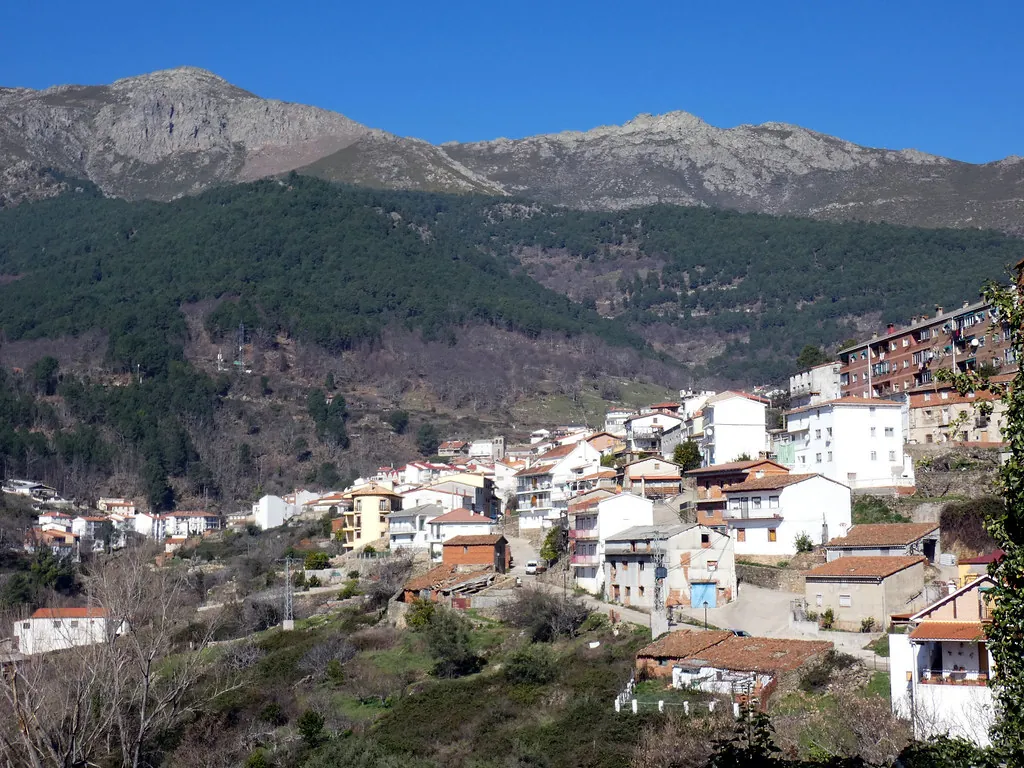
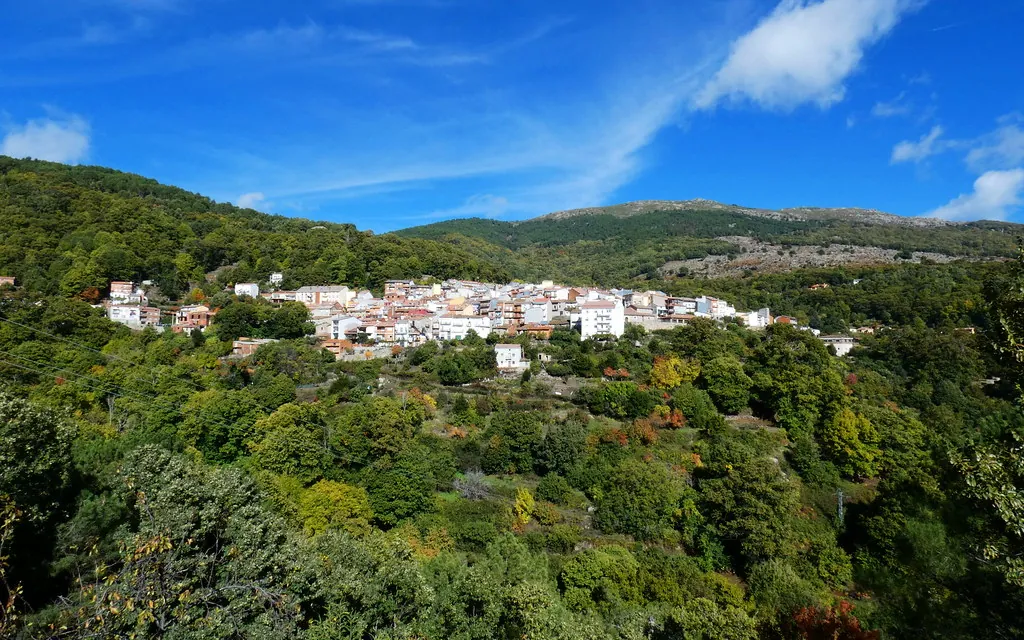
Vista aérea de Santa María del Tiétar
Instituto Geográfico Nacional · CC-BY 4.0 scne.es
Castilla y León · Cradle of Kingdoms

Santa María del Tiétar

The evening bus from Talavera de la Reina wheezes to a halt beside the stone trough at the entrance to Santa María del Tietar. Passengers step down...

582 inhabitants · INE 2025
697m Altitude

Why Visit

Mountain Church of the Assumption Hiking

Best Time to Visit

summer

Assumption Festival (August) agosto

Things to See & Do
in Santa María del Tiétar

Heritage

  • Church of the Assumption
  • Pajarero Dam (nearby)

Activities

  • Hiking
  • Fishing

Festivals
& & Traditions

Fecha agosto

Fiestas de la Asunción (agosto)

Las fiestas locales son el momento perfecto para vivir la autenticidad de Santa María del Tiétar.

Full Article
about Santa María del Tiétar

The easternmost village on the Tiétar, bordering Madrid; surrounded by forest and water.

Ocultar artículo Leer artículo completo

The evening bus from Talavera de la Reina wheezes to a halt beside the stone trough at the entrance to Santa María del Tietar. Passengers step down into air that smells of warm pine and freshly-turned soil rather than diesel. At 700 metres, the village sits exactly where the Sierra de Gredos exhales: the last ridge of chestnut and oak behind you, theTiétar valley opening southwards like an olive-green fan. It is the sort of place Spaniards from Madrid visit for a long weekend, realise the phone signal vanishes every time a cloud crosses the sun, and still return the following year.

A Village that Works for its Living

Forget manicured flowerpots and souvenir aprons. The centre is a single elongated square, Plaza de la Constitución, edged by stone houses whose ground floors change function according to the hour. At seven the baker pushes up the shutter of Hornos Santa María; by two the same doorway is blocked with crates of empty Estrella bottles awaiting collection. The village has neither a boutique hotel nor a medieval fortress to sell you. Instead it offers the small satisfactions of somewhere that functions twelve months a year: a chemist that still stocks home-made cough syrup, a grocer who will weigh out 200 g of chorizo for a single-person stew, and the reliable clink of horseshoes from Hipica Pegaso’s yard where English-speaking guides saddle up placid Arab crosses for gentle forest rides. A one-hour hack costs €25; a half-day picnic ride with packed bocadillo is €55. Book the evening before—WhatsApp works even when voice calls drop.

Water, Woods and the Wrong Map

Santa María’s best features lie outside its modest street plan. Follow the signed footpath that starts between house numbers 14 and 16 on Calle Real; within ten minutes the tarmac gives way to a stone track rattling with cicadas. You are now on the Cañada Real Leonesa, a medieval drovers’ road that once carried merino sheep to winter pastures. The route dips to the Rio Santa María, a Gredos-born stream that has carved out a chain of swimming-sized pools. None are sign-posted as official bathing spots, so come early on summer weekdays if you want a quiet swim. After heavy rain the water runs caramel-brown with pine needles; in August it slows to a gin-clear trickle warm enough for a lunchtime dip. Bring sandals—river stones are slippery with algae—and a rubbish bag; bins were removed after boar kept knocking them over.

Climb the opposite bank and the vegetation changes within 200 m. Holm oak and strawberry trees replace the riverside poplars; the path narrows to a sheep trail that smells of wild thyme. From the ridge (45 min at a steady pace) you look north to the granite wall of Gredos and south across the Tiétar olive plain where white wind-pumps turn languidly. The horizon is 60 km away on a clear day; you can just pick out the slate roofs of Oropesa and the A-5 motorway glinting like a thrown ribbon. There is no café, no viewpoint selfie stand, and rarely more than a pair of elderly locals gathering pine cones for winter kindling.

Seasonal Rhythms and Closed-Door Mondays

Visit in late April and the valley is a chessboard of green wheat and purple vetch; the air carries enough pollen to make non-locals sneeze. By mid-July thermometers touch 35 °C at midday, sending villagers indoors for the four-hour siesta that tourism brochures pretend no longer exists. Autumn brings two welcome changes: the temperature drops to walking-friendly 22 °C and the chestnut harvest starts. Anyone staying in self-catering accommodation should drive the 12 km to El Hornillo on Sunday morning; the roadside stall there sells 5 kg sacks of sweet chestnuts for €6, still warm from the roaster. Winter is mild—snow falls once or twice but melts before lunchtime—yet many bars close entirely between January and March. Monday to Wednesday outside July and August you will struggle to find anything open after 14:00. Plan accordingly: stock up in Talavera’s Carrefour on the way up, and treat bar hopping as a weekend sport.

Food Meant for Farmers

Forget tasting menus. The local restaurants—really three bars with kitchens—serve the sort of food that keeps a ploughman upright. Start with judiones del Barco, butter-bean stew slow-cooked with ham hock; the beans grow 40 km away in La Vera and arrive at the table the size of conkers. A half-ración at Bar Castor (€8) feeds two modest appetites. Follow with chuletón de Ávila, a T-bone cut from year-old beef aged 21 days; Restaurante Cristina charges €22 per kilo, so a 700 g steak shared between two lands just under €16 a head. Vegetarians are largely out of luck—order the pimientos del piquillo rellenos de setas and you will receive three peppers swimming in fish stock—so self-caterers should load up on tomatoes, goat cheese and crusty bread from the Thursday market in nearby Sotillo de la Adrada. The local wine, Tiétar Valley red, is bottled in Talavera and tastes like an uncomplicated Rioja; €9 buys a litre filled from the cask at the co-op on Calle Nueva.

Getting Here, Staying Put, Getting Out

The closest airport is Madrid-Barajas; allow two and a half hours by car, not the optimistic 1 h 40 min advertised by GPS. The final 30 km twist through the Puerto de Sotillo mountain pass—spectacular but not a drive for towing caravans. No direct public transport exists from the airport; the weekday bus from Madrid’s Estación Sur reaches Talavera at 15:30, giving you a 45-minute connection window to the village. Miss it and the next service is the following morning.

Accommodation is overwhelmingly self-catering: think restored stone cottages with wood-burning stoves, beams low enough to bang a six-footer’s head and Wi-Fi that buffers during rainstorms. Two-bedroom houses sleep four and average €90 a night year-round; owners prefer Saturday-to-Saturday bookings in high season. The smartest option is Casa del Tietar on Calle Constitución (north side, remember, for mountain views) with underfloor heating and a plunge pool that feels unnecessary in October. Budget travellers should contact the ayuntamiento; the municipal albergue opens for Easter week and August only, dorm beds €15 including breakfast toast and café con leche.

When Enough is Enough

Leave before you run out of cheese, or before the church bell that marks the quarters starts sounding cheerful rather than quaint. Santa María del Tietar will not change your life, but it might realign your sense of scale: mountains behind, valley below, silence at night thick enough to taste. Pack a paperback, walking boots and a tolerance for early closing times; leave the phrase-book app in Madrid. The village does not need decoding, merely a bit of patience—and a car that can handle mountain roads without boiling the radiator.

Key Facts

Region
Castilla y León
District
Valle del Tiétar
INE Code
05227
Coast
No
Mountain
Yes
Season
summer

Livability & Services

Key data for living or remote work

2024
ConnectivityFiber + 5G
HealthcareHospital 15 km away
EducationHigh school & elementary
Housing~5€/m² rent · Affordable
January Climate7.1°C avg
Sources: INE, CNMC, Ministry of Health, AEMET

Planning Your Visit?

Discover more villages in the Valle del Tiétar.

View full region →

More villages in Valle del Tiétar

Traveler Reviews