Full Article
about Villarejo del Valle
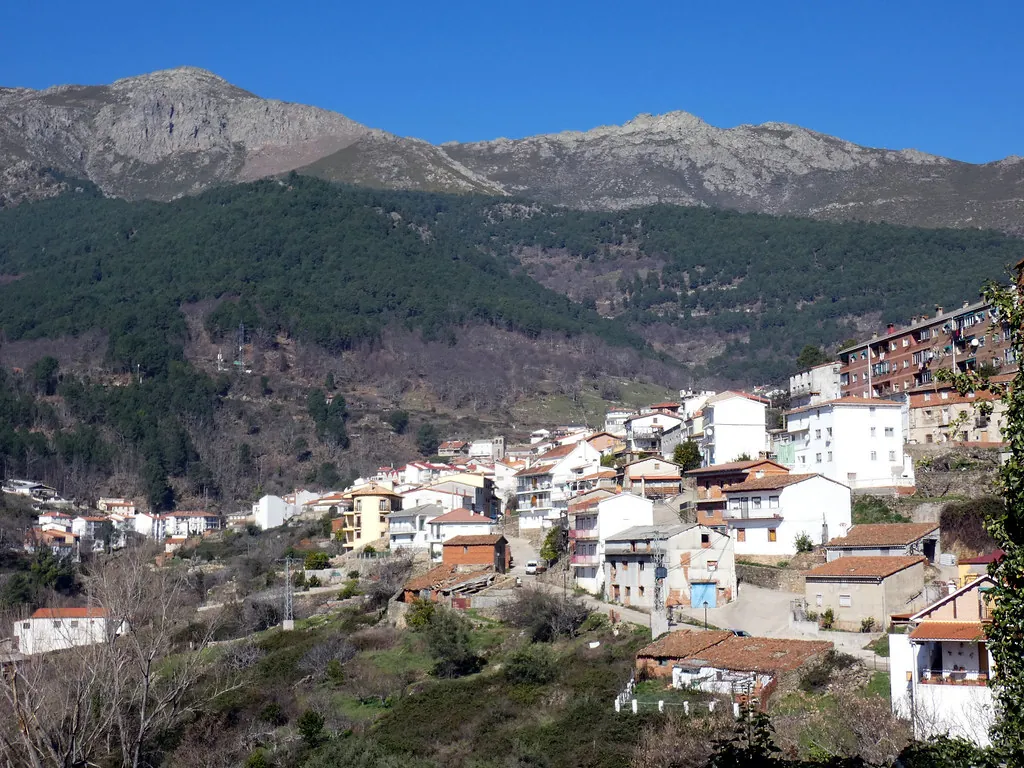
Village with well-preserved traditional architecture, set in the Barranco de las Cinco Villas.
Hide article Read full article
A village on the southern slopes of Gredos
Early in the morning, as sunlight begins to reach the slopes of the Sierra de Gredos, tourism in Villarejo del Valle does not quite exist yet. The only sounds are water running through an irrigation channel and the sharp clap of a shutter opening. Stone houses hold on to the night’s coolness, and the air carries the scent of old firewood and damp earth.
The village sits on the southern side of the Sierra de Gredos, within the Valle del Tiétar. Chestnut and oak trees surround it, and in autumn they shift the whole landscape into ochre tones. Villarejo del Valle is small, with only a few hundred residents, and stands at around 800 metres above sea level.
You do not need a map here. Narrow streets, short slopes and corners where stone appears on every façade shape the layout. Darkened wooden balconies and thick walls point to a way of building that has barely changed over time.
The square and the church of San Andrés
At the centre stands the Iglesia de San Andrés, built in the 16th century. It is not especially large, yet its position gives it presence. The bell tower rises above the rooftops and sets the rhythm of daily life with its chimes.
Around it, cobbled streets spread out and occasionally open into small yards or enclosures. A slow walk reveals details that are easy to miss at first glance. An old iron grille with thick bars, a carved wooden beam, a wide doorway that hints at former stables. Some houses still keep traditional wine presses and family cellars, reminders of a time when vineyards played a bigger role in the valley.
Water and the pools of the Barbellido
Water shapes much of life in Villarejo del Valle. The garganta de Barbellido descends from higher ground in Gredos, forming pools and small waterfalls among rounded rocks. During the summer heat, people come here to cool off in these natural pools. The water remains very cold, even in August.
On quieter days, the steady sound of water hitting stone fills the air, along with the hum of insects among riverside vegetation. Summer brings more visitors, especially from midday onwards, and some spots can become busy. Earlier hours tend to be calmer for those looking for a quieter atmosphere.
Paths through chestnut and oak
Several paths begin around the village, linking it with other settlements in the valley or heading into the hills. Some stretches still preserve old stone paving, and small stone crosses appear at certain junctions.
Chestnut groves are particularly prominent in this part of the Tiétar Valley. In autumn, the ground becomes covered with fallen leaves and opened chestnut husks, and the air turns dense and earthy. This season is especially suited to walking, although rain quickly brings mud to shaded sections of the paths.
Wildlife is part of the landscape as well. Iberian ibex can sometimes be seen higher up in the sierra. In forest clearings, roe deer occasionally move at dawn or towards the end of the day.
Routes towards the higher Gredos
Paths from the surroundings of Villarejo climb towards the mountains. Some walkers use the area as a starting point or a stop along longer routes across the Sierra de Gredos. Reaching higher areas of the massif, such as the Laguna Grande zone, involves long distances and significant elevation gain. Careful planning is needed, along with checking access conditions before setting out.
Shorter walks are easier to find. Trails that follow streams and gorges offer cooler routes, even in summer, with long stretches of shade.
Food from the valley kitchens
Cooking in the area is straightforward and rooted in local produce. Hearty dishes dominate. Beans, stews with cured meats and patatas revolconas, a mashed potato dish seasoned with paprika and pork, appear frequently on valley tables. Beef from the province is also common, and migas, made from fried breadcrumbs, are typical in colder months.
Seasonal ingredients shape the menu as well. Mushrooms or chestnuts can shift the character of certain dishes depending on what the surrounding land provides each year.
Seasons and local rhythm
Spring brings more water to the gorges and a strong green across the forests. Autumn, when the chestnut trees are full, stands out as one of the best times for walking in the area.
Summer changes the pace. The village becomes livelier, especially at weekends. Traditional fiestas patronales take place, with processions and open-air celebrations. Many residents who live elsewhere return during these dates.
Quieter moments still exist. Weekdays tend to be calmer, and early morning or the end of the day brings back the silence that defines Villarejo del Valle for much of the year.