Full Article
about El Rourell
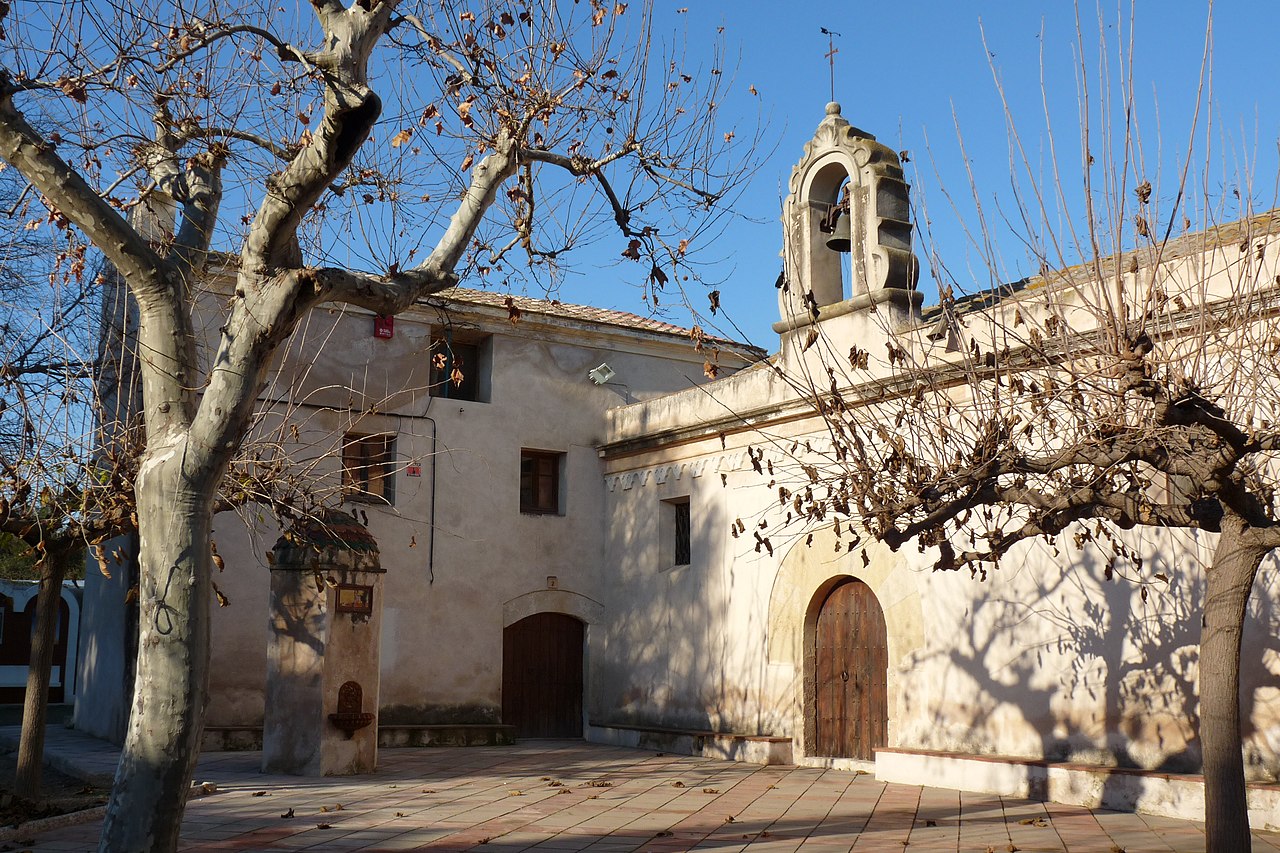
Small village with a fortified manor of the marquises of Vallgornera and hazelnut fields.
Hide article Read full article
A Small Village in the Plain of Alt Camp
El Rourell lies around 25 kilometres from Tarragona, set in the middle of the agricultural plain of the Alt Camp region in Catalonia. The approach is straightforward: first along the N‑240, then onto local roads that lead directly into the village. Parking is rarely an issue. El Rourell is small, and it is usually easy to leave the car on the streets at the entrance or near the church.
This is not a place that demands hours of sightseeing. The entire village can be walked in about half an hour. Most visitors arrive while travelling around the comarca, perhaps moving between Valls, Alcover and the monastery of Santes Creus, and decide to make a brief detour.
The houses cluster around the church of Sant Miquel, forming a compact and orderly centre. Low buildings dominate, many whitewashed, others built in exposed stone. The atmosphere is calm and residential. There is virtually no tourism infrastructure and no shops designed with visitors in mind. El Rourell functions first and foremost as a working village within the rural landscape of the Camp de Tarragona.
Beyond the houses, the countryside takes over. Vineyards stretch across much of the surrounding land, joined by almond trees and other agricultural plots that fill the horizon. On a clear day, the Prades mountains can be glimpsed to the north, rising beyond the flat expanse of fields.
The Heart of the Village and Its Surroundings
At the centre of El Rourell stands the church of Sant Miquel. It is a simple building, probably dating from the 18th century, with an austere façade. There are no grand artistic features to draw particular attention. The church serves its purpose as the focal point of the village, anchoring daily life rather than impressing with ornamentation.
The rest of the old centre follows a pattern common across many villages in the Alt Camp. Short streets connect tightly packed houses, their façades close together. On the outskirts, a few masías appear. These traditional rural houses reflect the agricultural character of the area. Some have been restored, while others retain their original working structure, with large gateways, inner courtyards and tiled roofs.
In El Rourell, the landscape carries more weight than any individual building. Vineyards occupy much of the municipal territory, forming the agricultural mosaic typical of this part of Tarragona province. The scenery changes with the seasons. In winter, the fields appear bare and muted. Spring brings more colour, and almond trees often blossom in the surrounding area, briefly softening the otherwise open terrain.
Walking out along the rural tracks gives a clearer sense of the Camp de Tarragona plain. The land stretches wide and level, shaped by cultivation rather than dramatic natural features. When visibility is good, the outline of the Prades mountains frames the northern horizon, adding depth to an otherwise horizontal landscape.
Moving Around El Rourell
El Rourell is best explored on foot. The village itself is so compact that using a car within the centre makes little sense. A short walk from the entrance streets to the church and back again covers most of what there is to see.
The more interesting option is to follow the agricultural paths that lead out from the village. Many of these tracks connect with neighbouring municipalities in the Alt Camp. They are easy routes for walking or cycling, always running between fields and cultivated land. There is no dramatic terrain, only the steady rhythm of farmland on either side.
Within a few minutes by car, places with more activity come into reach. Valls, for example, offers a busier town atmosphere. The monastery of Santes Creus, one of the major historical landmarks in the area, is also close by. For many travellers, El Rourell forms part of a wider route through the comarca rather than a standalone destination.
Traditions and the Agricultural Calendar
Life in El Rourell remains closely tied to the agricultural calendar. The annual festa major, usually held in August, is organised by the village itself and consists of simple events that bring residents together. It reflects the scale of the community, modest and local in character.
The grape harvest is another significant moment in the year. Viticulture continues to play an important role in this area, and September brings visible activity in the fields and in nearby cooperatives. The surrounding vineyards are not decorative. They are working landscapes, and the vendimia shapes the rhythm of late summer.
In winter, the calçot season takes over much of the comarca of Valls. Calçots are a type of spring onion grilled over an open flame and traditionally eaten with romesco sauce. While this custom is not exclusive to El Rourell, it forms part of the broader atmosphere across the Alt Camp during the colder months. The fields, the harvests and seasonal food remain central to local identity.
Practical Notes for a Short Stop
From Tarragona, El Rourell can be reached in about 25 minutes via the N‑240 and regional roads towards Valls. From Barcelona, the journey typically takes just over an hour, depending on traffic conditions.
There are no tourist offices or visitor services within the village. Anyone coming here should treat it as a brief stop within a broader exploration of the Alt Camp. Expectations need to match the scale of the place. El Rourell offers a quiet walk, an impression of rural order and a view over cultivated land.
A simple plan works best. Park at the entrance, walk to the church of Sant Miquel, wander through the short streets and then head out along one of the agricultural tracks before continuing on to nearby towns. Those looking for a fuller programme of sights will need to move on to Valls, Santes Creus or other villages in the region.
El Rourell does not attempt to attract attention. It remains a small settlement in the plain, shaped by vineyards, almond trees and the steady patterns of agricultural life in the Camp de Tarragona.