Full Article
about La Riba
Paper-making town boxed into the Francolí gorge, a landscape of water and rock.
Hide article Read full article
A village shaped by its valley
At first light in La Riba’s main square, the air often carries the damp scent of the river mixed with cold stone. Sunlight slips down the hillside that wraps around the village and touches each façade in turn, many still half-closed behind their shutters. Stand still for a moment and the sound of the Brugent can be heard below, steady and unhurried, setting the rhythm of the place.
Tourism in La Riba revolves around this narrow landscape of rock and water. The village sits tucked between the low mountains of the Alt Camp, not far from Tarragona, yet the atmosphere shifts as soon as the main road is left behind. There are no grand buildings or monumental squares. Instead, attention settles on small details: an old washhouse beside the river, passages threading between stone houses, and footpaths that begin almost without warning before slipping into the woods.
Many visitors pass through on their way from Valls, Montblanc or the coast. Even so, it rewards a slower pace. The village is compact and makes most sense on foot, where its scale and layout gradually reveal themselves.
Stone streets and Sant Llorenç
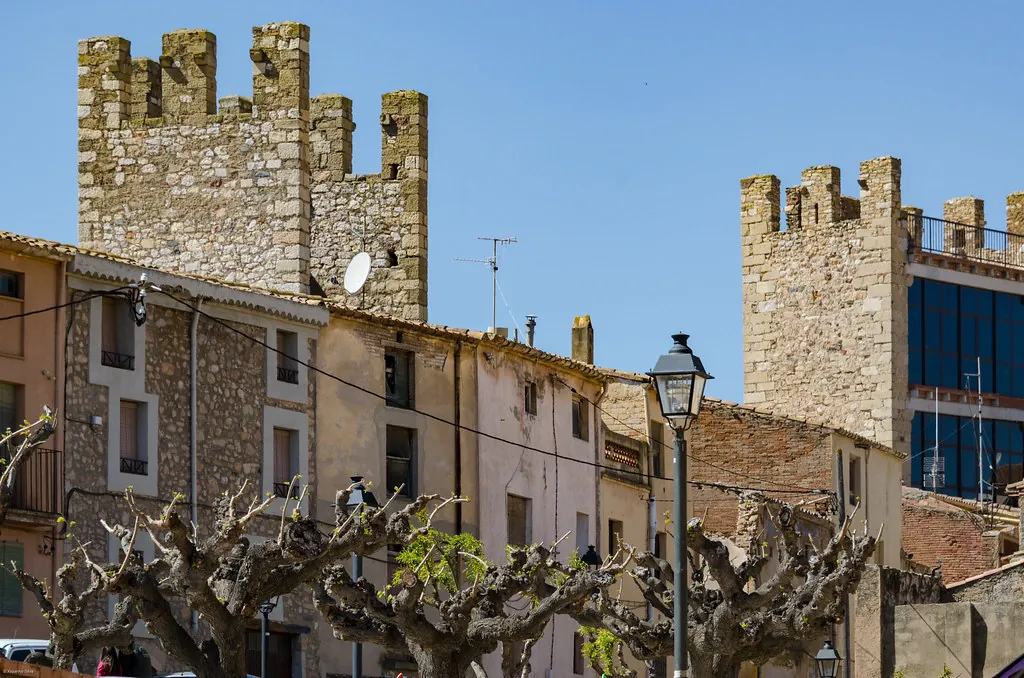
The historic centre unfolds through short slopes and streets that fold back on themselves. Stone walls show dark patches left by years of moisture, and some doorways still carry worn frames shaped by decades of use.
The church of Sant Llorenç appears suddenly among the houses rather than standing apart in an open square. It forms part of the fabric of the village, almost blending into it. Its tower can be seen from several points and quietly helps with orientation when the streets become confusing.
Closer to the river, old washhouses and fountains remain in place. For years they served as everyday meeting spots, tied to the practical use of water in daily life. The water still runs, and on a quiet day it is easy to picture how the village once depended on it for nearly everything.
The Brugent and paths beyond
The Brugent defines La Riba’s surroundings. Its clear water flows between rocks and small pools, drawing people from nearby areas in summer in search of relief from the heat. Conditions can change after heavy rain, so a degree of caution is sensible when approaching the river.
Several paths leave directly from the village. Some follow the valley floor, while others climb towards pine forests on the slopes. A few connect with longer routes leading to Alcover or towards the Prades mountains. From below, the terrain can look gentle, though the midday sun in summer can be intense, which makes earlier or later hours more comfortable for walking.
Along these routes, the air shifts between the resin of pine, dry earth underfoot, and the dampness that lingers near the water. In certain stretches, the path passes by old industrial remains linked to paper production, an activity that shaped the village for a long time.
Food and seasonal rhythms in Alt Camp
The cooking of the area follows the seasons closely. In winter, calçotadas take centre stage. These gatherings revolve around calçots, a type of spring onion typical of Catalonia, grilled over open flames and eaten in long, social meals. They are closely associated with the Alt Camp and especially with nearby Valls, where the tradition is strongest.
Autumn brings a different focus. If the year has been rainy, mushrooms are collected in the surrounding pine forests. Hearty stews appear more often at the table, alongside traditional cured meats that remain part of the region’s home cooking.
La Riba works well as a calm base for exploring the wider Alt Camp. Within a short distance, the scenery shifts between cultivated fields, vineyards, and low mountain ranges, offering quiet variety without long journeys.
Evening light in the valley
As the day draws to a close, the valley seems to narrow even further. Light enters at an angle, sliding across rock faces and rooftops. Some areas fall fully into shadow while others catch a warm orange glow.
From paths that climb slightly above the village, the layout becomes clear. Houses cluster beside the river, the road follows the valley floor, and slopes covered in pine trees rise on either side.
For walking or photography, the calmest moments tend to be early in the morning or on weekdays. Summer weekends bring more visitors from nearby areas, many heading towards the river.
A small place with its own pace
Local festivities dedicated to Sant Llorenç usually take place in August. They bring together residents who live in the village year-round and those who return for the occasion. These days centre on shared meals, social gatherings, and activities organised by the community itself.
Outside these dates, La Riba keeps a steady, unhurried rhythm. There is little noise and few fixed plans. What defines the place is simpler: water moving between rocks, paths that leave the village with barely a sign, and the sense of a valley that has followed its own way of life for centuries.